Could a single procurement oversight compromise your clinical infrastructure's integrity in 2026? With the global medical device market projected to reach $623.37 billion this year, the operational requirement to secure authentic, high-stakes equipment is paramount. You likely recognize that selecting a medical device wholesaler platform is no longer a matter of simple browsing; it's a critical strategic decision that dictates the stability of your specialized supply chain. Ensuring direct, verified access to manufacturers like Boston Scientific and Asahi Intecc is essential for maintaining a high standard of care.
Procurement professionals frequently contend with fragmented supply chains for neurovascular devices and the persistent risk of non-authentic products in unregulated marketplaces. We understand that inefficient RFQ processes generate administrative overhead that stalls vital operations. This guide details how to evaluate and select the optimal medical device wholesaler platform to ensure supply chain security and procurement efficiency. You'll learn to verify supplier credentials, streamline RFQs for brands like Abbott Vascular and Terumo, and align your procurement with the new FDA Quality Management System Regulation (QMSR) effective February 2, 2026.
Key Takeaways
- Transition from manual procurement to data-driven digital sourcing to improve supply chain transparency and organizational response times.
- Analyze the operational distinctions between SaaS procurement tools and direct wholesale platforms holding inventory from brands like Asahi Intecc.
- Select a medical device wholesaler platform based on specific inventory depth in high-stakes categories such as coronary and neurovascular intervention.
- Establish a standardized framework for supplier verification to ensure all procured devices meet global regulatory standards and clinical requirements.
- Utilize specialized membership tools to streamline RFQ management and facilitate secure cross-border procurement with established industry manufacturers.
Table of Contents
- The Evolution of Medical Device Wholesale: Why Digital Platforms are Essential in 2026
- Comparing B2B Medical Marketplace Models: SaaS vs. Direct Wholesale
- Key Evaluation Criteria for Selecting a Global Procurement Platform
- Strategic Sourcing with GetMedicalDevice: A Hybrid Approach to Medical Distribution
The Evolution of Medical Device Wholesale: Why Digital Platforms are Essential in 2026
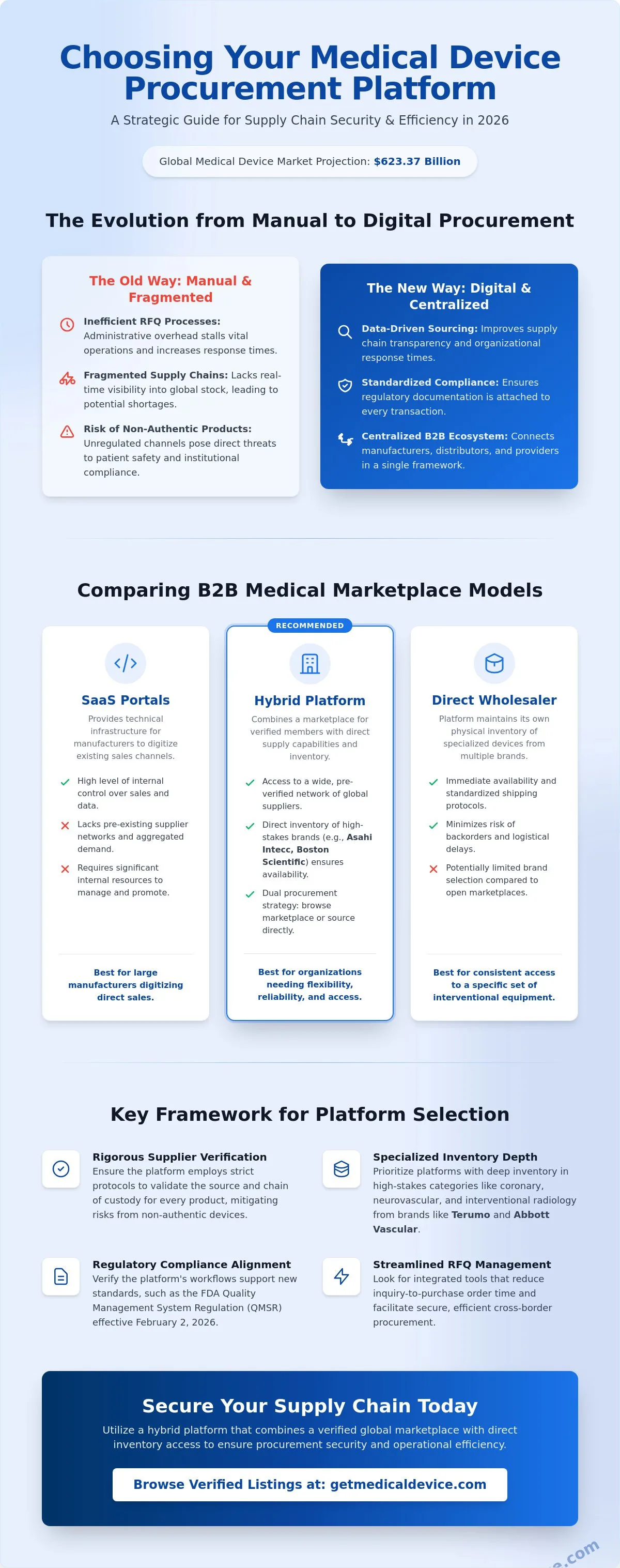
A modern medical device wholesaler platform functions as a centralized B2B ecosystem designed to connect manufacturers, verified distributors, and healthcare providers within a single digital framework. This infrastructure replaces outdated, manual procurement methods that relied heavily on individual relationships and fragmented communication. In 2026, the transition to data-driven digital sourcing is no longer optional. It's a fundamental requirement for managing the complexities of Medical Logistics. These platforms provide the necessary stability to maintain supply chain resilience during periods of global logistical volatility.
The shift toward digital integration offers several core advantages for procurement departments:
- Inventory Transparency: Real-time visibility into stock levels across global distribution hubs prevents critical shortages.
- Operational Speed: Integrated RFQ systems reduce the time required to move from initial inquiry to confirmed purchase order.
- Standardized Compliance: Automated workflows ensure that all necessary regulatory and quality documentation is attached to every transaction.
Addressing the Challenges of Global Medical Procurement
The interventional radiology and vascular sectors continue to face persistent risks from counterfeit or non-authentic devices. These products pose a direct threat to patient safety and can lead to severe regulatory penalties for healthcare institutions. A specialized medical device wholesaler platform mitigates these risks by employing rigorous verification protocols to validate the source and chain of custody for every product. The "verified supplier" standard serves as the benchmark for procurement safety in 2026, ensuring that all equipment meets the harmonized quality requirements now in effect.
The Role of Specialized Marketplaces vs. General B2B Sites
General B2B marketplaces like Alibaba or Amazon Business lack the technical specialization required for high-stakes medical sourcing. Procurement of complex devices from brands like Boston Scientific requires an intermediary that understands clinical applications and strict regulatory nuances. Niche platforms provide a focused environment where technical specifications are prioritized over generic retail metrics. This specialization is essential for maintaining the integrity of specialized medical inventories that general marketplaces are not equipped to handle.
Comparing B2B Medical Marketplace Models: SaaS vs. Direct Wholesale
Analyzing the structural differences between procurement models is necessary for optimizing supply chain costs. A pure-play SaaS solution, such as Cloudfy, provides the technical infrastructure for manufacturers to digitize their existing sales channels. While this offers high levels of internal control, it lacks the pre-existing supplier networks found in established marketplaces. In contrast, a comprehensive medical device wholesaler platform functions as a dynamic intermediary that aggregates multiple brands and suppliers into a single access point.
Certain platforms operate under a "Direct Wholesaler" model. In this configuration, the platform maintains physical inventory of specialized brands like Asahi Intecc. This model ensures immediate availability and standardized shipping protocols, which are often inconsistent in decentralized marketplaces. For organizations requiring consistent access to interventional equipment, this inventory-heavy approach minimizes the risk of backorders and logistical delays. Utilizing a trusted global wholesaler and exporter such as imtmedicaldevices.com can further ensure that high-quality medical supplies are delivered with the necessary reliability and speed.
The hybrid model represents a sophisticated evolution, combining a marketplace for verified members with direct supply capabilities. This structure allows for a dual-layered procurement strategy. Organizations can evaluate the cost-benefit of membership-based platforms, which typically offer predictable annual fees, against transaction-fee models that can become expensive during high-volume procurement cycles. To streamline your sourcing, you can browse verified listings to identify reliable supply partners.
SaaS Portals: Control vs. Reach
SaaS portals excel at helping manufacturers manage their established customer base through proprietary e-commerce infrastructure. However, they frequently fail to connect sellers with new global buyers due to their closed-loop nature. The technical overhead of maintaining these systems, including security updates and ERP integrations, requires significant internal resources that may detract from core logistical operations. It's often more efficient to leverage existing infrastructures than to build proprietary systems from scratch.
To manage the complex technical requirements of these digital systems, healthcare organizations often check out MEDITIL for tailored IT solutions that ensure operational security and efficiency.
Verified Marketplaces: The Facilitator Advantage
Utilizing verified medical device suppliers significantly reduces procurement lead times by eliminating the need for independent vetting. An effective b2b medical device marketplace aggregates global demand, providing smaller institutions with the same inventory access as large hospital networks. This aggregation ensures that scarce inventory is distributed based on verified clinical requirements rather than simple geographic proximity.
Key Evaluation Criteria for Selecting a Global Procurement Platform
Selecting a medical device wholesaler platform requires a rigorous assessment of technical capabilities and inventory specialization. In 2026, generalist platforms cannot provide the necessary depth for high-stakes clinical areas. An authoritative platform must demonstrate extensive availability in specialized categories such as coronary intervention and neurovascular devices. Access to Tier 1 manufacturers like Abbott Vascular and Terumo is a non-negotiable requirement for institutions maintaining premium surgical standards.
Effective evaluation also hinges on the platform's supplier vetting process. A "Verified Supplier" status should indicate a comprehensive audit of regulatory standing and historical reliability. This verification reduces the administrative burden on procurement teams, as the platform acts as a primary filter for quality assurance. Efficiency is further measured by the speed of the Request for Quote (RFQ) process. Buyers should receive multiple competitive bids for high-value equipment within a standardized timeframe. To begin optimizing your supply chain, you can source medical devices from our verified network.
Technical Specifications and Regulatory Documentation
Reliable platforms must provide immediate access to critical regulatory documentation, including CE certificates and FDA approvals. With the FDA Quality Management System Regulation (QMSR) becoming effective on February 2, 2026, platforms must ensure that all listed suppliers comply with these harmonized international standards. Serialized stock management is also essential. This allows for precise traceability throughout the product lifecycle, which is vital for risk management and recall protocols.
Global Logistics and RFQ Management
Managing international bids requires a structured medical device RFQ platform that prioritizes efficiency. A credit-based RFQ system is an effective mechanism for ensuring response quality. By requiring suppliers to use specific RFQ response credits, the platform filters out low-intent or incapable vendors. This ensures that procurement officers only interact with serious entities capable of meeting technical requirements and delivery timelines.
Strategic Sourcing with GetMedicalDevice: A Hybrid Approach to Medical Distribution
GetMedicalDevice operates as a specialized medical device wholesaler platform that integrates marketplace accessibility with direct supply reliability. By serving as an authoritative facilitator, the platform bridges the gap between global manufacturers and healthcare institutions. The Verified Supplier Membership is a central component of this infrastructure, designed to establish professional visibility and global trust. This membership ensures that suppliers meet rigorous organizational standards before engaging in high-value transactions, providing buyers with a verified layer of security.
Strategic sourcing through the platform provides access to a premium product list, including a comprehensive sourcing guide for Terumo vascular intervention products. To maintain the integrity of the procurement process, the platform utilizes a systematic RFQ credit system. This mechanism requires suppliers to use RFQ Response Credits when bidding on contracts, ensuring that only qualified entities with verified capabilities respond to complex solicitation requests. This structured approach eliminates low-intent interactions and focuses resources on viable procurement outcomes.
Accessing the Global Inventory
Navigating specialized medical equipment requires a structured categorical approach. Users can efficiently source components within the peripheral intervention and vascular access segments. Utilizing premium medical product listings enhances visibility for high-demand items, allowing procurement officers to identify authentic stock levels quickly. This transparency is vital for maintaining the clinical workflow in surgical environments where inventory precision is mandatory.
Next Steps for Procurement Professionals
To initiate procurement, professionals must complete the registration process as a verified buyer or apply for a Verified Supplier Membership. This registration provides the necessary credentials to source authentic Asahi Intecc medical products and other Tier 1 brands. Following registration, users can deploy RFQ credits to secure competitive bids for upcoming project cycles. Explore the GetMedicalDevice product catalog to optimize your procurement strategy today.
Optimizing Your Procurement Infrastructure for 2026
The transition to a digital medical device wholesaler platform is a strategic necessity for maintaining clinical continuity. Effective procurement in 2026 requires a shift toward platforms that integrate rigorous verification protocols with direct access to specialized inventory. By prioritizing these authoritative facilitators, you mitigate the risks associated with non-authentic equipment and fragmented logistical workflows. This approach ensures your facility remains compliant with the latest regulatory standards while reducing administrative delays during the RFQ process. Focusing on verified networks is the most reliable method for securing your supply chain.
GetMedicalDevice provides direct access to Tier 1 brands including Boston Scientific and Abbott Vascular. Our Verified Supplier Membership protocols ensure every partner meets strict industry requirements for quality and reliability. We maintain a specialized focus on interventional and vascular medical devices to support your most complex surgical needs. Access the GetMedicalDevice Marketplace and Verified Supplier Network to begin streamlining your operations today. Establishing a resilient, data-driven procurement system ensures your organization remains prepared for the evolving demands of global medical logistics.
Frequently Asked Questions
What is a medical device wholesaler platform?
A medical device wholesaler platform is a centralized digital B2B ecosystem that facilitates the procurement of clinical equipment by connecting manufacturers, verified distributors, and healthcare providers. It serves as an authoritative intermediary, replacing fragmented manual sourcing with a systematic digital workflow. These platforms provide real-time visibility into global inventory and standardized documentation. This ensures that procurement departments can maintain supply chain resilience and regulatory compliance within a single, secure environment.
How do I verify the authenticity of products on a B2B medical marketplace?
Authenticity is verified through a combination of platform-led vetting protocols and direct access to regulatory documentation. Reliable marketplaces require suppliers to submit valid CE and FDA certificates along with proof of their distribution rights. You should prioritize platforms that utilize a "Verified Supplier" status. This status indicates that the entity has undergone a formal audit of its operational standards and compliance history, which is essential for ensuring product integrity.
What are the benefits of using an RFQ platform for medical device procurement?
An RFQ platform optimizes procurement by aggregating competitive bids from multiple verified suppliers, which reduces administrative overhead. It allows procurement officers to solicit technical specifications and pricing for high-value equipment within a structured timeframe. By utilizing mechanisms like RFQ Response Credits, the medical device wholesaler platform ensures that only serious, capable vendors respond to requests. This filtering process eliminates low-intent interactions and accelerates the transition to a confirmed purchase order.
Can I source specialized interventional cardiology products through a wholesaler platform?
Yes, specialized platforms provide direct access to high-stakes interventional cardiology equipment from Tier 1 manufacturers. You can source specialized devices including coronary stents, guide wires, and catheters from brands like Boston Scientific, Terumo, and Abbott Vascular. These platforms categorize inventory by clinical application, such as coronary intervention or vascular access. This depth of inventory is a primary differentiator between niche medical marketplaces and general B2B sites that lack clinical specialization.
How does a Verified Supplier Membership improve B2B sales leads?
A Verified Supplier Membership improves sales leads by signaling high-level professional trust and increasing visibility within the global marketplace. This status acts as a formal endorsement of a supplier's regulatory compliance and reliability, attracting high-intent buyers from hospital networks and procurement agencies. Additionally, members gain access to specialized tools, such as premium product listings, which allow them to bid on high-value contracts with greater efficiency and institutional credibility.