
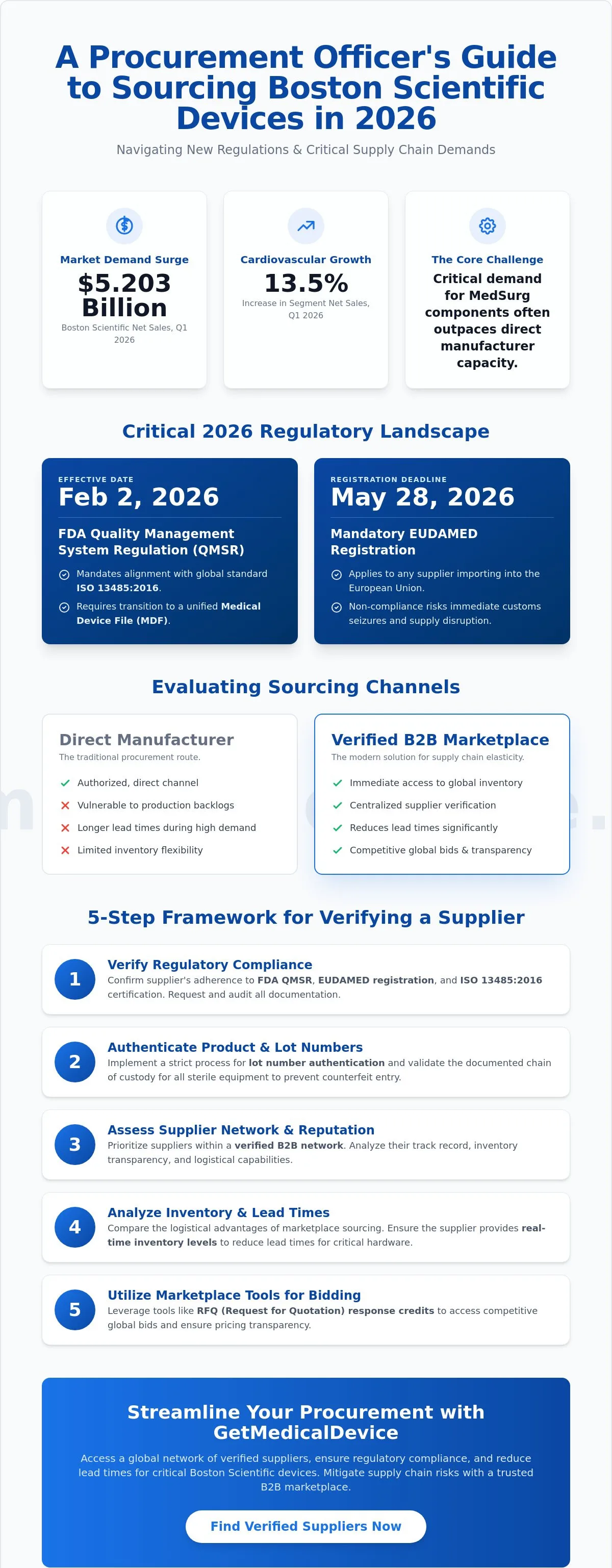
With Boston Scientific generating $5.203 billion in net sales in the first quarter of 2026, the demand for cardiovascular and MedSurg components has reached a critical threshold that often outpaces direct manufacturer capacity. Locating a reliable Boston Scientific medical device supplier in the secondary market requires more than a simple price comparison. It demands a rigorous verification framework to mitigate the risk of non-compliant or counterfeit hardware. You're likely aware that the margin for error in interventional device procurement has narrowed significantly following the February 2, 2026, implementation of the FDA Quality Management System Regulation (QMSR).
This guide establishes a professional framework for procurement officers to identify and verify authentic sourcing channels globally. You'll learn how to navigate the mandatory EUDAMED registration deadline of May 28, 2026, and transition your documentation from legacy records to the unified Medical Device File (MDF) standard. We'll examine the specific criteria for evaluating a verified supplier network to ensure your facility reduces lead times for critical surgical components without compromising regulatory integrity.
Key Takeaways
- Identify the impact of the 2026 FDA Quality Management System Regulation (QMSR) on procurement documentation and the transition to unified Medical Device Files (MDF).
- Categorize high-demand inventory within interventional cardiology and urology to prioritize supply chain stability for critical surgical components.
- Implement a rigorous 5-step verification framework to validate any Boston Scientific medical device supplier, focusing on ISO certifications and lot number authentication.
- Analyze the logistical advantages of marketplace sourcing to reduce lead times for essential hardware compared to traditional direct manufacturer contracts.
- Utilize RFQ response credits and verified supplier networks to access competitive global bids and maintain transparency in inventory levels.
Table of Contents
- The 2026 Landscape for Boston Scientific Medical Device Sourcing
- Core Boston Scientific Product Categories for Global Procurement
- Evaluating Sourcing Channels: Direct Manufacturer vs. Marketplace Suppliers
- A 5-Step Framework for Verifying a Boston Scientific Supplier
- Streamlining Procurement with GetMedicalDevice
The 2026 Landscape for Boston Scientific Medical Device Sourcing
The global procurement landscape for interventional devices has undergone a significant transformation in 2026, driven by a 13.5% increase in the cardiovascular segment's net sales during the first quarter. This growth reflects an intensified demand for specialized catheters, stents, and electrophysiology tools. For a procurement officer, identifying a reliable Boston Scientific medical device supplier requires a clear distinction between authorized direct channels and independent verified distributors. While direct contracts provide a traditional route, the secondary market has become an essential component for maintaining supply chain elasticity. Independent suppliers often offer immediate inventory access that direct manufacturers cannot always guarantee during periods of high clinical demand.
As a global leader in medical technology, Boston Scientific maintains a dominant presence in interventional cardiology and urology. The company's recent strategic focus on high-growth areas, such as the FARAWATCH approach combining PFA and WATCHMAN procedures, has created a specialized market for compatible accessories. Procurement professionals are increasingly shifting toward verified B2B marketplaces to manage these requirements. These platforms provide a centralized framework for verifying supplier credentials and real-time inventory levels, which reduces the administrative burden of manual vetting. This transition is a pragmatic response to global supply chain volatility where transparency and speed are the primary metrics for success.
The Role of Interventional Radiology in Modern Procurement
The demand for less invasive medical solutions has positioned interventional radiology at the center of modern hospital procurement strategies. Boston Scientific technology facilitates higher surgical productivity by reducing patient recovery times and procedural complexity. In a value-based healthcare environment, procurement officers prioritize devices that demonstrate clear clinical outcomes and operational efficiency. This shift requires a sourcing strategy that balances the upfront cost of high-specification hardware with the long-term reduction in hospital stay durations. Accessing a verified network of global distributors ensures that these critical components remain available even when regional primary stocks are depleted.
Regulatory Standards for Medical Device Suppliers
Adherence to evolving regulatory standards is the most critical factor in selecting a Boston Scientific medical device supplier in 2026. The FDA Quality Management System Regulation (QMSR), which became effective on February 2, 2026, now mandates alignment with ISO 13485:2016. Suppliers must demonstrate that they've transitioned their documentation from legacy records to the unified Medical Device File (MDF). This change ensures a consistent quality standard across international borders, but it also requires rigorous auditing of supplier paperwork.
Mandatory EUDAMED registration, effective May 28, 2026, further complicates the sourcing process. Any supplier failing to meet these registration requirements faces immediate customs seizures, which can disrupt critical surgical schedules. Procurement teams must verify that every intermediary maintains a documented chain of custody for sterile equipment. This includes validating sterilization records and lot numbers to prevent the entry of non-compliant or counterfeit devices into the clinical environment. Using a structured verification framework is the only way to ensure that the devices reaching the operating room meet the manufacturer's original safety specifications.
Core Boston Scientific Product Categories for Global Procurement
Effective inventory management begins with a structured classification of devices based on clinical criticality and turnover rates. A Boston Scientific medical device supplier must provide transparency regarding these high-demand categories to ensure hospital supply chains remain functional. Procurement officers can verify the stability and segment performance of these product lines by reviewing official corporate filings, which provide data on the MedSurg and Cardiovascular segments. These segments accounted for $6.824 billion and $13.250 billion in 2025 net sales, respectively. It's essential to establish stable relationships for "evergreen" products like coronary stents and urological catheters to reduce lead times.
Interventional Cardiology and Vascular Access
In the cardiovascular space, procurement focuses on drug-eluting stents (DES) and specialized access tools. While bare-metal options exist, the clinical shift toward DES requires suppliers to maintain specific storage conditions and documentation. Catheters and guidewires represent high-turnover inventory that demands consistent replenishment. The Watchman device serves as a primary example of high-value interventional sourcing; its integration into the FARAWATCH approach in 2026 has increased its role in structural heart programs. Facilities often benefit from using verified product listings to identify distributors with immediate stock of these complex components.
Urology and Pelvic Health Solutions
Urology procurement focuses on stone management and reconstructive surgery. Lithotripsy equipment and retrieval baskets are standard requirements for surgical suites. Suppliers in this category must demonstrate deep inventory across various sizes and specifications. Key products include:
- Lithotripsy systems and laser fibers for stone fragmentation.
- Prosthetic surgical devices for pelvic health reconstruction.
- Ureteral stents and drainage catheters.
Procurement officers should prioritize suppliers who can provide comprehensive lot tracking for these implantable devices. This ensures compliance with the unified Medical Device File (MDF) standards introduced in early 2026.
Endoscopy and Pulmonary Equipment
Endoscopic accessories, including biopsy forceps and retrieval devices, are essential for diagnostic and therapeutic procedures. Pulmonary intervention tools, such as those used for bronchial thermoplasty, represent a more specialized procurement category. Managing lead times for these accessories involves identifying a Boston Scientific medical device supplier with a robust global distribution network. Because these tools are often procedure-specific, maintaining a buffer of "evergreen" diagnostic accessories prevents delays in high-volume endoscopy suites. This proactive approach mitigates the risk of stockouts during peak procedural seasons.
Evaluating Sourcing Channels: Direct Manufacturer vs. Marketplace Suppliers
Selecting the optimal procurement channel is a strategic decision that directly impacts surgical scheduling and hospital cash flow. According to the Boston Scientific company profile, the organization's massive scale and 11.6% increase in reported Q1 2026 sales highlight a high-demand environment where primary supply lines often experience strain. Procurement officers must evaluate whether a direct manufacturer contract or a secondary Boston Scientific medical device supplier better serves their immediate operational requirements. Direct contracts offer consistency but often lack the agility needed to address sudden inventory gaps during procedural surges.
The decision involves a complex cost-benefit analysis. While direct sourcing might offer standard Net 90 payment terms, the hidden costs of lengthy onboarding and rigid contract structures can be significant. Diversifying the supplier network is a documented method for mitigating single-source risks. If a primary manufacturer faces a production backlog in its cardiovascular segment, having a relationship with an independent Boston Scientific medical device supplier ensures that interventional suites remain operational. Digital marketplaces serve as the bridge in this scenario, providing a structured environment where global inventory is visible and accessible.
The Limitations of Direct Manufacturer Sourcing
Direct sourcing typically involves high minimum order quantities (MOQs) and standardized contract terms that don't always align with the needs of smaller clinics or specialized surgical centers. The onboarding process for a new healthcare facility can take several weeks, involving extensive credit checks and administrative documentation. Additionally, geographic restrictions often limit which products a manufacturer will ship directly to certain regions. These logistical hurdles create friction in the supply chain, particularly when a facility needs to procure specific catheters or stents for an upcoming case on short notice.
The Advantages of a Verified B2B Marketplace
A verified B2B marketplace removes these barriers by aggregating inventory from multiple global distributors into a single interface. This model allows procurement teams to compare multiple RFQ responses simultaneously, ensuring they secure the best available terms without manual outreach. Verification is a core component of this channel; every listed distributor undergoes a rigorous vetting process to confirm their compliance with 2026 regulatory standards. While the marketplace itself doesn't provide freight forwarding, it facilitates connections with suppliers who have established logistics networks. This access to immediate inventory is a critical advantage for maintaining surgical productivity in a volatile market.
A 5-Step Framework for Verifying a Boston Scientific Supplier
Establishing a secure sourcing channel requires a systematic auditing process that moves beyond surface level price comparisons. Every Boston Scientific medical device supplier entering your supply chain must undergo a rigorous verification sequence to ensure clinical safety and regulatory compliance. This five step framework provides the structure necessary to mitigate the risks associated with secondary market procurement.
- Step 1: Validate ISO and Regulatory Certifications. Confirm that the supplier maintains a current ISO 13485:2016 certification. Under the 2026 FDA Quality Management System Regulation (QMSR), you must also verify that their documentation has transitioned to the unified Medical Device File (MDF) format.
- Step 2: Authenticate Product Lot Numbers and Sterilization Records. Request original manufacturer lot numbers for every batch. Cross reference these with the manufacturer's database to confirm the sterilization date and expiration.
- Step 3: Review Procurement Platform History. Evaluate the supplier’s track record on professional B2B marketplaces. Consistent performance and a history of fulfilled RFQs indicate a stable operational infrastructure.
- Step 4: Request Detailed RFQ Documentation. Demand comprehensive technical data sheets and formal quotes. A legitimate distributor will provide transparent data regarding their current inventory levels and lead times.
- Step 5: Verify Logistics and Cold Chain Capabilities. Ensure the distributor possesses the infrastructure to handle sensitive interventional devices. This is especially critical for drug eluting stents and certain biologics that require specific temperature controls during transit.
Facilities looking to formalize this process can utilize a verified supplier membership to access a pre-vetted network of global distributors. This reduces the administrative burden of manual verification while maintaining high quality standards.
Red Flags in Medical Device Procurement
Identifying "gray market" warning signs is essential for protecting patient safety. Pricing that falls significantly below the 2026 market average often indicates compromised or near-expiry stock. You should also examine the Unique Device Identification (UDI) labels; missing, altered, or over-labeled UDI tags are immediate grounds for rejection. With the mandatory EUDAMED registration effective as of May 28, 2026, any supplier unable to provide their Single Registration Number (SRN) should be excluded from your procurement list. Unverified distributors on general trade sites often lack the specialized medical documentation required for international compliance.
The Importance of a Quality Standards Agreement
A formal Quality Standards Agreement (QSA) provides the legal and clinical protections necessary for high stakes procurement. This document should specify that the Boston Scientific medical device supplier will not change the method or location of storage without prior notification. It must also include clauses ensuring compliance with international anti-bribery laws and ethical labor standards. For healthcare facilities, these contracts serve as the primary defense against non-compliant hardware. Ensuring that every procurement cycle is backed by a QSA reinforces the integrity of the hospital's Medical Device File and simplifies the auditing process during regulatory inspections.
Streamlining Procurement with GetMedicalDevice
Standardization reduces risk. GetMedicalDevice operates as a specialized intermediary designed to standardize the procurement of interventional hardware. The platform vets every Boston Scientific medical device supplier against the 2026 regulatory benchmarks established in previous sections. By utilizing a centralized framework, procurement officers bypass the administrative bottlenecks associated with manual distributor vetting. This ensures every transaction aligns with the unified Medical Device File (MDF) standards. The platform facilitates this through a Verified Supplier Membership, which identifies distributors who have already passed rigorous credentialing audits.
Efficiency in high-stakes environments depends on data transparency and rapid communication. Procurement teams utilize RFQ Response Credits to solicit competitive bids from a pre-vetted network of global distributors. This system allows for a direct comparison of availability and terms without the need for multiple independent inquiries. Additionally, Premium Product Listings provide immediate visibility into current inventory for critical components, such as drug-eluting stents and urological retrieval devices. This structured access to hardware prevents the procedural delays often caused by fragmented supply chains or unverified secondary market listings.
The RFQ System: Precision Sourcing for Hospitals
Submitting an effective RFQ requires specific technical parameters to ensure the responses are actionable. Procurement officers should include the exact manufacturer part numbers, required sterilization dates, and specific regulatory documentation needs in their initial request. Once submitted, the system aggregates responses, allowing for a methodical analysis of lead times and compliance status. This process reduces the administrative friction inherent in the B2B medical supply chain. It allows hospital staff to focus on clinical outcomes rather than logistical troubleshooting. Analyzing these responses ensures that the selected Boston Scientific medical device supplier can meet the immediate demands of the surgical suite.
Building Long-Term Relationships with Verified Suppliers
Consistency in the supply chain is achieved through stable, verified professional relationships. Leveraging a verified network ensures that hospitals maintain access to essential inventory even during global supply fluctuations. For suppliers, a verified status increases visibility among high-volume institutional buyers who prioritize regulatory integrity over the lowest possible price point. This model closes the gap between global demand and localized supply by creating a transparent marketplace. It fosters a procurement environment where reliability is the primary metric. Establishing these connections through a formal platform provides a scalable solution for facilities managing complex interventional cardiology and urology programs in a volatile 2026 market.
Optimizing Your 2026 Procurement Strategy
Navigating the 2026 regulatory environment requires a systematic transition to the unified Medical Device File (MDF) and strict adherence to the May 28 EUDAMED registration deadline. By implementing the 5-step verification framework, procurement officers can secure authentic interventional cardiology and urology components while effectively reducing lead times. Diversifying your network beyond traditional direct contracts ensures that clinical suites remain operational during periods of high global demand and supply chain volatility.
Selecting a verified Boston Scientific medical device supplier is no longer just a matter of hardware availability; it's a critical step in maintaining patient safety and institutional compliance. You can streamline this process by utilizing a Verified Supplier Membership and a credit-based RFQ system to connect with a global network of interventional radiology distributors. These tools provide the transparency and structure necessary to handle high-value professional interactions without unnecessary delays.
Access Verified Boston Scientific Suppliers on GetMedicalDevice to establish a secure and efficient sourcing channel for your facility. Professionalizing your procurement workflow today ensures long-term stability and clinical excellence in an increasingly complex medical technology market.
Frequently Asked Questions
How do I verify if a Boston Scientific medical device supplier is authorized?
You must validate the supplier’s Single Registration Number (SRN) within the EUDAMED database and confirm their ISO 13485:2016 certification status. Request a formal letter of authorization or verify their inclusion in the manufacturer’s official distributor records. Every legitimate entity will provide documentation that aligns with the unified Medical Device File (MDF) standards required by the 2026 Quality Management System Regulation (QMSR). Cross-referencing these data points ensures the supplier maintains a valid legal standing.
What are the main risks when sourcing Boston Scientific products from a third-party distributor?
The primary risks involve compromised cold-chain integrity for drug-eluting stents and the potential for non-compliant hardware entering the clinical environment. Missing or altered Unique Device Identification (UDI) labels indicate significant regulatory failure. Suppliers operating without a formal Quality Standards Agreement (QSA) may not adhere to the necessary storage protocols for high-stakes interventional hardware. These gaps in the chain of custody can lead to immediate customs seizures or clinical complications during surgical procedures.
Does GetMedicalDevice directly manufacture Boston Scientific products?
GetMedicalDevice does not engage in direct medical device manufacturing or logistics. The platform operates as a professional intermediary designed to connect healthcare facilities with a verified network of global distributors. It provides a structured framework for identifying a Boston Scientific medical device supplier that meets specific regulatory benchmarks. The platform’s role is to facilitate the verification and RFQ process rather than producing or shipping the hardware itself, ensuring a transparent procurement environment.
What documentation should I request from a medical device supplier before purchasing?
You should request current ISO 13485:2016 certifications, technical data sheets, and sterilization records for the specific lot numbers being procured. Ensure the supplier provides a documented chain of custody and their SRN for EUDAMED compliance. Procurement teams must also confirm that all supplier paperwork aligns with the unified Medical Device File (MDF) format. This documentation is essential for maintaining the hospital’s internal quality records and ensuring compliance during regulatory audits.
How can a hospital use an RFQ platform to reduce procurement costs?
Hospitals use RFQ platforms to solicit competitive bids from multiple global distributors simultaneously, which ensures they secure the most favorable market terms. This centralized system eliminates the need for manual outreach to individual vendors; this reduces administrative labor costs significantly. By comparing real-time inventory levels and lead times across a verified network, facilities can avoid the high costs associated with emergency surgical stockouts and fragmented supply chain management.
What is the difference between an authorized distributor and a verified marketplace supplier?
An authorized distributor maintains a direct contractual relationship with the manufacturer for specific geographic territories. A verified marketplace supplier is an independent entity that has undergone a rigorous credentialing process by a third-party platform to confirm their regulatory compliance and operational stability. While their sourcing channels differ, both must provide authentic Boston Scientific medical device supplier documentation and adhere to international quality standards for sterile equipment to ensure clinical safety.
Can I source Boston Scientific Watchman devices through GetMedicalDevice?
You can source Watchman devices and their compatible accessories through the platform’s verified distributor network. Because these are high-value interventional components, procurement officers should utilize the RFQ system to verify immediate stock availability and sterilization dates. This ensures the facility maintains the necessary inventory for complex structural heart procedures. This approach avoids the lengthy onboarding times often required by direct manufacturer contracts, maintaining procedural momentum in the surgical suite.
How does the credit-based RFQ system work for medical device buyers?
The system allows buyers to use RFQ Response Credits to request detailed quotes from specific verified distributors on the platform. Once a request is submitted, suppliers provide comprehensive bids that include pricing, lead times, and technical documentation. This structured exchange ensures that both parties are committed to a professional business workflow. It results in more accurate and actionable procurement data for the hospital, allowing for precise inventory planning and improved surgical productivity.
