
In 2026, the traditional digital catalog has become an obsolete tool for medical procurement. Industry professionals recognize that manual RFQ processes and fragmented supply chains no longer meet the rigorous demands of a global industry projected to reach $719.61 billion this year. Verifying international suppliers while navigating the FDA's Quality Management System Regulation, which became effective on February 2, 2026, requires a level of precision that manual workflows cannot sustain. The complexity of modern healthcare logistics necessitates a transition toward more structured, verified environments.
This analysis demonstrates how the modern b2b medical device marketplace has evolved into a verified procurement ecosystem. You will discover how these digital frameworks replace traditional sourcing to provide secure, high-stakes equipment access backed by real-time regulatory alignment and mandatory EUDAMED registration. We will examine the shift toward automated platforms that prioritize speed and transparency, ensuring that critical inventory is accessible through a stable and documented global infrastructure designed to eliminate procurement friction.
Key Takeaways
- Understand the transition from fragmented physical sourcing to integrated digital hubs that facilitate 24/7 procurement access.
- Learn how the modern b2b medical device marketplace utilizes verified supplier filters and credit-based RFQ systems to ensure high-quality responses.
- Evaluate the efficiency gains of digital ecosystems compared to traditional sales cycles, prioritizing pricing transparency and verified inventory availability.
- Identify the specific steps required to establish a verified profile that signals professional intent and clinical precision to global suppliers.
- Explore streamlined methods for accessing premium inventory from established global brands within a centralized, secure procurement framework.
Table of Contents
- The Evolution of B2B Medical Device Marketplaces in 2026
- Key Trends Reshaping Digital Medical Procurement
- Marketplace vs. Traditional Sourcing: A Strategic Analysis
- Implementation: How to Leverage a B2B Marketplace
- The Future of Verified Ecosystems: The GetMedicalDevice Model
The Evolution of B2B Medical Device Marketplaces in 2026
The landscape of medical procurement has undergone a fundamental structural shift. In 2026, the reliance on annual physical trade shows as primary sourcing events has been replaced by 24/7 digital procurement hubs. This transition isn't merely a change in medium; it's a direct response to the logistical volatility that defined the early 2020s. A modern b2b medical device marketplace now functions as the primary infrastructure for stabilizing global supply chains, moving beyond the role of a simple directory to become a critical bridge between clinical requirements and precise logistical execution.
This year marks the definitive end of the unverified directory era. Within a professional b2b medical device marketplace, procurement managers no longer have the luxury of navigating static lists that lack real-time validation. The implementation of the FDA's Quality Management System Regulation (QMSR) and mandatory EUDAMED registration requirements have turned verification into a non-negotiable metric. Without a centralized system to verify these credentials, the risk of non-compliance is too high for modern healthcare facilities to accept. These platforms provide the necessary transparency to ensure that every participant meets current global standards.
From Digital Catalogs to Transactional Ecosystems
Static listings have been superseded by transactional ecosystems that integrate real-time inventory data directly into the procurement workflow. In previous years, a catalog might show a product that wasn't actually in stock, leading to critical delays in patient care. Today's platforms prioritize platform security and data integrity over sheer product volume. Procurement professionals now look for systems where logistics and compliance tracking are baked into the interface. This shift ensures that every transaction is documented and every supplier's status is current, reflecting a move toward high-stakes accuracy rather than broad, unverified options.
Addressing the Global Sourcing Challenge
Managing cross-border requirements remains a primary pain point for international trade. Digital platforms solve this by acting as centralized portals that handle complex medical device regulation and documentation automatically. By standardizing communication between international distributors and local facilities, these marketplaces reduce lead times for interventional devices. Instead of managing dozens of individual relationships and manual RFQ processes, procurement teams use these hubs to define technical parameters and verify international standards instantly. This systematic approach ensures that critical equipment moves through the supply chain without the friction of manual verification or fragmented communication channels.
Key Trends Reshaping Digital Medical Procurement
The global medical devices market is projected to reach nearly $720 billion by the end of 2026. This massive scale requires a b2b medical device marketplace that functions with clinical precision rather than acting as a broad consumer directory. We're seeing a distinct shift toward specialized sourcing hubs for interventional and vascular equipment. Procurement professionals now utilize these platforms to access specific inventory from established leaders like Abbott Vascular, Asahi Intecc, Boston Scientific, and Terumo. AI-enhanced matching algorithms have become standard, automatically aligning complex hospital RFQs with real-time supplier inventory to eliminate the delays inherent in manual searching.
The integration of AI doesn't just speed up the search process; it improves the accuracy of logistical outcomes. These systems analyze technical parameters within a request and match them against verified documentation provided by suppliers. This ensures that the equipment sourced isn't just available, but is also compliant with the specific clinical requirements of the facility. For organizations looking to streamline these interactions, establishing a verified supplier membership provides a structured framework for managing global trade interactions with minimal administrative friction.
The 'Verification First' Sourcing Model
Platform-level verification has become the primary filter for modern procurement. This model significantly reduces the due diligence burden on hospital legal and compliance teams. By centralizing the vetting process, a b2b medical device marketplace ensures that all participants meet the necessary regulatory benchmarks before any transaction begins. Verified Status is a critical risk-mitigation tool for 2026 that ensures every participant adheres to current international trade and safety standards. Organizations that maintain verified credentials signal a high level of professional intent, which is essential for building trust in cross-border transactions.
Strategic RFQ Management
The industry is moving away from high-volume, low-quality bidding. Modern procurement hubs now employ credit-based RFQ systems that prioritize quality responses over lead quantity. This systematic approach ensures that suppliers are fully committed to the procurement request before engaging. The use of structured data within these requests provides several advantages for procurement managers:
- Targeted RFQ responses eliminate the administrative noise of unverified or irrelevant leads.
- Credit-based systems require suppliers to use specific response credits, ensuring they only bid on projects they can fulfill with precision.
- Standardized data fields allow for automated comparative analysis across multiple international vendors, facilitating faster decision-making for critical equipment.
This focus on quality over volume ensures that the procurement cycle remains efficient and predictable. By leveraging these trends, facilities can maintain consistent access to high-stakes medical equipment while minimizing the risks associated with supply chain fragmentation.
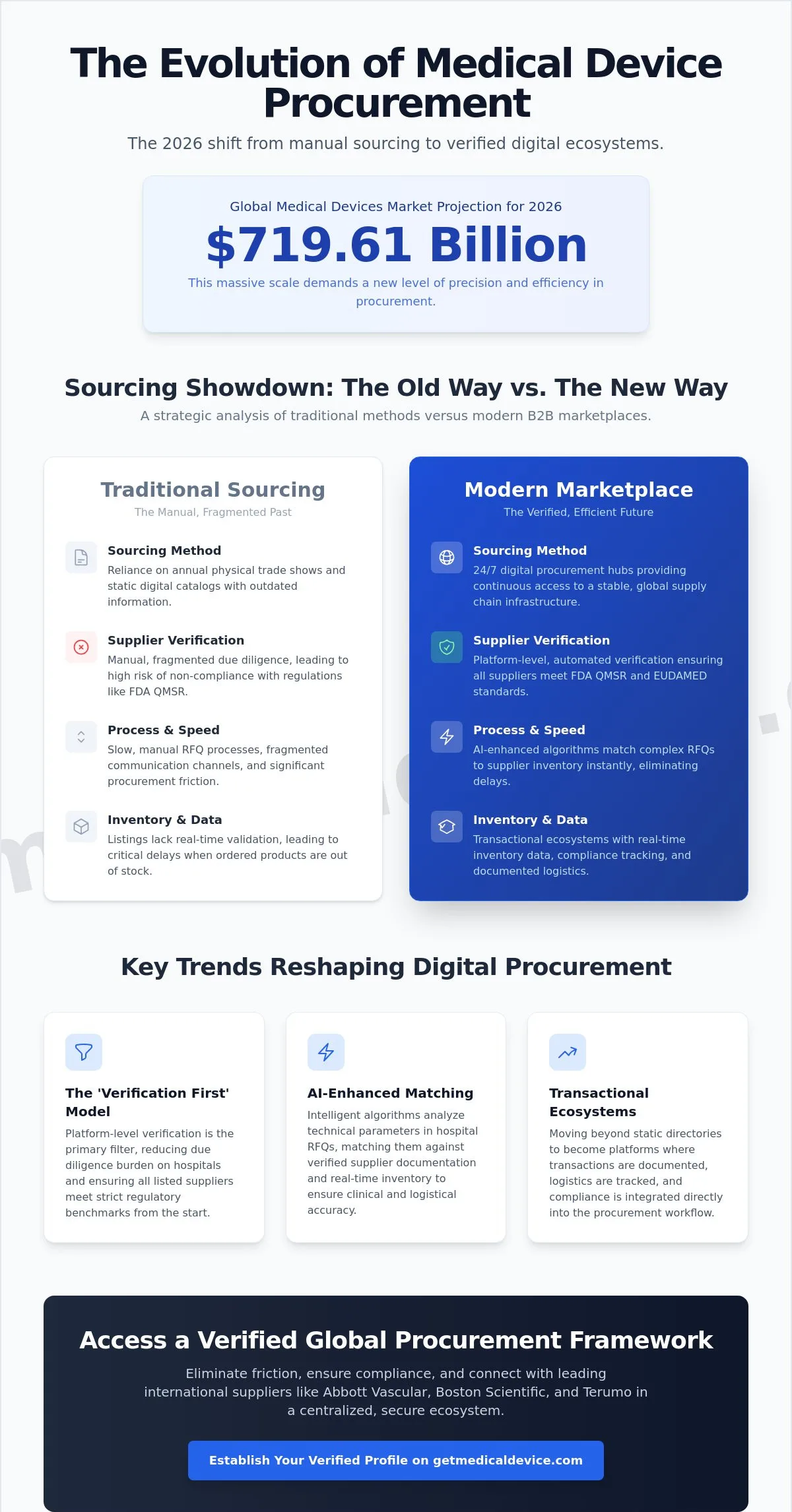
Marketplace vs. Traditional Sourcing: A Strategic Analysis
Traditional procurement models rely on linear sales representative cycles. These interactions often involve fragmented communication and manual follow-ups that extend lead times. Conversely, a b2b medical device marketplace functions as a centralized portal. It provides immediate access to a global network of distributors. This shift eliminates the information silos where pricing and availability were once restricted by individual representatives. By 2026, transparency is an operational necessity. It allows procurement teams to scale operations without increasing administrative headcount.
The marketplace acts as an authoritative facilitator. This role is vital given the 2026 medical device industry trends, which include heightened FDA oversight and the rise of AI-enabled diagnostic tools. Traditional sourcing doesn't keep pace with these rapid shifts. A digital ecosystem reduces risk by providing a structured verification framework. It ensures every transaction aligns with current safety and documentation standards, which is critical for maintaining a stable global infrastructure.
Efficiency Gains in Digital Sourcing
Digital models compress the procurement cycle from weeks to days. This speed results from centralizing documentation, such as ISO 13485:2016 certificates, in a single digital vault. Automated lead management replaces manual RFQ tracking. It lowers administrative overhead significantly. Hospital staff can then prioritize clinical outcomes over logistical tasks. Structured data ensures every input leads to a verifiable result, maintaining the precision required for high-stakes medical environments. This systematic approach eliminates the ambiguity often found in traditional, relationship-based sourcing.
Transparency and Market Intelligence
Information silos hinder accurate budget forecasting and resource allocation. A b2b medical device marketplace offers real-time visibility into global inventory for critical devices. This is essential for managing the supply chain volatility seen in 2026. Procurement managers can now utilize the following intelligence tools:
- Performance Benchmarking: Evaluate supplier reliability through platform-verified reviews and historical data.
- Predictive Budgeting: Use marketplace data to forecast pricing trends and adjust financial planning accordingly.
- Inventory Mapping: Track the availability of specialized equipment from brands like Boston Scientific or Terumo across multiple international vendors simultaneously.
This level of market intelligence supports precise financial planning. By analyzing pricing trends across international vendors, facilities optimize their spend. They ensure continuous access to the specialized equipment needed for complex interventional procedures without the delays of manual information gathering.
Implementation: How to Leverage a B2B Marketplace
Execution within a b2b medical device marketplace requires a systematic approach to profile management and data entry. The process begins with the establishment of a verified profile. This digital credential serves as a formal signal of professional intent to the global supply chain. It distinguishes legitimate procurement entities from unverified inquiries, ensuring that suppliers prioritize your requests. A complete, verified profile is the foundational layer for all subsequent high-stakes interactions.
Integrating marketplace data into existing hospital ERP systems is a critical step for operational efficiency. This connection ensures that inventory levels, pricing, and compliance documentation flow directly into your internal resource planning tools. It eliminates the need for manual data entry and provides a single source of truth for the entire procurement department. By automating this data transfer, organizations can manage the transition from a digital lead to physical delivery with clinical precision and minimal administrative friction.
Optimizing the RFQ Process
Technical precision is mandatory when drafting requests for vascular and interventional devices. Generic descriptions lead to logistical errors and clinical delays. Procurement teams must include specific data points such as catheter dimensions, wire stiffness, and required sterilization certifications. When evaluating supplier responses, the verification level of the responding entity should be the primary filter. Utilizing RFQ response credits ensures that you interact with high-intent supply partners. This credit-based system requires suppliers to commit resources to their bid, which naturally filters out low-quality responses and prioritizes vendors with ready inventory and verified logistical capabilities.
Managing Supplier Relationships Digitally
Platform-based communication tools allow for the tracking of supplier reliability and fulfillment rates over extended periods. This data is essential for building long-term partnerships with distributors of premium brands like Boston Scientific or Terumo. Maintaining a high-quality supplier membership profile is essential for securing consistent access to high-demand inventory in a fragmented global market. By documenting every interaction within the marketplace, procurement managers can identify the most reliable partners for critical equipment needs. This systematic monitoring leads to a more stable and predictable supply chain, reducing the risks associated with urgent equipment shortages.
To begin streamlining your procurement workflow and accessing a global network of verified suppliers, register for a verified membership today.
The Future of Verified Ecosystems: The GetMedicalDevice Model
The GetMedicalDevice model represents the shift from passive directories to active, professional facilitation. In a global trade environment where fragmentation is a constant risk, this b2b medical device marketplace provides a structured framework for accessing premium inventory. High-value transactions involving brands like Boston Scientific, Terumo, and Abbott Vascular require more than just a contact form. They demand a verified environment where clinical precision meets logistical execution. By centralizing these interactions, the platform acts as an indispensable tool for procurement entities that prioritize documentation and adherence to international standards over casual sourcing methods.
The value of a Verified Supplier Membership becomes evident when managing high-stakes medical equipment access. In 2026, the marketplace isn't just a convenience; it's a mandatory layer of protection. This membership ensures that every participant has undergone a rigorous vetting process, aligning with the regulatory shifts discussed in previous sections. Professional facilitation ensures that the sourcing of specialized surgical equipment remains predictable, even when dealing with complex cross-border requirements. It transforms the procurement process from a series of manual checks into a systematic, documented workflow.
Premium Product Listings and Visibility
Showcasing interventional cardiology and neurovascular devices to a global audience requires a high level of technical detail. Premium Product Listings allow distributors to provide the depth of information necessary for clinical decision-making. This visibility bridges the gap between major manufacturers and niche clinical needs that traditional sales cycles often overlook. By providing a platform for these specialized devices, the b2b medical device marketplace ensures that healthcare facilities can source exact specifications for complex procedures without the delays of fragmented communication. This targeted visibility ensures that critical inventory reaches the facilities where it's most needed.
A Utilitarian Approach to Global Trade
GetMedicalDevice prioritizes efficiency over marketing hyperbole. The platform is designed as an organizational tool for the modern project manager who requires accuracy and speed. It moves beyond the role of a casual intermediary to act as a stable, well-oiled machine for high-value professional interactions. Every feature is built to handle intricate requirements with clinical precision, ensuring that no detail is overlooked during the procurement process. This detached yet highly reliable approach reflects the high-stakes nature of the industry.
Success in 2026 depends on the ability to leverage verified ecosystems that provide transparency and security. As supply chain volatility continues to challenge the industry, the necessity of a structured marketplace becomes clear. Organizations that adopt this model ensure they're prepared for the logistical and regulatory demands of modern medical trade, securing a stable infrastructure for the future of healthcare procurement.
Strategizing for Procurement Excellence in 2026
The transition toward a verified b2b medical device marketplace is a necessary response to the increasing complexity of international trade and regulatory compliance. Organizations that adopt these digital ecosystems benefit from streamlined procurement cycles and enhanced transparency. By moving away from fragmented sourcing methods, procurement managers ensure that every transaction is backed by clinical precision and documented verification. This systematic approach eliminates the inefficiencies of traditional sales cycles and provides the market intelligence required for accurate forecasting.
Maintaining a stable supply chain in 2026 requires tools that prioritize high-intent interactions. A structured RFQ credit system and verified status provide the infrastructure necessary for establishing global trust. This environment facilitates direct access to premium inventory from established brands like Asahi Intecc and Abbott Vascular. By utilizing a centralized platform, your organization can manage technical parameters with accuracy and maintain a reliable flow of critical equipment.
Apply for Verified Supplier Membership to access premium medical device leads and secure your position within a stable, global procurement network. Establishing these professional connections today ensures long-term operational resilience.
Frequently Asked Questions
What is a B2B medical device marketplace?
A b2b medical device marketplace is a professional digital ecosystem designed to facilitate the procurement of medical equipment between manufacturers, distributors, and healthcare providers. These platforms move beyond simple product listings to provide integrated tools for RFQ management, inventory tracking, and supplier verification. They serve as a centralized hub where logistical parameters and clinical needs are aligned within a secure, professional framework designed for high-stakes medical trade.
How do verified supplier memberships improve procurement safety?
Verified supplier memberships establish a baseline of trust by requiring participants to undergo a rigorous vetting process before engaging in transactions. This system ensures that vendors comply with current international standards and documentation requirements. By centralizing the verification process, the platform reduces the administrative burden on hospital legal teams and mitigates the risk of sourcing non-compliant equipment in a fragmented global market, ensuring a stable and reliable infrastructure.
Can I source specific brands like Boston Scientific or Terumo on these platforms?
Yes, professional marketplaces provide access to premium inventory from established global manufacturers such as Boston Scientific, Terumo, Abbott Vascular, and Asahi Intecc. These platforms allow procurement managers to filter for specific technical parameters and brand-authorized distributors. This ensures that facilities maintain consistent access to high-stakes interventional and vascular equipment while verifying the authenticity of the supply chain through a documented and transparent procurement process.
What are RFQ response credits and why are they used?
RFQ response credits are a mechanism used to prioritize high-intent interactions by requiring suppliers to commit specific resources to their bids. This system filters out low-quality or irrelevant responses, ensuring that procurement managers only receive bids from vendors with ready inventory and verified capabilities. It acts as a quality control tool that maintains the efficiency of the b2b medical device marketplace by reducing administrative noise and focusing on committed supply partners.
How do digital marketplaces handle international regulatory compliance?
Digital marketplaces integrate regulatory tracking directly into the procurement workflow by requiring documentation such as ISO 13485:2016 certificates and mandatory EUDAMED registration data. The platforms are designed to align with evolving standards like the FDA's Quality Management System Regulation. This centralized approach ensures that all cross-border transactions meet the necessary safety and legal benchmarks, providing a documented audit trail for every purchase and reducing the complexity of international trade.
What is the difference between a generic directory and a verified procurement platform?
A generic directory offers static, unverified listings with no transactional or compliance oversight. In contrast, a verified procurement platform acts as an authoritative facilitator that vets every participant and integrates real-time inventory data. Verified platforms provide structured tools for RFQ management and documentation storage, ensuring that every interaction follows a professional business workflow designed for high-stakes medical procurement rather than simple product discovery or unverified lead generation.
How can a marketplace help with sourcing interventional radiology devices?
Marketplaces facilitate the sourcing of specialized interventional radiology equipment by allowing procurement teams to define exact technical parameters in their RFQs. This includes specific catheter dimensions, wire stiffness, and material requirements. By connecting directly with authorized distributors of specialized brands, these platforms reduce lead times and ensure that clinical teams have access to the precise tools required for complex vascular procedures, eliminating the friction of manual sourcing methods.
Are B2B platforms suitable for large-scale hospital procurement?
Yes, these platforms are designed to scale with the needs of large-scale hospital systems and integrated delivery networks. They provide the infrastructure necessary for managing high-volume RFQs and integrating marketplace data directly into existing ERP systems. This systematic approach reduces administrative overhead and provides the transparency required for accurate budget forecasting and inventory management across multiple facilities within a healthcare network, ensuring consistent access to critical medical equipment.

