
Securing a reliable supply of interventional devices in a fragmented global market requires more than just clinical approval; it demands a rigorous, data-driven procurement strategy. You're likely aware of the challenges involved in verifying authentic stock when technical specifications for Asahi Intecc medical products vary across international borders. The difficulty of managing long lead times for specialized interventional wires can disrupt procedural schedules and impact facility efficiency. This guide serves as a professional reference for procurement officers and distributors who need to navigate these logistical complexities with clinical precision.
We'll provide a clear framework for evaluating the current Asahi portfolio, including recent 2025 FDA-cleared innovations like the Branchor X Balloon Guide Catheter and new neurovascular guide wires. You'll learn how to implement a systematic verification process for suppliers to ensure product authenticity and regulatory compliance. By following this methodical approach, you can transition from reactive sourcing to an efficient RFQ submission process that stabilizes your inventory of high-stakes interventional tools.
Key Takeaways
- Identify the strategic advantages of Asahi Intecc's vertical integration, which ensures quality control from raw wire production to finished interventional devices.
- Evaluate proprietary technologies such as ACT ONE braiding and XTRAND flexibility to select the most effective Asahi Intecc medical products for specific clinical applications.
- Mitigate global supply chain risks by establishing a verification process to avoid unverified gray market sellers that compromise patient safety.
- Implement a systematic procurement framework that utilizes B2B platforms to match procedural volume with verified supplier availability.
- Streamline the sourcing process through specialized portals like GetMedicalDevice to access premium product listings and secure authentic interventional tools.
Table of Contents
- The Strategic Value of Asahi Intecc Medical Products in Interventional Care
- Technical Portfolio: Proprietary Technologies and Product Lines
- Navigating Global Sourcing and Supply Chain Risks
- Strategic Procurement Framework for Healthcare Facilities
- Optimizing Asahi Intecc Procurement via GetMedicalDevice
The Strategic Value of Asahi Intecc Medical Products in Interventional Care
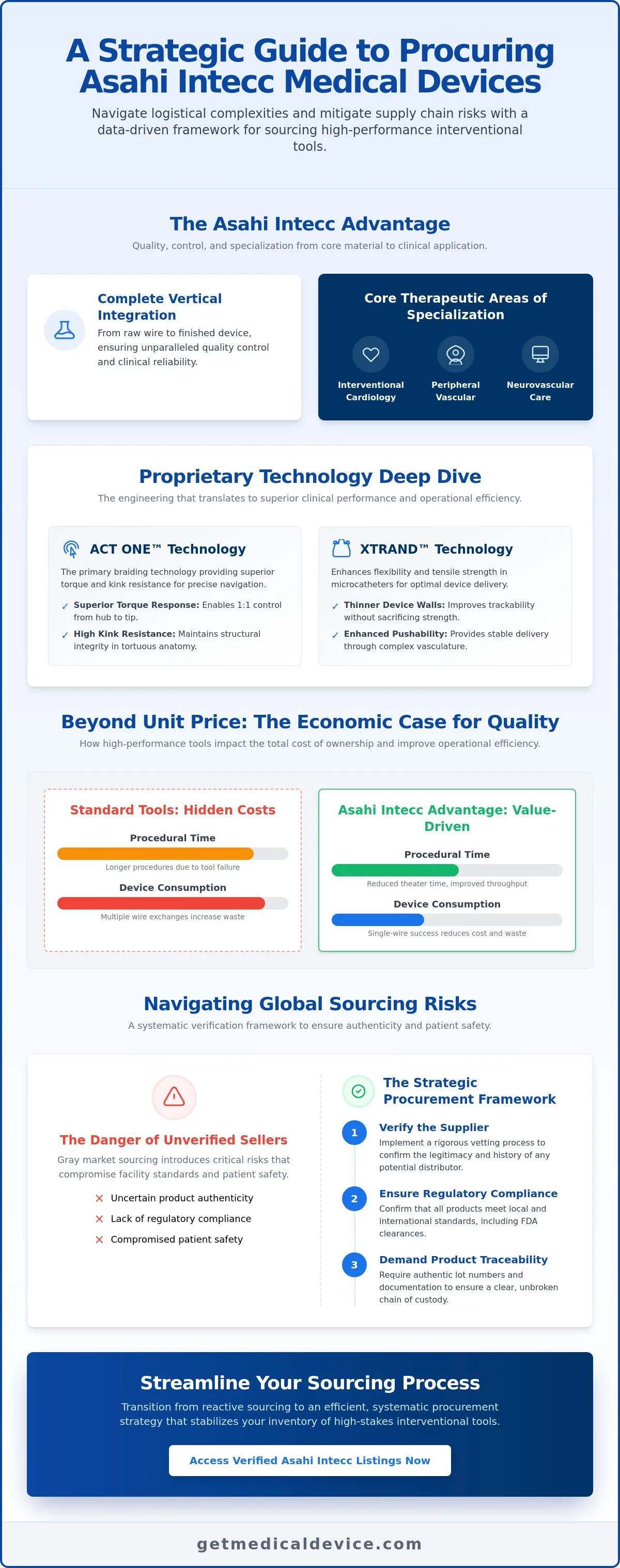
Asahi Intecc operates as a global leader in wire-drawing and braiding technologies, providing the foundational components required for modern minimally invasive surgery. Their expertise isn't limited to assembly; it extends to the molecular level of the materials they use. The primary market differentiator for the brand is its complete vertical integration. Unlike competitors that may outsource wire production, Asahi manages the entire manufacturing cycle from raw stainless steel and Nitinol material to the finished interventional device. This level of control ensures that every unit maintains consistent mechanical properties and clinical reliability.
The company focuses its technical resources on three primary therapeutic areas: Interventional Cardiology, Peripheral Vascular, and Neurovascular care. These high-stakes environments require tools that can navigate tortuous anatomy without losing structural integrity. For procurement professionals, the Asahi Intecc company profile provides a detailed history of how this technical specialization has scaled into a global infrastructure capable of supporting large-scale healthcare systems. Utilizing Asahi Intecc medical products allows facilities to standardize their inventory with devices designed to reduce procedural time and increase success rates in complex lesion sets.
Brand Reputation and Clinical Impact
In the field of Percutaneous Transluminal Coronary Angioplasty (PTCA), Asahi has established a dominant market position. Interventionalists consistently request Asahi guidewires for chronic total occlusions (CTO) because standard wires often fail to provide the necessary tactile feedback or penetration power. The brand's reputation for precision has made it a staple in cardiology suites worldwide. While coronary care remains a core pillar, the brand's shift toward neurovascular applications is a significant secondary growth driver. The same braiding technologies that revolutionized heart surgery are now being applied to intracranial access, allowing for more stable delivery of life-saving therapies in the brain's delicate vasculature.
The Economic Case for High-Quality Interventional Tools
Procurement strategies must shift from unit-price comparisons to an evaluation of the total cost of ownership. While premium tools may have a higher acquisition cost, their performance directly impacts the hospital’s operational budget. Asahi Intecc medical products are engineered for durability, which often reduces the need for multiple wire exchanges during a single case. When a single wire can complete a complex crossing, the facility saves on the cost of wasted devices. Furthermore, superior torque response reduces total theater time. Every minute saved in a high-cost environment like a catheterization lab improves patient throughput and lowers the labor costs associated with prolonged procedures. Reliable tools aren't just a clinical preference; they're a logistical necessity for efficient hospital management.
Technical Portfolio: Proprietary Technologies and Product Lines
ACT ONE (Advanced Comprehensive Torque One) is the primary braiding technology defining the performance of Asahi Intecc medical products. From a procurement perspective, this technology translates to superior torque response and kink resistance. When a device maintains its structural integrity under high stress navigation, the clinical team is less likely to require a replacement wire mid procedure. This reliability stabilizes inventory consumption rates and reduces the overall volume of clinical waste. It's a technical differentiator that directly impacts the operational efficiency of a catheterization lab.
XTRAND technology complements this by enhancing flexibility and tensile strength in microcatheters. This engineering allows for a thinner device wall without sacrificing pushability or trackability. For a facility managing a diverse procedural load, understanding these proprietary standards is critical for justifying the acquisition of premium product lines. The Asahi Intecc Corporate Profile highlights how these innovations are systematically applied across the company's Medical and Device divisions to maintain a competitive edge in the global market.
Guidewires: The Foundation of the Asahi Portfolio
Procurement officers should segment guidewire selection based on the specific requirements of the clinical department. The Sion series is optimized for standard workhorse applications, while the Fielder series provides the lubricity needed for tortuous anatomy. For complex lesions, the Gaia series offers the penetration power required for chronic total occlusions. In the neurovascular space, the Chikai and Meister lines provide the delicate balance of softness and torque needed for intracranial access. Peripheral applications, such as limb salvage, typically utilize the Silverway and Tellus wires to manage longer distances and larger vessel diameters.
Microcatheters and Support Systems
Microcatheters like the Caravel and Corsair systems are essential for providing support during lesion crossing. The ASAHI Corsair Pro is particularly valued in retrograde CTO procedures due to its tapered tip and screw like rotation capability. When selecting microcatheters, procurement must evaluate the inner diameter and crossing profile. A lower profile allows for better access in distal vessels, while a larger inner diameter may be necessary for specific therapeutic deliveries. You can evaluate verified supplier listings to compare these technical specifications across the current Asahi inventory.
Coating technologies also play a decisive role in device selection. Hydrophilic coatings are used to maximize lubricity and ease navigation through tight stenoses. Conversely, hydrophobic coatings provide the tactile feedback that interventionalists require to feel the vessel wall. A balanced procurement strategy ensures that both coating types are available to meet varying clinical needs. By understanding the interplay between ACT ONE braiding and these coating options, procurement teams can source Asahi Intecc medical products that align with both clinical outcomes and budgetary constraints.
Navigating Global Sourcing and Supply Chain Risks
Global demand for Asahi Intecc medical products often outpaces regional availability due to the highly specialized nature of interventional cardiology and neurovascular components. This fragmentation creates a reliance on cross-border sourcing to maintain procedural volume. However, procurement officers must recognize that unverified "gray market" channels introduce substantial risks. These products may bypass regulated climate-controlled storage or exceed sterilization expiration dates, which compromises patient safety and exposes the hospital to significant legal liability. Authentic devices require a documented chain of custody from the point of manufacture to the clinical setting.
Systematic verification requires a review of standard documentation for every transaction. Each shipment must include a Certificate of Analysis (CoA) and proof of ISO 13485 compliance to ensure the manufacturing and distribution processes meet international quality standards. GetMedicalDevice facilitates this by vetting supplier credentials, allowing procurement teams to evaluate the legitimacy of interventional radiology devices before committing to high-value orders. This structured approach to data collection ensures that only verified entities participate in the supply chain.
Verifying Medical Device Suppliers
Auditing a new B2B medical supplier involves a structured review of their track record and quality management systems. Procurement teams should prioritize suppliers that provide lot-number traceability for Asahi Intecc microcatheters. This allows for rapid identification in the event of a manufacturer recall. A Verified Supplier Membership on professional platforms reduces procurement friction by pre-screening these parameters. This shift in the due diligence process allows hospital staff to focus on clinical requirements rather than logistical verification.
Managing Lead Times and Stock Availability
High-turnover guidewires require precise demand forecasting to prevent procedural delays. Global logistics delays can disrupt elective surgery schedules if inventory levels aren't managed with a buffer for transit variability. Procurement teams shouldn't rely on a single source; instead, they should utilize marketplace data to identify alternative verified sources when primary manufacturers report backorders. This proactive approach ensures that essential Asahi Intecc medical products remain available even during supply chain fluctuations.
Diversifying the supplier base through verified portals maintains procedural momentum without sacrificing clinical standards. By monitoring real-time availability across multiple verified members, facilities can secure authentic interventional devices even when traditional distribution channels face disruption. This methodical strategy protects the facility from stockouts and ensures that specialized interventional wires are ready for use when needed for complex lesions.
Strategic Procurement Framework for Healthcare Facilities
Establishing a procurement framework for Asahi Intecc medical products requires aligning a facility’s clinical procedural volume with specific technological capabilities. Procurement officers must first analyze whether the department’s caseload involves routine interventions or high-complexity chronic total occlusions. This data determines the necessary ratio of workhorse wires to specialized penetration tools. Once requirements are defined, the next step involves evaluating supplier status. Prioritizing verified members on B2B platforms ensures that the sourcing process remains within a secure and authenticated ecosystem.
Logistics and compliance reviews should occur before any purchase order is finalized. Suppliers must demonstrate the ability to maintain sterile packaging integrity throughout the transit process. For certain devices, specialized shipping protocols may be necessary to preserve the chemical properties of hydrophilic coatings. Finalizing the procurement cycle involves implementing a system for tracking device usage and clinical outcomes. This traceability is essential for meeting regulatory standards and conducting internal cost-benefit analyses. A structured framework reduces the likelihood of stockouts and ensures that every device in the inventory meets the facility’s quality benchmarks.
Optimizing RFQ Responses for Medical Devices
Structuring an RFQ with precise technical parameters, such as specific tip loads or coating types, ensures more accurate pricing from distributors. Utilizing a structured credit system allows procurement teams to solicit competitive bids from a broader network of verified global suppliers simultaneously. When comparing these bids, look beyond the unit price. Evaluate delivery speed and the supplier's history of fulfillment reliability to determine the true value of the offer. This method prevents the hidden costs associated with delayed procedures or backordered stock.
Distributor Selection for International Markets
Choosing a distributor in emerging markets requires different criteria than in established healthcare systems. In areas with less developed logistics infrastructures, verify the distributor’s direct relationship with regional headquarters to ensure a stable supply chain. B2B marketplaces allow facilities to bypass traditional gatekeepers, providing direct access to premium product listings. You can view verified medical device supplier memberships to identify partners that meet these rigorous compliance standards and provide the necessary documentation for cross-border trade.
The selection process should also prioritize distributors who understand the specific regulatory requirements of your region. This includes verifying their ability to provide lot-number traceability and support for any 2025 FDA-cleared devices, such as the Branchor X Balloon Guide Catheter. By establishing these criteria early, procurement teams can build a resilient supply chain that supports long-term clinical goals while maintaining strict budgetary control. Reliable partnerships are the cornerstone of a successful interventional program.
Optimizing Asahi Intecc Procurement via GetMedicalDevice
GetMedicalDevice functions as a specialized infrastructure for the systematic procurement of high-stakes interventional tools. It acts as a professional intermediary, Structured medical sourcing facilities with a network of verified distributors for Asahi Intecc, Terumo, and Boston Scientific. By centralizing these specific product lines, the platform eliminates the logistical friction inherent in fragmented global sourcing. Procurement teams utilize Premium Product Listings to obtain real-time visibility into available inventory. This transparency ensures that critical components, such as specialized Asahi guidewires, are sourced from authenticated stock rather than speculative secondary markets that lack rigorous chain-of-custody documentation.
The platform’s RFQ credit system provides a structured framework for managing medical device budgets. Instead of conducting manual outreach to individual vendors, procurement officers use credits to solicit comprehensive bids from a pre-vetted network of global suppliers. This methodical process ensures that every response meets a baseline of professional documentation and regulatory compliance. It creates a controlled environment where bids are evaluated based on delivery reliability and adherence to technical specifications. This data-driven approach allows facilities to secure Asahi Intecc medical products while maintaining strict budgetary control and inventory stability.
Verified Supplier Benefits for Interventional Radiology
Distributors who maintain a Verified Supplier Membership gain increased visibility among clinical buyers searching for specialized interventional stock. This status indicates that the supplier has undergone a verification process regarding their quality management standards and lot-number traceability. The platform facilitates direct connections between global manufacturers and local clinics, which is essential for maintaining the supply of neurovascular catheters. By utilizing a verified portal, facilities can reduce procurement cycles for specialized devices, ensuring that elective surgery schedules remain uninterrupted by manufacturer backorders or regional stockouts.
Getting Started with GetMedicalDevice
Establishing a profile on the platform follows a logical progression designed to integrate with existing professional workflows. Users must first create a buyer or supplier profile and provide the necessary credentials to verify their status within the medical supply chain. Once the profile is active, procurement officers can utilize the search and RFQ tools to source authentic Asahi Intecc medical products globally. This systematic approach ensures that every transaction is backed by verified data and a transparent chain of custody. To participate in this professional ecosystem and secure your facility’s supply chain, you may Become a Verified Supplier on GetMedicalDevice. This action transitions your procurement strategy from a reactive model to a stable, data-driven sourcing infrastructure.
Establishing a Resilient Sourcing Infrastructure for Interventional Care
Sourcing Asahi Intecc medical products requires a shift from clinical evaluation to a structured B2B procurement strategy. By understanding proprietary technologies like ACT ONE braiding and implementing a rigorous verification process, facilities can mitigate the risks associated with fragmented global supply chains. A systematic framework that prioritizes lot-number traceability and documented compliance ensures that every device in the inventory meets the high-stakes requirements of interventional cardiology and radiology.
GetMedicalDevice provides the necessary tools to execute this strategy effectively. The platform’s Verified Supplier Network and RFQ Credit System streamline the bidding process, allowing procurement teams to manage budgets with clinical precision. As a portal specialized in leading interventional brands, it ensures real-time visibility into authentic product listings. You can Access Verified Asahi Intecc Suppliers on GetMedicalDevice to secure your facility's inventory through a reliable, data-driven ecosystem. Implementing these verified processes today ensures a stable supply of life-saving tools for the future.
Frequently Asked Questions
What are the core technologies used in Asahi Intecc guidewires?
ACT ONE braiding technology and XTRAND are the primary proprietary engineering standards used in these devices. ACT ONE ensures superior torque response and kink resistance, while XTRAND provides high flexibility and tensile strength. These technologies allow for precise navigation in tortuous anatomy without compromising the structural integrity of Asahi Intecc medical products during complex interventions.
How can I verify if an Asahi Intecc product supplier is legitimate?
Legitimacy is verified through a rigorous review of the supplier's ISO 13485 certification and their ability to provide lot-specific Certificates of Analysis (CoA). Procurement teams should prioritize suppliers with a Verified Supplier Membership on professional B2B platforms. This status indicates that the entity has undergone a systematic vetting process regarding their distribution standards and regulatory compliance.
Where can I find a comprehensive Asahi Intecc product list for procurement?
Comprehensive lists are available through Premium Product Listings on specialized B2B portals like GetMedicalDevice. These listings provide real-time visibility into current inventory, including coronary, peripheral, and neurovascular devices. Accessing these centralized databases allows procurement officers to evaluate technical specifications and stock availability across a verified network of global distributors without navigating fragmented manufacturer websites.
What is the difference between Asahi Sion and Asahi Fielder guidewires?
The Asahi Sion series is designed as a workhorse wire with superior torque and durability for standard navigation and vessel access. In contrast, the Asahi Fielder series is optimized for high lubricity and flexibility, making it the preferred choice for crossing narrow stenoses and highly tortuous vessels. Selecting between them depends on the specific tactile feedback and penetration requirements of the interventional procedure.
Does GetMedicalDevice facilitate the purchase of Asahi neurovascular devices?
Yes, the platform serves as a specialized portal for sourcing neurovascular devices alongside cardiology and peripheral vascular products. Buyers can access listings for specialized lines like the Chikai and Meister guidewires from verified suppliers. This centralized access simplifies the procurement of Asahi Intecc medical products that are often subject to limited regional availability or long lead times.
How do I submit an RFQ for bulk Asahi Intecc medical products?
Bulk procurement is managed through the RFQ credit system on the GetMedicalDevice platform. Buyers utilize credits to submit structured requests to a broad network of verified global suppliers simultaneously. This methodical process allows procurement teams to compare competitive bids based on unit pricing, delivery speed, and the supplier’s history of fulfillment reliability, ensuring a stable and cost-effective supply chain.
Are Asahi Intecc products compatible with other brands of microcatheters?
Compatibility is generally maintained through industry-standard sizing, though technical specifications must be verified before clinical use. Procurement officers should cross-reference the outer diameter of the guidewire with the inner diameter of the microcatheter. Using Asahi wires with Boston Scientific or Terumo microcatheters is a common clinical practice, provided the technical profiles and coating requirements align for the specific procedure.
What documentation should I request when sourcing Asahi products internationally?
International sourcing requires a Certificate of Analysis (CoA), ISO 13485 documentation, and proof of lot-number traceability for every shipment. These documents ensure the devices were manufactured and stored under regulated conditions throughout the supply chain. Additionally, procurement teams should verify that the supplier can provide evidence of regional regulatory clearance, such as FDA 510(k) notifications, to ensure legal compliance.
