
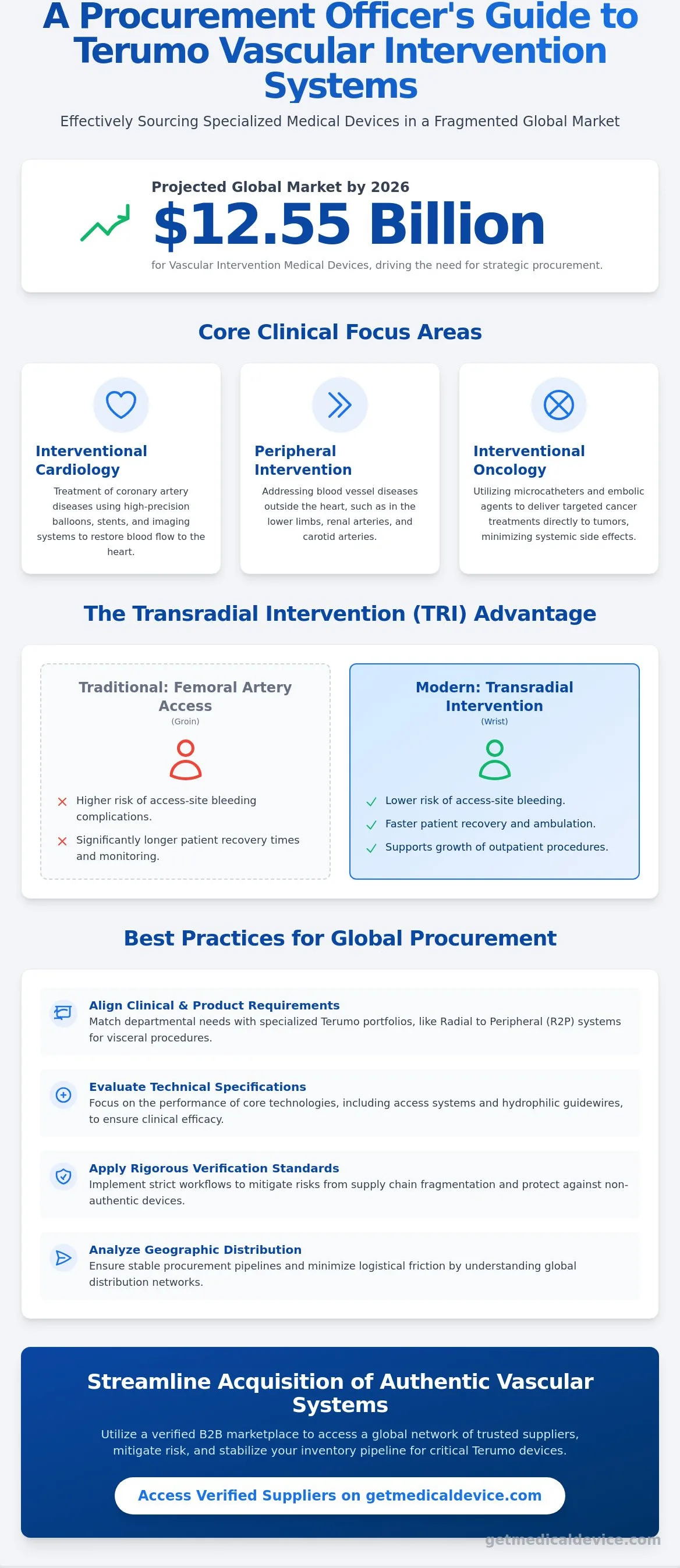
Did you know the global market for vascular intervention medical devices is projected to reach $12.55 billion in 2026? As demand scales, procurement officers face increasing pressure to secure authentic Terumo vascular intervention products within a fragmented global supply chain. You likely recognize that the difficulty isn't just finding a supplier, but verifying the integrity of specialized product lines across diverse regions. The recent 2026 Class I recall of specific Relay Pro Thoracic Stent Grafts highlights the critical need for rigorous oversight and up-to-date regulatory intelligence in your sourcing workflow.
This reference serves as a technical roadmap to help you evaluate and source Terumo vascular intervention systems effectively. We've structured this guide to facilitate the rapid identification of required SKUs while mitigating the risks associated with international medical device procurement. You'll gain a clear understanding of current product designations, such as the Breakthrough Device status for the Fenestrated TREO system, and learn how to utilize a verified marketplace to stabilize your inventory pipeline.
Key Takeaways
- Align clinical department requirements with specialized Terumo portfolios, including the Radial to Peripheral (R2P) systems designed for visceral procedures.
- Evaluate the technical specifications of core Terumo vascular intervention products, focusing on the performance of access systems and hydrophilic guidewire technology.
- Apply rigorous verification standards to international sourcing workflows to mitigate risks associated with supply chain fragmentation and non-authentic devices.
- Analyze geographic distribution networks to ensure stable procurement and minimize logistical friction across global markets.
- Utilize the GetMedicalDevice marketplace to access verified suppliers and streamline the acquisition of authentic vascular intervention systems.
Table of Contents
- The Strategic Role of Terumo Vascular Intervention Products
- Specialized Portfolios for Targeted Clinical Outcomes
- Primary Device Categories: From Access to Closure
- Best Practices for Global Procurement of Terumo Devices
- Efficient Sourcing via the GetMedicalDevice Marketplace
The Strategic Role of Terumo Vascular Intervention Products
Terumo Corporation maintains a dominant position in the global medical technology sector, specifically through its Cardiac and Vascular business segment. These specialized tools are engineered for minimally invasive endovascular procedures. They allow clinicians to treat complex cardiovascular and peripheral conditions without the trauma associated with traditional open surgery. For procurement officers, Terumo vascular intervention products represent a standardized solution for interventional radiology and cardiology departments that require high-precision instruments for delicate vascular access and therapy.
Utilizing a "start-to-finish" portfolio approach helps healthcare facilities reduce vendor fragmentation. This systematic integration simplifies the procurement cycle and ensures that every component, from the initial puncture to final vessel closure, is designed to function as a cohesive system. As the global market for vascular intervention devices is projected to reach $12.55 billion by 2026, the ability to source a comprehensive portfolio from a single, verified manufacturer provides a significant logistical advantage. It minimizes the administrative burden of managing multiple suppliers and streamlines staff training on device handling.
Core Clinical Focus Areas
The application of Terumo vascular intervention products spans three primary clinical disciplines. Each area requires specific technical parameters to achieve optimal patient outcomes:
- Interventional Cardiology: This focus involves the treatment of coronary artery diseases using high-precision balloons, stents, and imaging systems to restore blood flow to the heart.
- Peripheral Intervention: These devices address blood vessel diseases outside the heart, specifically in the lower limbs, renal arteries, and carotid arteries.
- Interventional Oncology: This emerging field utilizes specialized microcatheters and embolic agents to deliver targeted cancer treatments directly to tumors, minimizing systemic side effects.
The Transradial Intervention (TRI) Advantage
Terumo pioneered the shift toward Transradial Intervention (TRI), which utilizes the radial artery in the wrist as the primary access point rather than the femoral artery in the groin. This clinical shift is a primary driver of current procurement trends. TRI offers documented clinical benefits, including a lower risk of access-site bleeding and significantly faster patient recovery times. For hospitals, this transition supports the growth of outpatient procedures and reduces the length of stay for many patients. Consequently, procurement officers should anticipate a sustained increase in demand for radial-specific access kits, specialized catheters, and dedicated radial closure devices to support these evolving clinical protocols.
Specialized Portfolios for Targeted Clinical Outcomes
Effective procurement requires mapping Terumo vascular intervention products to the specific operational needs of hospital departments. The organizational structure of the company, as highlighted in the Forbes company profile, emphasizes clinical alignment across its Cardiac and Vascular divisions. One of the most significant developments in this area is the Radial to Peripheral (R2P) portfolio. This system is specifically engineered to allow clinicians to perform visceral and peripheral procedures through radial access, extending the safety benefits of transradial techniques to a wider range of anatomical targets. For distributors, understanding this synergy is vital for fulfilling bulk orders that require compatible access kits, long-reach catheters, and specialized closure devices.
Interventional Cardiology Systems
The cardiology portfolio focuses on the precision required for coronary artery management. Diagnostic and guiding catheters are designed with advanced polymers to provide superior torque control and trackability through complex vascular paths. Procurement officers should prioritize the acquisition of PTCA balloons and coronary guidewires that are optimized for crossing calcified lesions. Recent technological advancements include the OPUSWAVE Dual Sensor Imaging System, which received FDA 510(k) clearance in October 2025. This system integrates DualView imaging catheters to provide physicians with high-resolution data for evaluating coronary artery disease, representing a significant upgrade for modern cardiac catheterization labs.
Peripheral and Endovascular Solutions
Addressing peripheral artery disease requires tools capable of navigating tortuous anatomy in the lower limbs and carotid arteries. Terumo's peripheral portfolio includes self-expanding stents and PTA balloon dilatation catheters that maintain vessel patency under mechanical stress. In March 2026, the FDA granted Breakthrough Device Designation for the Fenestrated TREO Abdominal Stent-Graft system, a custom-made solution for complex abdominal aortic aneurysms. When sourcing these high-stakes devices, verifying the supplier's ability to provide the latest regulatory-cleared versions is essential for patient safety. You can browse verified listings to identify current peripheral inventory that meets these updated clinical standards.
Evaluating product synergy within a single procurement order reduces logistical friction and ensures that clinical teams have matched components. When Terumo vascular intervention products are sourced as a unified system, it eliminates the compatibility risks often found when mixing brands. This integrated approach supports better procedural outcomes by ensuring that guidewire coatings, catheter inner diameters, and stent delivery systems are technically harmonized. Maintaining this level of consistency is a best practice for procurement managers aiming to stabilize their medical device supply chains in 2026.
Primary Device Categories: From Access to Closure
Sourcing managers must categorize Terumo vascular intervention products according to their functional role in the procedural workflow. This methodical approach facilitates accurate inventory forecasting and ensures that clinical teams have access to necessary components for every stage of an intervention. By organizing procurement around the procedural lifecycle, distributors can better manage high-volume stock levels while maintaining the specialized items required for complex cases. This structured framework moves from the initial vessel puncture to the final hemostasis stage, providing a predictable model for supply chain management.
Access and Introducer Sheaths
Reliable vessel access is the foundation of every endovascular procedure. The Glidesheath Slender and Pinnacle introducer systems represent the core of this category. Terumo’s proprietary hydrophilic coating serves as a critical differentiator by significantly reducing friction during insertion, which enhances procedural ease and patient comfort. To optimize inventory efficiency, procurement officers should consider standardizing access kits to reduce SKU complexity within the catheterization lab. This simplification minimizes the administrative burden on staff and reduces the risk of stockouts for essential access components.
Guidewires and Delivery Systems
Guidewires are a high-turnover category where technical performance directly impacts procedural duration and success. The Glidewire system is recognized for its core-to-tip design, which ensures precise 1:1 torque transmission and trackability through tortuous anatomy. For specialized applications, including neurovascular or peripheral micro-access, micro-guide catheters are essential for navigating delicate vascular structures. When evaluating these delivery systems, a key procurement metric involves balancing wire durability against clinical performance requirements. Durable wires that maintain their lubricity throughout long procedures offer better value by reducing the need for multiple wire exchanges.
Vascular Closure and Hemostasis
The final stage of the intervention requires effective closure to prevent complications and facilitate recovery. The Angio-Seal and TR Band systems are the industry standards for femoral and radial closure, respectively. These devices are operational drivers that directly influence hospital throughput and patient discharge times. Although the unit cost of premium closure systems may be higher than manual compression, the total clinical benefit often justifies the investment. Rapid, reliable hemostasis reduces the workload for nursing staff and allows for faster bed turnover, which is a critical factor in high-volume vascular centers. Evaluating the cost-per-procedure against these broader institutional benefits is essential for making informed procurement decisions.
Best Practices for Global Procurement of Terumo Devices
Managing the acquisition of Terumo vascular intervention products requires a systematic approach to navigating global distribution networks. Each geographic region operates under specific logistical parameters that dictate lead times and availability. For instance, high-demand items like the recently cleared OPUSWAVE imaging systems or the Fenestrated TREO abdominal stent-grafts may have limited regional stock depending on current production cycles. Procurement officers must synchronize their inventory cycles with these global supply patterns to ensure clinical departments remain fully operational. This alignment is critical for avoiding the disruption of scheduled endovascular procedures.
International trade in vascular intervention equipment is governed by strict regulatory frameworks. Importers must ensure that all documentation, including Certificates of Analysis (CoA) and Certificates of Origin (CoO), matches the specific regulatory requirements of the destination country. Failure to maintain these standards can result in customs delays or the rejection of high-value shipments. Establishing a relationship with a supplier that understands these cross-border complexities is a fundamental requirement for maintaining a stable supply chain in 2026.
Verifying Supplier Authenticity and Compliance
The risk of non-authentic medical devices in the global supply chain necessitates a rigorous verification process. Procurement teams should implement a standardized checklist when evaluating B2B suppliers to ensure compliance with international safety standards. Essential documentation includes:
- ISO 13485 Certification: Verification that the supplier adheres to the comprehensive quality management system for medical devices.
- Manufacturer Authorization: Official documentation confirming the supplier's right to distribute specific Terumo product lines.
- Regulatory Alignment: Ensuring the device’s 510(k) clearance or CE mark status is valid for the intended region.
Utilizing digital platforms to identify verified suppliers with proven track records reduces the administrative burden of manual vetting. These platforms aggregate performance data, allowing buyers to select partners based on documented reliability and regulatory adherence. This transparency is vital for mitigating the risks associated with supply chain fragmentation.
Optimizing the Procurement Workflow
Efficiency in international sourcing is achieved through structured communication and order consolidation. Utilizing a formal Request for Quote (RFQ) process allows procurement managers to compare global pricing and availability in real-time. This comparison is vital for managing the costs associated with high-value interventional equipment. Implementing a credit-based RFQ system allows procurement teams to efficiently manage multiple bids from pre-qualified suppliers in a competitive environment. To further reduce overhead, organizations should consolidate orders to manage international logistics and freight costs more effectively. This strategy minimizes the frequency of customs clearances and stabilizes the delivery pipeline. You can access our medical device supplier directory to begin the RFQ process with verified global distributors.
Efficient Sourcing via the GetMedicalDevice Marketplace
GetMedicalDevice functions as a specialized intermediary for the professional procurement of high-value medical technology. It's a platform that addresses supply chain fragmentation by centralizing access to authentic Terumo vascular intervention products within a verified digital infrastructure. By acting as a knowledgeable bridge between global distributors and healthcare facilities, the marketplace ensures that procurement officers manage complex inventory requirements with clinical precision. This systematic approach is essential for maintaining the integrity of the medical device supply chain, particularly when sourcing specialized endovascular tools.
The platform's architecture is designed to prioritize efficiency and transparency in every transaction. It streamlines the identification of required medical devices by providing a structured environment where technical specifications and supplier credentials are easily accessible. This creates a sense of security for buyers who must adhere to strict institutional standards while managing high-stakes procurement cycles. It's a stable, process-driven solution for organizations that require a reliable source for their interventional radiology and cardiology needs.
Accessing Verified Terumo Suppliers
The marketplace provides a centralized directory for sourcing products from major industry leaders, including Terumo, Boston Scientific, and Abbott Vascular. This multi-brand capability allows procurement teams to evaluate various clinical options within a single interface. The verification process is a core component of the platform, designed to mitigate the risks of non-authentic devices. Every supplier undergoes a vetting procedure to confirm their adherence to international standards, such as ISO 13485. This layer of oversight is critical for identifying reliable sources for high-demand items, including Glidewires and Angio-Seal systems, which are essential for maintaining procedural throughput in high-volume clinics.
Utilizing RFQ Credits for Competitive Sourcing
The Request for Quote (RFQ) mechanism is designed to facilitate transparent and competitive bidding for large-scale hospital tenders. Buyers can submit detailed technical requirements to a global pool of verified suppliers, ensuring that all bids align with specific clinical and regulatory parameters. This process is managed through RFQ Response Credits, which allow suppliers to engage with high-intent procurement requests. Utilizing these tools enables organizations to receive multiple bids efficiently, providing the data necessary to make informed financial decisions without compromising on device quality. For distributors looking to expand their professional reach, the opportunity to Join GetMedicalDevice as a Verified Supplier provides a direct pathway to global procurement officers.
Premium product listings further simplify the workflow by providing detailed specifications and availability data. This transparency reduces the need for extensive manual inquiries and accelerates the procurement cycle. By integrating direct RFQ tools with a verified supplier network, GetMedicalDevice acts as an indispensable tool for healthcare facilities aiming to stabilize their inventory of Terumo vascular intervention products. The result is a more resilient supply chain that prioritizes accuracy, verification, and systematic efficiency.
Optimizing Your Vascular Intervention Supply Chain for 2026
Securing a reliable supply of Terumo vascular intervention products requires a methodical approach that aligns clinical requirements with rigorous verification standards. As endovascular procedures continue to evolve toward transradial access and outpatient settings, procurement officers must ensure their inventory reflects these technological shifts. Standardizing your workflow from initial access to final hemostasis reduces administrative friction and enhances procedural consistency across hospital departments. Establishing these structured processes is essential for managing the high-stakes requirements of modern interventional radiology.
The GetMedicalDevice marketplace serves as a stable infrastructure for identifying reputable partners within the global medical device trade. By utilizing our platform, you gain access to a network of global entities holding Verified Supplier status, ensuring transparency and adherence to international regulatory requirements. Whether you're sourcing from Terumo, Boston Scientific, or other leading manufacturers, our credit-based RFQ system allows for efficient, data-driven procurement. Browse Verified Terumo Suppliers on GetMedicalDevice to stabilize your inventory and minimize logistical risks. Strengthening your supply chain today ensures uninterrupted patient care and operational excellence.
Frequently Asked Questions
What are the main types of Terumo vascular intervention products?
The core categories include access systems, guidewires, catheters, and vascular closure devices. These Terumo vascular intervention products are designed to provide a systematic, start to finish solution for endovascular procedures. Specific examples include the Glidesheath Slender for access and the Glidewire system for navigating complex vascular anatomy.
How do I verify a Terumo medical device supplier?
Verification involves reviewing the supplier's ISO 13485 certification and requesting an official manufacturer authorization letter. Procurement officers should also utilize digital marketplaces that pre-vet suppliers based on their regulatory compliance and historical performance. This structured vetting process is essential for mitigating the risk of acquiring non-authentic medical equipment in the global supply chain.
What is the difference between Terumo coronary and peripheral intervention products?
Coronary products are engineered specifically for the heart's anatomy, focusing on high precision tools for treating coronary artery disease. Peripheral intervention products address vascular conditions in the limbs, renal arteries, and carotid arteries. While both categories utilize similar hydrophilic technologies, peripheral tools often require longer lengths and different torque profiles to reach distal anatomical targets.
Are Terumo Glidewires compatible with other catheter brands?
Terumo Glidewires are designed to industry standard diameters, such as 0.035 inch and 0.014 inch, making them compatible with most third party catheters. Clinicians must ensure the catheter's inner diameter is slightly larger than the wire's outer diameter to maintain the performance of the hydrophilic coating. Verifying these technical specifications before the procedure prevents friction related complications during wire advancement.
How can I find a Terumo distributor for my specific region?
The most efficient method is to use a centralized B2B marketplace that allows for geographic filtering of verified suppliers. This approach consolidates regional contact data into a single interface, reducing the time spent on fragmented searches. These platforms provide direct access to distributors who are authorized to sell Terumo vascular intervention products in specific international territories.
What is a transradial intervention (TRI) and which Terumo products are used?
Transradial intervention is a procedure where clinicians access the vascular system through the radial artery in the wrist rather than the femoral artery. Terumo is a leader in this space, providing specialized tools like the Glidesheath Slender and the TR Band for post procedural hemostasis. These products are engineered to accommodate the smaller diameter of the radial artery while maintaining high procedural success rates.
How does the RFQ process work on GetMedicalDevice for Terumo products?
The process begins with the buyer submitting a detailed request for specific SKUs and quantities to the marketplace. Verified suppliers then use RFQ response credits to submit competitive bids that include pricing and lead time information. This systematic workflow allows procurement managers to compare multiple offers and select the most reliable partner for their hospital's needs.
What are the benefits of using Terumo vascular closure devices?
These devices provide rapid, reliable hemostasis that significantly reduces the nursing workload compared to manual compression. By simplifying the closure process, hospitals can achieve faster patient ambulation and increased bed throughput. Products like the Angio-Seal and TR Band are operational drivers that improve the overall efficiency of high volume cardiac and radiology departments.