
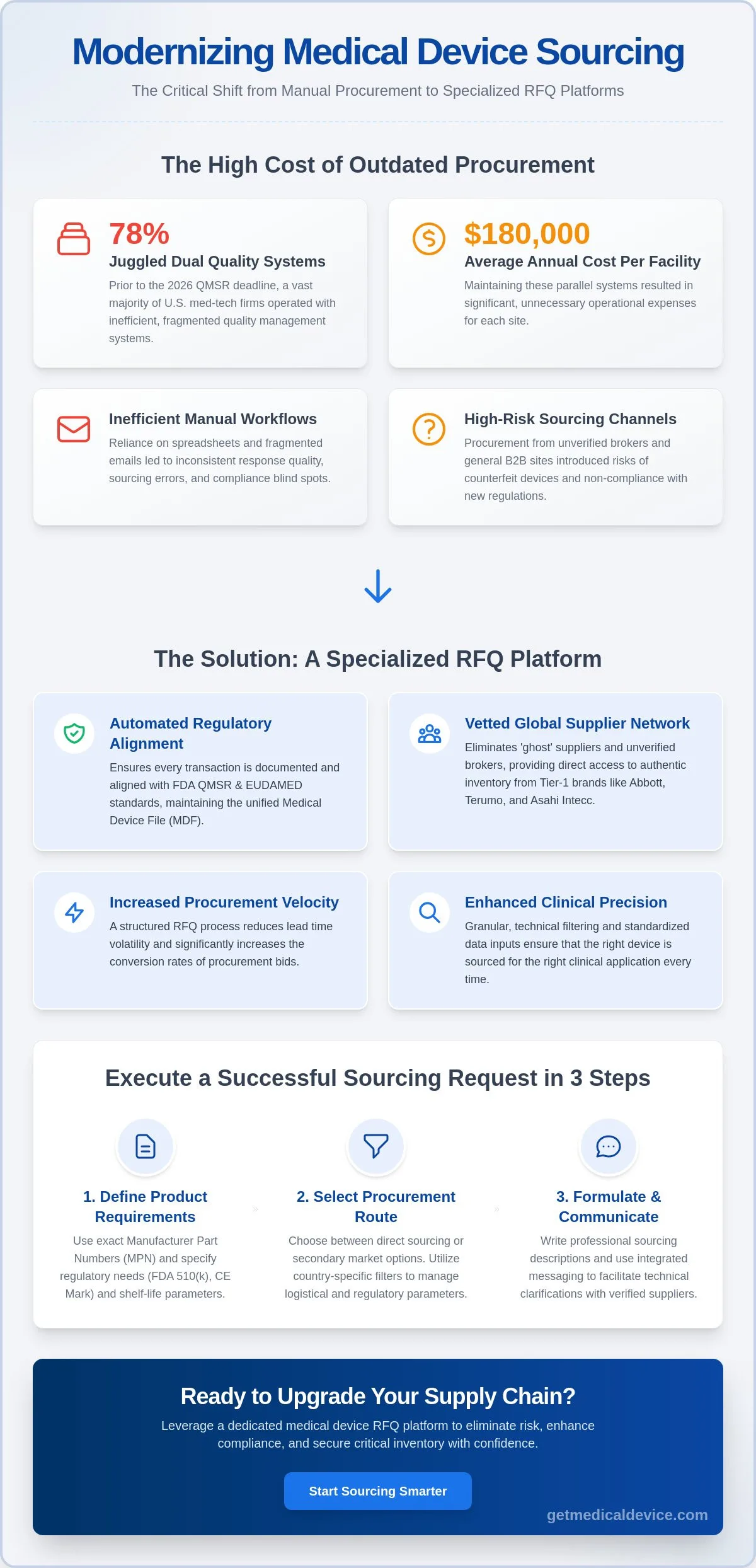
Prior to the full implementation of the FDA's Quality Management System Regulation (QMSR) on February 2, 2026, 78% of U.S. medical technology firms maintained dual quality systems at an average annual cost of up to $180,000 per facility. This regulatory fragmentation often extended into procurement, where sourcing critical components from brands like Asahi Intecc or Abbott was hindered by unverified brokers and inconsistent response quality. Utilizing a dedicated medical device RFQ platform is no longer a luxury for high-volume buyers; it's a technical necessity for maintaining a compliant and predictable supply chain.
You likely recognize that manual procurement workflows involving spreadsheets and fragmented emails cannot keep pace with the mandatory EUDAMED registration requirements that took effect in May 2026. This article provides a systematic process to master high-stakes sourcing through verified B2B platforms, ensuring every transaction aligns with the new unified Medical Device File (MDF) standards. We'll outline a repeatable workflow that leverages pre-vetted supplier networks to reduce lead time volatility and increase the conversion rates of your procurement bids.
Key Takeaways
- Transition from manual, email-based sourcing to structured digital ecosystems to enhance procurement transparency and clinical precision.
- Identify the specific technical parameters and regional procurement routes required to secure high-stakes inventory like Abbott vascular or Boston Scientific devices.
- Leverage a medical device RFQ platform to eliminate unverified broker noise and ensure all bidding activity is backed by serious intent.
- Formulate professional sourcing descriptions and utilize integrated messaging systems to facilitate technical clarification and supplier alignment.
- Access direct procurement pathways for specialized interventional brands, including Terumo and Asahi Intecc, through established global supplier networks.
Table of Contents
- The Evolution of Medical Device Procurement: Why Specialized RFQ Platforms are Essential
- How to Execute a Successful Sourcing Request on a Medical RFQ Platform
- Understanding the ROI of RFQ Response Credits and Verified Memberships
- Optimization Strategies: Ensuring High-Quality Responses to Your RFQs
- Sourcing Tier-1 Brands: The GetMedicalDevice Advantage
The Evolution of Medical Device Procurement: Why Specialized RFQ Platforms are Essential
By 2026, the medical technology sector has moved beyond the inefficiencies of manual, email-based procurement. A modern medical device RFQ platform functions as a specialized B2B ecosystem designed to handle the technical and regulatory complexities of high-stakes equipment sourcing. Unlike traditional procurement methods, these platforms provide a structured Request for Quotation (RFQ) process that integrates directly with global compliance standards. This digital shift ensures that every transaction is documented, verified, and aligned with the FDA’s Quality Management System Regulation (QMSR) that became mandatory in early 2026.
Centralized platforms facilitate cross-border trade by acting as a formal intermediary between hospital procurement departments and verified suppliers. They provide the global infrastructure necessary to manage intricate logistical parameters while mitigating the risk of non-compliant or counterfeit devices entering the clinical supply chain. By requiring specific data inputs at the point of entry, these systems ensure that the unified Medical Device File (MDF) remains intact throughout the procurement lifecycle. It's no longer sufficient to rely on unverified brokers when sourcing life-critical components; the systematic verification layer of a dedicated platform is now a baseline requirement for operational safety.
Limitations of General B2B Marketplaces
General-purpose marketplaces often lack the granular filtering mechanisms required for medical trade. They don't prioritize ISO 13485 certification or EUDAMED registration status, leading to a high noise-to-signal ratio and wasted administrative hours. Procurement teams frequently encounter 'ghost' suppliers who lack physical inventory or the ability to provide necessary documentation for sterile-packaged and temperature-sensitive devices. These platforms are inadequate for the rigorous verification demands of the current regulatory environment, often failing to distinguish between authentic medical equipment and substandard alternatives.
The Clinical Precision of Specialized Platforms
Specialized platforms maintain a categorical focus on high-complexity fields such as interventional cardiology and neurovascular surgery. They offer pre-verification of suppliers to guarantee access to authentic brand-name inventory from manufacturers like Abbott vascular, Boston Scientific, or Terumo. By utilizing standardized data inputs, these platforms allow procurement teams to conduct faster regulatory reviews without manual cross-referencing. This systematic approach ensures that clinical expertise is reflected in every sourcing request, leading to higher conversion rates on bids and predictable lead times for critical inventory like Asahi Intecc guidewires.
How to Execute a Successful Sourcing Request on a Medical RFQ Platform
Executing a request on a medical device RFQ platform requires a high degree of technical specificity to ensure clinical safety and regulatory alignment. A structured approach eliminates ambiguity and reduces the risk of sourcing incompatible or non-compliant equipment. Each input within the platform serves as a critical data point for the supplier's verification process, directly impacting the quality of the bids you receive. Following a methodical workflow allows procurement teams to move from identification to resolution with minimal friction.
Defining Your Product Requirements
Precision begins with the Manufacturer Part Number (MPN). Using exact MPNs for products from brands like Terumo or Asahi Intecc prevents substitution errors that could compromise patient outcomes. You must also specify current regulatory requirements, such as FDA 510(k) clearance or CE Mark status under the latest European Union MDR guidelines. For sterile devices, it's necessary to indicate desired shelf-life and expiration date parameters. This ensures that the inventory remains viable for clinical use upon arrival at your facility.
Selecting the Right Procurement Route
The platform allows you to choose between direct sourcing and secondary market options. Selecting the appropriate route depends on your destination country and the urgency of the requirement. Use country-specific filters to manage regional logistical hurdles and customs documentation requirements. It's essential to define clear Incoterms, such as EXW, FCA, or DAP, within the system to establish a precise transfer of risk and cost responsibilities. If your organization requires access to a global network of verified suppliers for high-stakes equipment, you can review the GetMedicalDevice platform to streamline these complex workflows.
To ensure a high conversion rate on your procurement bids, follow these five instructional steps:
- Step 1: Define technical parameters. Input the brand, exact part number, and specific sterility or packaging requirements.
- Step 2: Select procurement routes. Filter by destination country and urgency to optimize the logistical chain.
- Step 3: Set response deadlines and pricing brackets. Establish firm timelines and quantity-based pricing structures to attract competitive, high-volume bids.
- Step 4: Monitor verification status. Continuously check the credentials of responding suppliers to ensure they meet your internal compliance standards.
- Step 5: Evaluate bids through a structured framework. Compare responses based on lead times, unit price, and the completeness of regulatory documentation.
By adhering to this systematic process, procurement officers can transform a complex sourcing task into a repeatable and transparent operation. This level of organization is particularly vital when sourcing interventional cardiology or neurovascular products, where technical specifications leave no room for error.
Understanding the ROI of RFQ Response Credits and Verified Memberships
The economic logic of a medical device RFQ platform relies on a structured participation model that prioritizes quality over sheer volume. For procurement officers, a platform that utilizes RFQ Response Credits effectively filters out low-intent noise. When suppliers must allocate a finite resource to bid on a request, they only engage with opportunities where they possess the actual inventory and logistical capacity to deliver. This mechanism ensures that every response received for high-stakes items, such as Abbott vascular stents or Boston Scientific catheters, represents a verified intent to transact rather than a speculative inquiry.
For distributors and medical device suppliers, the return on investment is measured through lead quality and conversion efficiency. Premium Product Listings and verified status allow organizations to bypass the trust barriers that often stall international trade. By operating within a formal, credit-based system, suppliers can analyze their cost-per-lead with greater accuracy, focusing their resources on high-priority interventional cardiology or neurovascular requests that align with their specific stock profiles.
RFQ Credits: A Mechanism for Quality Control
A paid response model serves as a vital quality control layer. It discourages the practice of "RFQ spam," where unverified brokers send generic bids to every available listing. By managing credit allocation, suppliers are forced to conduct thorough internal reviews of their stock for brands like Terumo or Asahi Intecc before responding. This discipline benefits the buyer by providing more accurate pricing and realistic lead times. Procurement teams can track the conversion rate of these responses to finalized purchase orders, creating a data-driven feedback loop that identifies the most reliable partners in the network.
The Value of Verified Supplier Membership
Verified Supplier Membership provides a psychological and operational advantage. The "Verified" badge functions as a credential that signals adherence to industry standards, which is essential when building trust with global hospital networks. This status often grants access to restricted premium listings and ensures priority placement in search results for high-demand categories. When a procurement officer searches for specialized neurovascular catheters, verified suppliers appear at the top of the hierarchy, significantly increasing their visibility. This structured visibility is a key driver for higher conversion rates, as it connects serious buyers with the most reputable entities in the global infrastructure.
Utilizing these platform features allows both parties to move away from unstructured, high-risk interactions toward a more stable and predictable procurement cycle. The result is a streamlined workflow where clinical requirements are met with precision and administrative waste is minimized.
Optimization Strategies: Ensuring High-Quality Responses to Your RFQs
The efficacy of a medical device RFQ platform is directly proportional to the technical clarity of the initial submission. High-tier suppliers prioritize requests that demonstrate a deep understanding of clinical requirements and regulatory standards. By crafting professional descriptions that utilize industry-specific terminology, you signal that your organization is a knowledgeable and serious buyer. This approach encourages engagement from established distributors who carry specialized inventory from brands like Abbott vascular or Asahi Intecc.
It's essential to utilize the platform's integrated messaging system for technical clarifications rather than relying on external communication channels. Keeping all dialogue within the system maintains a transparent audit trail, which is vital for compliance with the unified Medical Device File (MDF) standards. You should also filter responses by supplier location and historical performance data to identify partners with a proven track record of reliable delivery. Establishing these successful initial interactions often leads to long-term supply chain partnerships that stabilize your inventory of critical interventional cardiology components.
Avoiding Common RFQ Mistakes
Inaccurate pricing often stems from providing vague quantity requirements. Suppliers cannot offer precise pricing brackets without knowing the total volume and expected delivery schedule. Another frequent error is failing to specify necessary certifications, such as ISO 13485, in the initial post. This oversight leads to a high volume of non-compliant bids that must be manually screened. Finally, setting unrealistic lead times can deter high-quality verified suppliers who prioritize accurate logistical commitments over speculative promises. To avoid these pitfalls and secure authentic equipment, you can start sourcing through a verified medical device supplier network today.
Leveraging Platform Analytics
Modern platforms provide real-time data that allows procurement officers to monitor market demand for specific devices, such as Boston Scientific stents or Terumo catheters. By analyzing these trends, you can adjust your procurement strategies based on actual supplier availability rather than historical assumptions. Utilizing historical bid data is also a powerful tool for benchmarking future costs. It allows you to identify price fluctuations and seasonal lead-time variations, ensuring that your budget remains aligned with global market realities. This systematic use of analytics transforms procurement from a reactive task into a strategic, data-driven operation.
Sourcing Tier-1 Brands: The GetMedicalDevice Advantage
The GetMedicalDevice medical device RFQ platform offers a distinct advantage by consolidating access to Tier-1 manufacturers within a single, verified ecosystem. Procurement teams can establish direct routes for Boston Scientific and Terumo products, ensuring that technical specifications are met without the intervention of unverified secondary brokers. This infrastructure is specifically designed to handle high-stakes inventory, providing the clinical precision required for interventional cardiology and neurovascular procedures. By combining a global marketplace with deep distribution expertise, the platform ensures that every transaction is backed by organizational competence and verified processes.
Accessing specialized neurovascular inventory from Asahi Intecc requires a reliable chain of custody to maintain product integrity. The platform facilitates this by connecting buyers with suppliers who possess the actual stock and the necessary regulatory credentials. Sourcing Abbott Vascular coronary stents through this verified supply chain provides the documentation required for clinical safety and internal audits. This systematic approach reduces the administrative burden on procurement officers while increasing the reliability of the global medical supply chain.
Verified Brand-Specific Sourcing
The process for requesting authentic interventional cardiology devices begins with the input of exact manufacturer part numbers. This ensures that the chain of custody for high-value surgical equipment remains transparent from the supplier to the clinical facility. Procurement professionals can access hard-to-source vascular access products globally by utilizing the platform's specialized filtering tools. These tools prioritize verified suppliers who can provide real-time evidence of stock availability and regulatory compliance, ensuring that patient care isn't compromised by logistical delays.
Scaling Your Distribution Globally
Organizations can utilize the platform's reach across 200+ countries to manage complex export and import requirements. This global infrastructure allows procurement teams to connect with verified distributors in emerging markets who adhere to international quality standards. By centralizing these interactions, the platform provides a stable environment for scaling distribution without the risks associated with unverified networks. If you're ready to optimize your sourcing workflow, you can Register as a Verified Supplier or Submit an RFQ on GetMedicalDevice today to access a secure, high-performance procurement ecosystem.
Advancing Toward Systematic Procurement Efficiency
Adopting a structured medical device RFQ platform is the most effective method for aligning procurement workflows with the 2026 regulatory environment. By mastering the systematic input of technical parameters and leveraging credit-based verification, organizations ensure that every transaction complies with the latest Medical Device File standards. This approach effectively mitigates the risks associated with unverified brokers and inconsistent lead times, allowing procurement officers to focus on clinical outcomes rather than logistical troubleshooting.
Establishing a predictable supply chain requires a global infrastructure capable of handling high-stakes interventional and vascular inventory. GetMedicalDevice facilitates this transition by providing access to 37+ verified suppliers and a network that spans 200+ countries. You can secure authentic inventory from Tier-1 brands including Abbott, Terumo, and Boston Scientific through a single, authoritative interface. It's time to replace fragmented manual processes with a stable, well-oiled machine designed for professional accuracy. Start Sourcing with a Verified Medical Device RFQ Platform today to enhance your organizational competence.
Frequently Asked Questions
What is a medical device RFQ platform?
A medical device RFQ platform is a specialized digital ecosystem designed to facilitate the structured procurement of clinical equipment through a formalized bidding process. It replaces fragmented email communication with a centralized workflow where buyers submit technical requirements and verified suppliers provide competitive quotes. This infrastructure ensures that all interactions are documented, supporting regulatory compliance and operational transparency within the global medical supply chain.
How do RFQ response credits work for suppliers?
RFQ response credits function as a quality control mechanism where suppliers utilize a finite digital currency to bid on active procurement requests. This system ensures that suppliers only engage with opportunities that align with their actual inventory and logistical capabilities. By requiring a credit for each response, the platform effectively reduces low-intent bid volume, ensuring that procurement officers receive high-quality, serious proposals from committed distributors.
Are all suppliers on the GetMedicalDevice platform verified?
Yes, the platform utilizes a rigorous verification layer to ensure that every supplier meets established industry standards for reliability and documentation. This process involves a thorough review of organizational credentials and supply chain history to mitigate the risks associated with unverified intermediaries. Maintaining this high standard of verification is essential for ensuring the authenticity of high-stakes medical devices and preserving the clinical integrity of the procurement cycle.
Can I source specific brands like Boston Scientific or Terumo directly?
You can source specific Tier-1 brands such as Boston Scientific, Terumo, and Abbott vascular directly through the platform's verified supplier network. The system allows procurement teams to filter requests by manufacturer part number to ensure exact matches for interventional cardiology or neurovascular inventory. This brand-specific sourcing capability eliminates the ambiguity often found in general marketplaces and ensures that clinical departments receive the precise components required for patient procedures.
What are the benefits of a Verified Supplier Membership?
A Verified Supplier Membership provides enhanced visibility through a "Verified" badge that signals clinical and operational reliability to global procurement officers. Members gain access to restricted premium product listings and benefit from priority placement in search results for high-demand categories like Asahi Intecc guidewires. This status is a critical tool for building long-term trust with international hospital networks and increasing conversion rates on competitive procurement bids.
How does the platform handle international shipping and logistics?
The platform facilitates international trade by providing a standardized framework for defining Incoterms and regional documentation requirements within the RFQ process. While the platform acts as a formal intermediary for sourcing and verification, it does not provide direct logistics or freight forwarding services. Buyers and suppliers must coordinate the physical movement of goods through their preferred logistical partners, using the platform's messaging system to confirm tracking and chain-of-custody documentation.
Is there a limit to the number of RFQs a buyer can submit?
There is typically no technical limit on the number of sourcing requests a buyer can submit; however, the platform is structured to prioritize high-quality, technical submissions. Each request should include precise manufacturer part numbers and regulatory requirements to ensure supplier alignment. This systematic approach ensures that the medical device RFQ platform remains an efficient tool for managing high-volume procurement without compromising the quality of supplier responses.
How do I ensure the authenticity of devices sourced through an RFQ platform?
Authenticity is ensured through the platform's pre-verification of suppliers and the mandatory inclusion of regulatory documentation in each bid. Buyers should require specific evidence of chain of custody and current ISO 13485 certification within the RFQ parameters. By sourcing from verified members who specialize in brands like Abbott or Terumo, procurement teams can verify that the inventory is authentic and compliant with the unified Medical Device File standards.
