
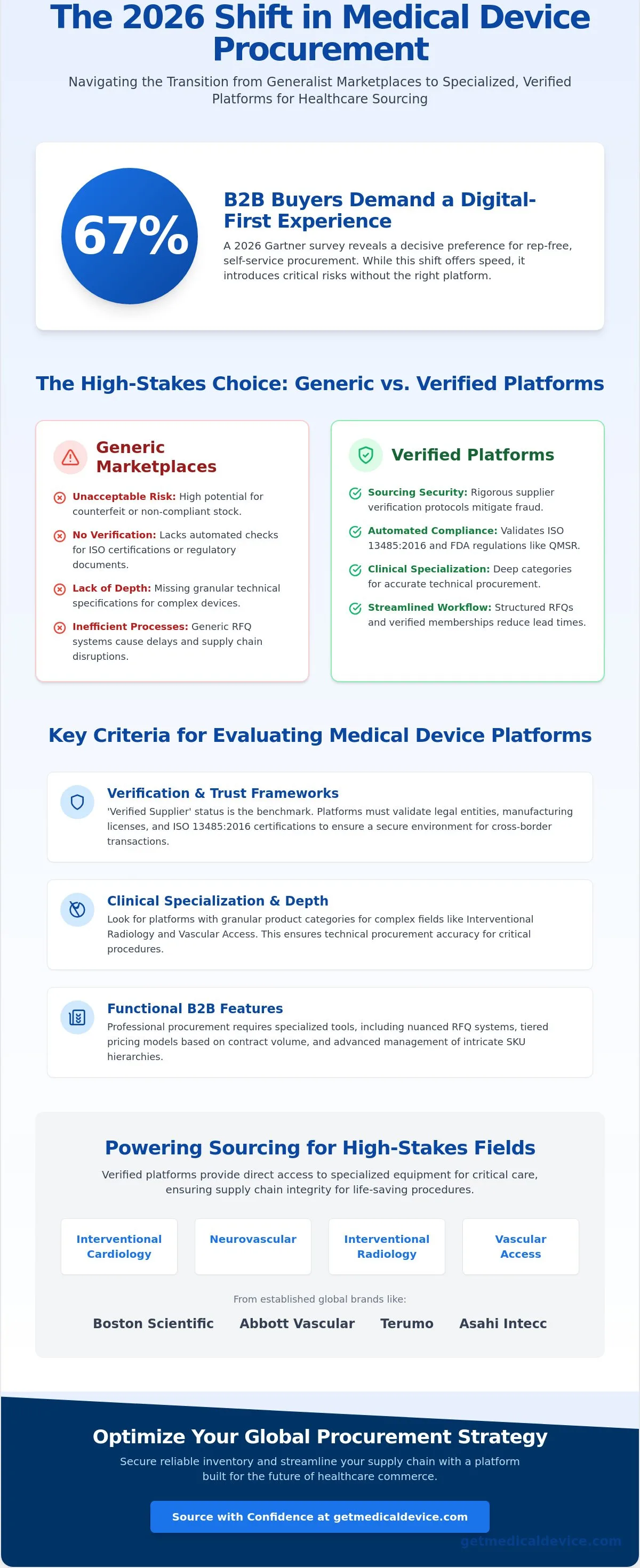
A 2026 Gartner survey found that 67% of B2B buyers now prefer a rep-free, self-service procurement experience. While the shift toward digital platforms offers speed, it also introduces significant risks regarding counterfeit or non-compliant equipment. Identifying the top medical device e-commerce sites requires looking beyond simple interfaces to prioritize platforms that offer rigorous verification protocols and clinical specialization. You've likely experienced the frustration of managing inefficient RFQ processes on generic marketplaces that lack the technical depth required for high-stakes medical sourcing.
This guide compares the leading platforms to help you optimize your global procurement and supply chain strategy. You'll learn how to identify marketplaces with verified global suppliers that streamline the acquisition of specialized interventional cardiology and neurovascular equipment from brands like Boston Scientific and Abbott Vascular. We'll examine how structured RFQ systems and compliance with the 2026 FDA Quality Management System Regulation (QMSR) are defining the next generation of healthcare commerce. This comparison provides the technical framework needed to secure reliable inventory without compromising regulatory standards.
Key Takeaways
- Identify the 2026 transition from generalist platforms to specialized digital portals that facilitate trade between verified manufacturers and healthcare providers.
- Evaluate the top medical device e-commerce sites based on their ability to provide global sourcing reach and rigorous supplier verification protocols.
- Learn to navigate specialized product categories for complex fields, including interventional radiology and vascular access, to ensure technical procurement accuracy.
- Analyze the functional differences between direct-to-manufacturer models and verified B2B marketplaces to optimize your organization's specific supply chain strategy.
- Implement structured RFQ systems and verified memberships to enhance global visibility and reduce procurement lead times for hospital teams.
Table of Contents
- The Evolution of B2B Medical Procurement in 2026
- Key Criteria for Evaluating Medical Device E-commerce Platforms
- Comparing the Top Medical Device E-commerce Sites and Marketplaces
- Strategic Sourcing: Why a Verified Marketplace is the Professional Choice
The Evolution of B2B Medical Procurement in 2026
A B2B medical device e-commerce site is a specialized digital portal designed to facilitate the trade of regulated equipment between verified manufacturers, distributors, and healthcare providers. It differs from consumer platforms by adhering to strict definitions of what constitutes a medical device, ensuring that every transaction meets clinical and legal standards. In 2026, the industry has shifted away from generalist marketplaces toward niche, high-verification platforms. Identifying the top medical device e-commerce sites is now a requirement for procurement officers who prioritize sourcing security and technical accuracy in high-stakes environments.
Drivers of Digital Transformation in Healthcare Sourcing
The primary drivers of this change include an urgent demand for transparency within the global supply chain. Procurement teams now require 24/7 access to inventory from established brands like Terumo and Asahi Intecc to prevent stockouts of life-saving equipment. The digital procurement portal serves as the primary interface for 2026 hospital supply chains. These systems replace antiquated manual processes with real-time RFQ systems that provide immediate data on availability and lead times. This efficiency is essential for reducing supply chain disruptions for critical surgical equipment.
Generic vs. Specialized Medical Marketplaces
Sourcing regulated devices on generic platforms like Alibaba presents unacceptable risks, including the potential for non-compliant or counterfeit stock. The top medical device e-commerce sites distinguish themselves by automating the verification of regulatory documentation and ISO certifications. Specialized portals, such as those focusing on interventional radiology or vascular access, provide the granular technical specifications required for complex surgical procedures. By utilizing these dedicated environments, organizations reduce the likelihood of supply chain disruptions while maintaining strict adherence to global safety standards.
Key Criteria for Evaluating Medical Device E-commerce Platforms
Selecting the top medical device e-commerce sites requires a shift in priority from user interface design to clinical reliability. Standard e-commerce metrics don't apply when procurement failure can impact patient outcomes. Reliable platforms now use automated verification systems to validate ISO 13485:2016 certifications and manufacturing credentials. Experts suggest that technology can strengthen the medical supply chain by providing real-time visibility into supplier compliance. This level of scrutiny ensures that every device listed meets the regulatory standards required for hospital use.
Verification and Trust Frameworks
A 'Verified Supplier' status is the benchmark for mitigating procurement fraud in 2026. Platforms must validate legal entities and manufacturing licenses before allowing product listings. This systematic approach ensures that distributors are authorized to sell specific equipment. By verifying these credentials, top medical device e-commerce sites provide a secure environment for cross-border transactions, effectively removing the ambiguity found on generic marketplaces.
Functional B2B Features for Professional Buyers
Professional procurement requires tools that support complex logistical workflows. Advanced platforms offer specialized categorization for fields like interventional radiology and vascular access. These portals must also manage intricate SKU hierarchies for major manufacturers. You can find detailed support for sourcing through a Boston Scientific supplier guide or an Abbott Vascular sourcing guide. These features include:
- Tiered pricing models based on contract volume.
- Nuanced RFQ systems for high-volume bidding.
- Integrated global logistics with transparent tracking.
Effective SKU management ensures that clinical teams receive the exact specifications required for their procedures. To explore a comprehensive range of verified equipment, you can browse our current medical device listings.
Comparing the Top Medical Device E-commerce Sites and Marketplaces
Procurement officers must distinguish between Direct-to-Manufacturer portals and Verified B2B Marketplaces. Direct portals offer a direct link to a single brand but limit sourcing options to a specific product line. Verified B2B marketplaces act as global sourcing hubs, aggregating multiple verified suppliers into a single interface. This distinction is critical when evaluating the top medical device e-commerce sites available in 2026. While regional distributors provide local support, global hubs offer the inventory depth required for specialized hospital departments.
Leading Platforms for Specialized Medical Sourcing
GetMedicalDevice operates as a specialized hub for interventional and surgical products. It facilitates direct access to high-demand brands like Asahi Intecc and Terumo through a structured verification system. The platform provides significant depth in critical categories such as coronary intervention and neurovascular equipment. This specialization allows for technical sourcing that general marketplaces cannot match. For a detailed analysis of these workflows, you may consult the global medical device sourcing and procurement guide.
Software Solutions for Medical Manufacturers
Manufacturers seeking to build private e-commerce infrastructure often utilize SaaS portals like Cloudfy. These solutions offer control over branding and specific customer pricing but require significant internal resources for maintenance and regulatory updates. Joining an established marketplace provides immediate access to a pre-verified buyer network. Verified Supplier Memberships on these platforms offer global visibility without the overhead of custom software development. This model is often the more efficient choice for top medical device e-commerce sites looking to scale their reach quickly.
To optimize your supply chain with verified inventory, access our medical device listings to begin the RFQ process.
Strategic Sourcing: Why a Verified Marketplace is the Professional Choice
Strategic sourcing in 2026 requires more than just finding a supplier; it necessitates a verified framework that ensures clinical precision and regulatory adherence. While private portals offer control, they often lack the discovery benefits and standardized verification protocols found on top medical device e-commerce sites. A verified marketplace acts as a central node in the global supply chain, providing a systematic way to vet international partners. This structure is essential for hospitals that cannot afford the lead times or risks associated with unverified procurement channels.
Maximizing ROI Through Verified Memberships
A Verified Supplier Membership provides a distinct competitive advantage by converting skeptical international buyers into long-term partners. This status confirms that a distributor has passed rigorous documentation checks, including manufacturing credentials and ISO compliance. For suppliers, this translates to higher visibility and trust. The implementation of RFQ Response Credits allows for targeted lead generation, ensuring that manufacturers connect with buyers specifically seeking specialized devices. It's a precise method of resource allocation that generic platforms don't provide, directly impacting the speed of the procurement cycle.
Future-Proofing Your Procurement Strategy
Adapting to the evolution of the B2B medical device marketplace is a requirement for staying competitive. Organizations must move beyond ad-hoc purchasing and adopt a systematic approach to selling medical equipment B2B. This involves integrating structured RFQ systems that offer real-time data on global inventory levels. When selecting a digital partner, hospitals and distributors should prioritize platforms that offer:
- Automated verification of regulatory filings.
- Specialized clinical categorization for complex surgical units.
- Transparent tracking for cross-border logistical workflows.
The top medical device e-commerce sites serve as a bridge between complex global entities, ensuring that every transaction meets the high-stakes requirements of the healthcare industry. Selecting a marketplace with a commitment to order and transparency is the final step in securing a resilient supply chain.
Securing a Resilient Procurement Framework for 2026
The transition toward specialized digital procurement is now an operational requirement for healthcare entities. As the industry aligns with the 2026 FDA Quality Management System Regulation, the distinction between generic marketplaces and top medical device e-commerce sites becomes a defining factor in supply chain security. Organizations that prioritize verified supplier networks and structured RFQ systems effectively mitigate the risks of non-compliance while ensuring consistent access to critical inventory.
Establishing a presence within a clinical-grade ecosystem allows distributors to bypass the logistical friction of traditional sourcing. By utilizing specialized listings for leading brands like Abbott and Terumo, you ensure your inventory reaches the professional buyers who require technical precision. Access to a global network of verified entities, supported by an RFQ credit system for precision bidding, provides the infrastructure needed to scale international operations with accuracy.
Take the final step in optimizing your distribution channel. Become a Verified Supplier on GetMedicalDevice today to integrate your offerings into a stable, global procurement hub. We look forward to facilitating your next high-value professional interaction.
Frequently Asked Questions
What are the most important features of a B2B medical device e-commerce site?
The essential features include automated verification of ISO certifications, specialized clinical categorization for surgical fields, and advanced Request for Quote (RFQ) systems. These platforms must facilitate complex SKU management and tiered contract pricing to accommodate high-volume procurement. In 2026, the integration of real-time inventory tracking and regulatory documentation handling distinguishes the top medical device e-commerce sites from generalist marketplaces that lack clinical depth.
How do medical marketplaces verify their suppliers?
Verification protocols involve a multi-stage vetting process that validates a supplier's legal entity status, manufacturing licenses, and adherence to ISO 13485:2016 standards. Professional platforms conduct thorough documentation audits to ensure every distributor is authorized to sell regulated equipment. This systematic approach effectively mitigates the risks of procurement fraud and ensures all listed products meet the safety requirements defined by global regulatory bodies.
Can I buy specialized brands like Boston Scientific or Terumo on these platforms?
Yes, specialized marketplaces facilitate the procurement of established brands such as Boston Scientific, Terumo, Asahi Intecc, and Abbott Vascular through their network of verified distributors. These platforms provide a structured interface where hospital procurement teams can issue RFQs for specific interventional and neurovascular components. This ensures clinical departments receive authentic equipment with full regulatory traceability rather than relying on unverified third-party sellers.
What is the difference between a medical e-commerce site and a healthcare procurement platform?
A medical e-commerce site acts as a transactional marketplace where multiple verified suppliers list inventory for global discovery and trade. In contrast, a healthcare procurement platform is typically an internal organizational tool used to manage pre-negotiated contracts and hospital-specific catalogs. While both systems support sourcing, e-commerce sites provide broader access to new suppliers and international inventory that's often unavailable through existing internal procurement channels.
Is it safe to source neurovascular or coronary devices from an online marketplace?
Sourcing high-risk neurovascular or coronary devices is safe provided the marketplace utilizes rigorous supplier verification and adheres to the 2026 FDA Quality Management System Regulation (QMSR). The top medical device e-commerce sites prioritize clinical safety by ensuring all listings include necessary regulatory clearances and technical documentation. By using a platform that validates manufacturing credentials, procurement officers can secure specialized interventional equipment without compromising the integrity of the medical supply chain.