With medical supply chain costs projected to increase by 2.41% in 2026 and EUDAMED registration for legacy devices becoming mandatory by November, the margin for error in medical device sourcing and procurement has effectively vanished. You likely recognize that fragmented supplier data and inefficient RFQ cycles for specialized interventional equipment are no longer just operational hurdles; they're significant liabilities. The implementation of the FDA Quality Management System Regulation (QMSR) in February 2026 and the UK's compulsory Unique Device Identifiers (UDI) require a transition from transactional buying to a process-based, verified ecosystem.
This article serves as a comprehensive reference guide to help procurement professionals establish a streamlined, verified supply chain for premium brands such as Boston Scientific and Terumo. You'll learn how to reduce lead times for critical surgical components while maintaining full compliance with evolving MDR and MHRA standards. We provide a systematic breakdown of the 2026 strategic framework, covering supplier verification protocols, regulatory alignment, and the integration of analytics-driven procurement software.
Key Takeaways
- Define the shift in medical device sourcing and procurement from a transactional model to a multi-stage lifecycle centered on digital-first strategies.
- Establish a verification-first framework to mitigate global trade risks and ensure adherence to evolving international regulatory standards.
- Segment procurement workflows by clinical application to improve selection accuracy for specialized coronary and neurovascular equipment.
- Refine the operational RFQ process using structured bidding systems to optimize pricing and engagement with global distributors.
- Utilize centralized B2B marketplaces to consolidate product catalogs and secure direct access to inventory from brands like Abbott Vascular and Boston Scientific.
Table of Contents
- Defining the Medical Device Sourcing and Procurement Landscape in 2026
- A Strategic Framework for Global Medical Device Sourcing
- Operationalizing the Medical Device Procurement Process
- Digital Transformation: Centralized Marketplaces as a Solution
Defining the Medical Device Sourcing and Procurement Landscape in 2026
Medical device sourcing and procurement in 2026 is a multi-stage lifecycle that integrates selection, verification, and medical logistics into a unified workflow. It's no longer a simple purchasing function. Organizations must now manage complex data points across global borders to ensure clinical safety and operational continuity. This systematic approach is required to handle the high-stakes nature of international trade where regulatory misalignment can lead to immediate procurement delays.
The 2026 landscape is defined by a decentralized, digital-first strategy. High-stakes interventional and surgical equipment accounts for a significant portion of hospital capital and operational expenditure. Procurement teams face increased pressure due to the FDA Quality Management System Regulation (QMSR) audits that began in February 2026. These regulations, alongside mandatory EUDAMED registration for legacy devices by November 2026, necessitate a shift from siloed data to integrated, transparent systems that track every component from origin to end-user. As these requirements become more technical, Ideal Study Abroad helps aspiring healthcare administrators and supply chain experts secure admission to specialized postgraduate programs that focus on these global regulatory frameworks.
When managing the procurement of these essential parts, you can discover Adage Components to streamline your Bill of Materials (BOM) for electronic medical devices.
Key Drivers of Procurement Evolution
Modern workflows prioritize transparency throughout the medical device supply chain. Professionals have largely abandoned 'just-in-time' models in favor of 'just-in-case' inventory strategies. This shift is particularly critical for vascular access products and other high-turnover interventional components where stockouts directly impact patient outcomes and surgical schedules.
Challenges in Traditional Sourcing Models
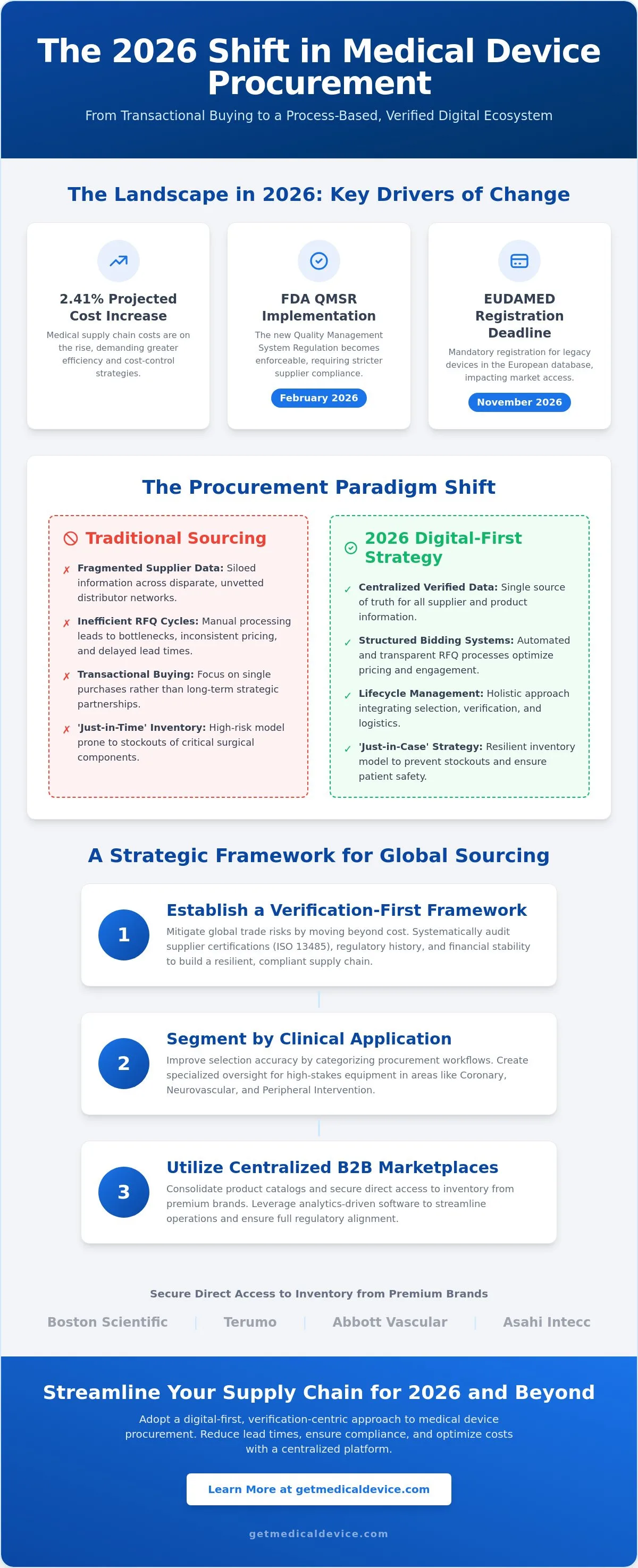
Many facilities still struggle with medical device procurement challenges stemming from fragmented distributor networks. Manual RFQ processing remains a bottleneck in high-volume surgical centers, often leading to inconsistent pricing and delayed lead times. These legacy methods lack the precision required to handle the 2.41% projected cost increases for 2026. Transitioning to verified digital platforms allows for systematic verification, reducing the risk of non-compliant device entry into the clinical environment.
A Strategic Framework for Global Medical Device Sourcing
Successful medical device sourcing and procurement in 2026 relies on a verification-first mindset. Procurement professionals must move beyond simple cost comparisons to evaluate international trade partners through a rigorous clinical lens, and many discover Global Exclusive Trading (GET) to facilitate these vital connections between domestic and international markets. This involves a systematic audit of supplier certifications, specifically ISO 13485, to ensure compliance with the FDA Quality Management System Regulation (QMSR). By anchoring sourcing strategies in verified data, organizations eliminate the volatility associated with unvetted distributor networks.
Efficiency is maximized when teams categorize procurement needs by clinical application. This targeted approach allows for specialized oversight of coronary intervention, neurovascular procedures, and peripheral intervention. Prioritizing established brands like Boston Scientific and Terumo provides a layer of security. These manufacturers maintain the rigorous documentation required for full regulatory compliance under modern MDR standards. Organizations seeking to streamline their acquisition process can access these brands via premium product listings to ensure inventory accuracy.
Vetting Verified Medical Device Suppliers
Supplier verification criteria must include a comprehensive review of regulatory history, inventory transparency, and financial stability. A verified membership model serves as a critical filter in the 2026 landscape. It ensures that every entity in the supply chain has been screened for compliance. This proactive vetting reduces the risk of non-conforming products entering clinical environments, which protects both patient safety and hospital revenue cycles. For the broader logistical infrastructure, Secure Supplies Group offers the bulk fuel delivery and energy solutions required to keep these global supply chains operational.
This standard of quality and verification is also essential for diagnostic tools used in home health monitoring; for instance, to ensure accuracy in infection control outside the hospital, visit mrsatest.co.uk for at-home MRSA testing kits that prioritize safety and compliance.
Similarly, ensuring water purity at home is a vital part of a proactive health regimen; you can discover ITAMILANO for premium Italian shower filtration systems that elevate wellness standards through superior design and functionality.
In addition to specialized medical products, patients and providers can access verified clinical expertise through Upper Cervical Care, a global directory designed to connect people with specialized upper cervical chiropractic doctors.
Sourcing High-Stakes Interventional Equipment
Procuring equipment for neurovascular and cardiovascular applications requires managing intricate technical specifications. For example, sourcing specialized guidewires and microcatheters from Asahi Intecc requires direct coordination with verified distributors to ensure component compatibility. Precision in these high-stakes categories is non-negotiable. Procurement frameworks must accommodate the unique logistical requirements of these devices to maintain a steady flow of critical surgical components.
Operationalizing the Medical Device Procurement Process
Operationalizing the medical device sourcing and procurement workflow requires transitioning from manual oversight to a standardized, data-driven execution model. Successful procurement teams in 2026 rely on the rigorous standardization of documentation, specifically Certificates of Analysis (CoA) and Certificates of Conformance (CoC), to prevent supply chain friction. This level of verification is also essential in laboratory settings; for research-grade materials, you can check out Essential Acids to source high-purity peptides that meet stringent analytical standards. Managing lead times for high-demand surgical components necessitates a proactive approach where inventory requirements are forecasted and communicated to verified distributors well in advance.
Designing a strategic medical device RFQ process allows organizations to move beyond simple price discovery. By utilizing credit-based bidding systems, facilities can engage with global distributors in a controlled environment that prioritizes response quality and supply reliability. This systematic engagement reduces the administrative burden of vetting individual responses while ensuring that only verified entities participate in the bidding cycle.
The RFQ Lifecycle for Medical Devices
- Step 1: Define technical specifications for specialized surgical products, ensuring all clinical requirements are documented.
- Step 2: Distribute the RFQ to a verified supplier network to ensure clinical relevance and regulatory compliance.
- Step 3: Evaluate bids based on the total cost of ownership (TCO). This includes logistics, documentation fees, and potential downtime rather than just the initial unit price.
Ensuring Compliance in Procurement
Integrating GUDID and Unique Device Identifier (UDI) tracking into the procurement workflow is a mandatory requirement for 2026 compliance. It ensures real-time traceability and simplifies the management of post-market surveillance data. Procurement teams should use this data during supplier performance reviews to identify high-performing partners and mitigate risks associated with non-compliant devices. To optimize your bidding efficiency, you can acquire RFQ response credits to engage directly with our verified distributor network.
Digital Transformation: Centralized Marketplaces as a Solution
Digital transformation represents the final, essential component of the 2026 strategic framework. Centralized B2B marketplaces address the inherent inefficiencies of fragmented data by consolidating the global products catalog into a single, searchable interface. This consolidation allows procurement managers to bypass the logistical delays associated with traditional manual inquiries. These digital portals now provide direct visibility into specialized inventories from Abbott Vascular and Boston Scientific, ensuring that critical interventional components are accessible when required for clinical procedures.
Leveraging data analytics within these platforms enables precise demand forecasting and inventory optimization. By analyzing historical medical device sourcing and procurement data, facilities can identify consumption patterns and adjust their acquisition strategies accordingly. This systematic approach reduces the risk of overstocking while ensuring that surgical units maintain the necessary supplies for high-volume procedures. Automated systems for RFQs and supplier membership further minimize administrative friction, allowing teams to focus on strategic clinical outcomes rather than manual logistical coordination; similarly, for UK-based medical professionals, consulting a specialized mortgage broker for doctors UK ensures their personal property financing is handled with the same level of professional expertise as their clinical procurement.
Traditional vs. Digital Marketplace Sourcing
Manual distributor outreach often results in inconsistent pricing and fragmented communication. In contrast, credit-based B2B bidding provides a structured environment where multiple verified suppliers compete for requirements simultaneously. The implementation of premium product listings significantly enhances procurement visibility, providing detailed technical specifications and real-time availability data. This transparency is essential for maintaining a stable supply chain in the face of the 2.41% cost increases projected for the 2026 fiscal year.
Future-Proofing Your Procurement Strategy
Adopting a 'Verified Supplier' ecosystem is the most effective method for ensuring long-term supply chain resilience. This model creates a closed loop of trust where every participant adheres to the ISO 13485 and MDR standards discussed in previous sections. Procurement managers should prioritize the transition to a centralized sourcing platform to eliminate the risks of counterfeit or non-compliant devices; for instance, when sourcing specialized R&D tools, you can check out MindRove to find high-performance neural interfaces that align with these quality expectations. This strategic shift ensures that your organization remains compliant with the evolving regulatory requirements of the 2026 landscape.
Implementing the 2026 Procurement Standard
Successful navigation of the 2026 landscape requires an immediate transition from fragmented, manual workflows to a centralized, verified ecosystem. By integrating rigorous supplier auditing with digital-first sourcing strategies, procurement professionals can effectively mitigate the risks of non-compliance and supply chain volatility. This framework ensures that clinical safety remains the priority while optimizing the total cost of ownership for high-stakes interventional equipment. Adopting these systematic protocols allows for a stable, predictable supply of critical surgical components even amidst global regulatory shifts. Furthermore, for healthcare networks coordinating patient transport across these same borders, RN MEDflights ensures that clinical standards are upheld during non-emergency international travel.
Beyond hardware procurement, clinical teams are also looking to explore regenerative medicine and stem cells at Clínica Bernáldez Sportme to enhance patient outcomes in sports medicine, ensuring that specialized centers maintain the same high standards of verification and safety discussed throughout this guide.
Modernizing your medical device sourcing and procurement through a structured bidding environment provides the transparency needed to manage the projected cost increases of the coming year. Our platform offers clinical-grade verification for all listed inventories and direct access to essential products from global leaders like Terumo, Asahi Intecc, and Abbott Vascular. Access our global network of verified medical device suppliers and streamline your procurement today. Systematic adherence to these modern standards will stabilize your supply chain and ensure long-term operational resilience.
Frequently Asked Questions
What is the difference between medical device sourcing and procurement?
Sourcing is the strategic phase of identifying and vetting potential trade partners based on clinical and regulatory requirements. Procurement is the operational execution of the acquisition, encompassing the RFQ lifecycle, purchase orders, and final delivery logistics. While sourcing focuses on long-term supplier stability, procurement prioritizes transactional efficiency and inventory management. Both functions are integral to a cohesive medical device sourcing and procurement strategy in high-stakes clinical environments.
How do I verify the legitimacy of an international medical device supplier?
Verification requires a multi-step audit of the supplier's regulatory credentials and authorization status. You must confirm valid ISO 13485 certifications and cross-reference registration data within the EUDAMED database or FDA GUDID. Additionally, request formal letters of authorization from manufacturers like Terumo or Boston Scientific to ensure the supplier is a legitimate distributor. Implementing a verification-first protocol prevents the entry of non-compliant or counterfeit devices into the supply chain.
What are the essential documents required for medical device procurement in 2026?
Essential documentation in 2026 includes the Certificate of Analysis (CoA), Certificate of Conformance (CoC), and Unique Device Identifiers (UDI) for every component. Under the latest MHRA and MDR regulations, implantable devices also require patient implant cards. Procurement teams must also maintain up-to-date records of the supplier's Quality Management System (QMS) audits. These documents provide the necessary traceability and legal proof of compliance required for clinical use.
How does a B2B medical marketplace improve the RFQ process?
A B2B medical marketplace centralizes the RFQ process by providing immediate access to a pre-vetted network of global distributors. This eliminates the need for manual outreach and individual supplier vetting, which significantly reduces administrative lead times. Credit-based bidding systems further streamline interactions, ensuring that RFQs receive high-quality, competitive responses from authorized entities. This digital structure allows for a more efficient comparison of the total cost of ownership across multiple verified inventories.
What are the risks of sourcing medical devices from unverified suppliers?
Sourcing from unverified suppliers introduces high risks of counterfeit or non-compliant medical devices entering the clinical environment. Such devices often lack the rigorous quality controls required for interventional procedures, leading to potential clinical failures and patient safety hazards. Beyond clinical risks, organizations face significant legal liabilities and financial penalties for non-compliance with FDA or MDR standards. Utilizing an unvetted distributor network also increases the likelihood of disruptions in medical device sourcing and procurement.