What if your current procurement strategy is still operating on 2024 standards while the FDA's Quality Management System Regulation (QMSR) and EU EUDAMED mandates have already fundamentally reshaped the global market? Procurement professionals often face inconsistent bid quality from unverified international vendors and technical hurdles when comparing specifications across Tier-1 brands like Abbott or Boston Scientific. It's a high-stakes environment where a single procedural oversight in the medical device rfq process results in extended lead times for critical surgical components. You'll learn to master the complexities of this evolving landscape to secure interventional equipment with clinical precision and cost efficiency. This guide provides a methodical framework for 2026, detailing how to reduce procurement risk through systematic verification and access to verified products. We'll examine the impact of 145% tariffs on specific components and outline a standardized approach to navigating the mandatory implementation of EUDAMED modules and updated UK medical device regulations.
Key Takeaways
- Establish a standardized framework for digital sourcing that ensures clinical and financial alignment across global markets.
- Specify critical technical requirements for brands like Boston Scientific and Terumo to eliminate compatibility errors and ensure product efficacy.
- Streamline the medical device rfq process using credit-based filtering to engage only with verified, high-intent suppliers.
- Implement a rigorous verification workflow that cross-references supplier credentials with international regulatory databases to mitigate procurement risk.
- Access a specialized marketplace designed for the procurement of interventional equipment through structured buyer and supplier memberships.
Table of Contents
- Defining the Medical Device RFQ Process in a Global Sourcing Strategy
- Technical Requirements for High-Stakes Interventional Device RFQs
- Optimizing the Digital RFQ Lifecycle and Response Credits
- Mitigating Sourcing Risks through Supplier Verification
- Executing Your Strategy with GetMedicalDevice
Defining the Medical Device RFQ Process in a Global Sourcing Strategy
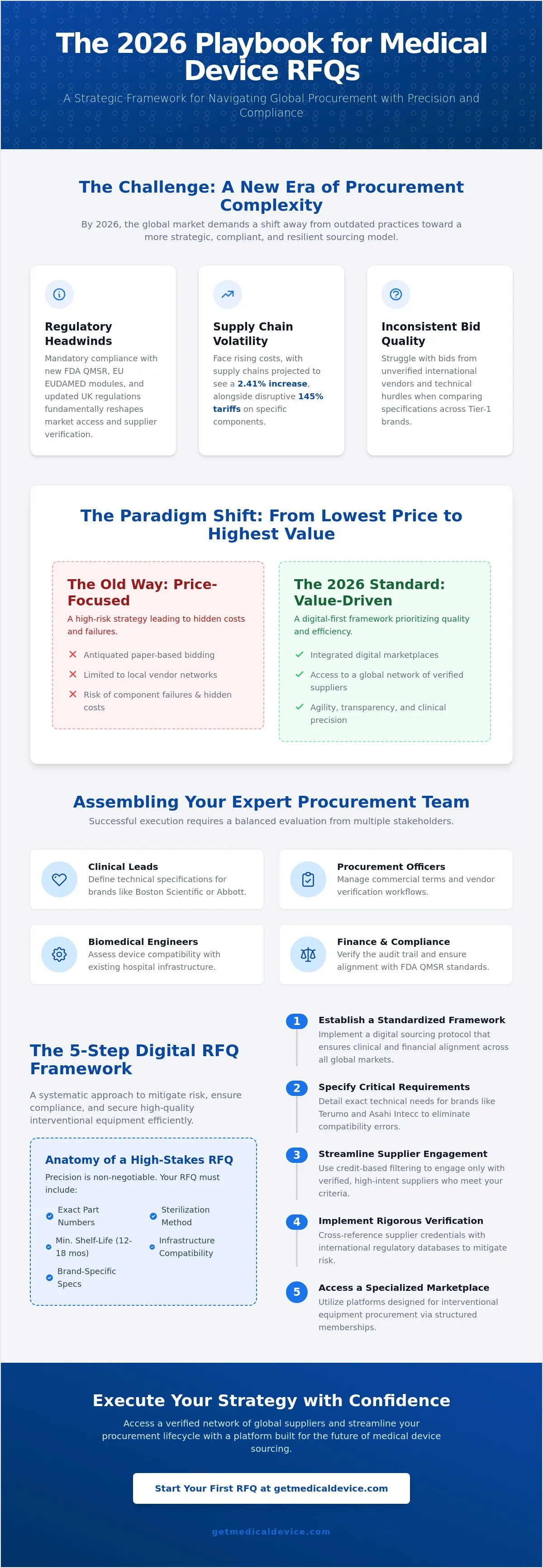
The medical device rfq process serves as a formal bridge between clinical necessity and fiscal responsibility. It's no longer just a document used to solicit pricing; it's a strategic instrument designed to align the technical requirements of interventional specialists with the budgetary constraints of healthcare systems. By 2026, the transition from antiquated paper-based bidding to integrated digital marketplaces has become the industry standard. This shift allows procurement officers to move beyond local vendor limitations and engage with a global network of verified suppliers. Within the broader Medical Equipment Management Lifecycle, the RFQ phase is the most critical point for ensuring that the acquisition of high-stakes technology meets both safety and performance benchmarks.
Successful execution of an RFQ requires the participation of multiple stakeholders to ensure a balanced evaluation. These typically include:
- Clinical Leads: Interventional cardiologists or surgeons who define the technical specifications for brands like Boston Scientific or Abbott.
- Procurement Officers: Professionals responsible for managing the commercial terms and vendor verification workflows.
- Biomedical Engineers: Technical experts who assess device compatibility with existing hospital infrastructure.
- Finance and Compliance: Teams that verify the audit trail and ensure the purchase aligns with the 2026 regulatory environment, including FDA QMSR standards.
The Evolution of Procurement in 2026
Modern procurement models have shifted from 'lowest price' to 'highest value' frameworks. With medical supply chain costs projected to rise by 2.41% in 2026, simply seeking the cheapest unit is a high-risk strategy that often leads to hidden logistical expenses or component failures. Global supply chain volatility has forced a move toward digital-first procurement. Hospital systems now prioritize agility and transparency, using digital platforms to bypass traditional bottlenecks. This evolution ensures that critical surgical components are sourced based on verified availability and technical merit rather than geographical proximity alone.
Strategic Objectives of a Structured RFQ
A structured medical device rfq process aims to eliminate ambiguity in specialized sourcing. When procuring interventional devices from Tier-1 brands like Terumo or Asahi Intecc, clinical precision is non-negotiable. The RFQ must capture granular data to reduce administrative friction and ensure that every bid is directly comparable. This standardization creates a defensible audit trail, which is essential for maintaining compliance with the mandatory EUDAMED modules and updated UK medical device regulations effective in 2026. By utilizing a systematic approach, organizations can reduce procurement risk and maintain a stable inventory of essential medical technology.
Technical Requirements for High-Stakes Interventional Device RFQs
High-stakes procurement requires a level of detail that generic templates cannot provide. When initiating the medical device rfq process for interventional equipment, the inclusion of exact manufacturer part numbers and technical parameters is mandatory. Vague descriptions lead to bid variances that compromise clinical outcomes. Buyers must define sterilization methods, such as Ethylene Oxide (EO) or Gamma radiation, and establish a minimum acceptable shelf-life, typically no less than 12 to 18 months upon delivery. Additionally, compatibility with existing imaging suites and cath lab infrastructure must be verified to prevent integration failures post-acquisition. This technical rigor ensures that the equipment fits the clinical environment without requiring costly modifications.
Mapping Brand-Specific Specifications
Precision sourcing involves specifying the exact performance characteristics of Tier-1 brands. For instance, when requesting Asahi Intecc guidewires, the RFQ should detail tip load, torque response, and radiopacity requirements. Similarly, procurement of Abbott Vascular coronary stents requires specific diameter and length parameters alongside delivery system compatibility. This granular approach aligns with the principles of value-based procurement of medical devices, ensuring that the technology selected offers the best clinical utility for the specific patient population. You can browse verified product listings to ensure your technical requirements align with current market availability from brands like Terumo and Boston Scientific.
Compliance and Quality Standards
Regulatory documentation is the cornerstone of a defensible procurement strategy. Every RFQ response must include a valid ISO 13485 certification and evidence of compliance with the 2026 regulatory landscape. As of May 28, 2026, EUDAMED modules require unified master data and UDI traceability for all devices entering the EU market. For US-bound products, adherence to the FDA's Quality Management System Regulation (QMSR), which became effective February 2, 2026, is essential. Buyers should also demand a 'Letter of Authorization' (LOA) to verify the supplier's standing within the authentic supply chain and prevent the entry of grey-market goods.
Documentation for international trade must be exhaustive to avoid logistical delays. The medical device rfq process should mandate the provision of Certificates of Free Sale (CFS), Certificates of Origin, and detailed technical data sheets. With tariffs on specific Chinese medical components reaching 145% in 2026, clear documentation of the manufacturing origin is vital for accurate cost projection and customs clearance. Standardizing these requirements at the RFQ stage allows for a more efficient comparison of bids and reduces the risk of regulatory non-compliance during the import phase.
Optimizing the Digital RFQ Lifecycle and Response Credits
Efficiency in the medical device rfq process depends on the quality of interactions rather than the volume of responses. Unlike traditional email-based sourcing, modern digital marketplaces utilize credit-based mechanisms to solve the problem of bid spam. By requiring suppliers to use RFQ Response Credits to engage with a request, the system ensures that only high-intent vendors with verified inventory participate. This logistical safeguard prioritizes supplier commitment and technical capability, which is essential when sourcing high-value interventional equipment from brands like Boston Scientific or Terumo. It's a methodical approach that transforms the procurement cycle into a focused, data-driven interaction.
Precision in the digital lifecycle also mirrors the U.S. Government's Simplified Acquisition Procedures for Health-Care, which emphasizes streamlined interactions to reduce administrative burden. Implementing a standardized 'Request for Clarification' (RFC) window is a critical step in maintaining this momentum. This window allows for technical queries regarding specific coronary stents or microcatheters without derailing the overall procurement timeline. By establishing a time-bound bidding environment, hospital systems can secure real-time inventory availability in a market where supply chain software value is projected to reach $11.35 billion by 2034, reflecting the industry's rapid digitalization.
The Mechanics of High-Intent Bidding
High-intent bidding focuses on the quality of supplier engagement. When a Verified Supplier Membership is combined with a credit-based response system, it creates a self-filtering marketplace. Suppliers only commit their credits to RFQs where they possess a competitive advantage, such as specific Abbott Vascular or Asahi Intecc components. This reduces the noise for procurement teams and allows for the analysis of supplier response patterns. Over time, this data identifies reliable partners who consistently meet technical specifications and delivery timelines, reducing the long-term risk of component shortages.
Streamlining the Decision-Making Matrix
The final stage of the digital lifecycle involves an automated scoring matrix to evaluate multi-vendor responses. A standardized medical device rfq process allows procurement software to score bids based on lead time, price, and regulatory compliance automatically. This is particularly useful for managing multi-lot procurement requests or complex shipments involving various surgical instruments. By reducing the clarification cycle through high-precision templates, organizations can move from request to contract with minimal friction. This system ensures that every decision is backed by a defensible audit trail, meeting the rigorous documentation standards required in the 2026 regulatory environment.
Mitigating Sourcing Risks through Supplier Verification
Verification serves as the primary safeguard in a professional medical device rfq process. As global supply chains face increased scrutiny and geopolitical shifts, the risk of procuring sub-standard or counterfeit interventional components has escalated. A systematic verification workflow ensures that every device, from coronary stents to complex microcatheters, meets the required clinical and regulatory benchmarks before a purchase order is issued. This methodical approach is essential for maintaining the integrity of the clinical supply chain.
Executing a rigorous five-step verification protocol is mandatory for maintaining institutional compliance:
- Step 1: Authenticate platform status. Confirm the supplier's verified credentials on a global B2B infrastructure to ensure they have undergone preliminary background checks.
- Step 2: Cross-reference regulatory filings. Validate the supplier’s standing against international databases. This includes checking the four mandatory EUDAMED modules effective May 28, 2026, and the FDA's QMSR records.
- Step 3: Technical clinical audit. Review the proposed device's clinical data and Instructions for Use (IFU) to ensure they align with the specific requirements of the interventional suite.
- Step 4: Logistics assessment. Evaluate the supplier's ability to maintain cold-chain requirements or specialized handling protocols for temperature-sensitive surgical components.
- Step 5: Formalize agreements. Execute a comprehensive Quality Agreement and Service Level Agreement (SLA) that defines liability, return policies, and performance expectations.
Identifying Red Flags in Global Sourcing
Procurement teams must remain vigilant against 'grey market' interventional cardiology devices that bypass authorized distribution channels. These products often lack the necessary 'Letter of Authorization' (LOA) and may have been stored or transported under sub-optimal conditions. Inconsistent documentation in international trade filings or discrepancies in freight data are immediate indicators of risk. Utilizing unverified, non-specialized marketplaces increases the likelihood of encountering these red flags, potentially compromising patient safety and institutional compliance. The medical device rfq process must be designed to filter out these inconsistencies at the initial bid stage.
The Value of Verified Supplier Membership
Institutional buyers can significantly reduce their administrative burden by prioritizing vendors with a Verified Supplier Membership. This status acts as a pre-vetted trust signal, indicating that the supplier's documentation and standing have already been scrutinized. It ensures a transparent line of traceability from Tier-1 manufacturers like Abbott Vascular, Terumo, or Boston Scientific directly to the point of use. By leveraging platform-based verification, healthcare systems can bypass the need for exhaustive independent audits while maintaining full compliance with the updated 2026 regulatory standards.
Executing Your Strategy with GetMedicalDevice
Standardizing the medical device rfq process requires a robust digital infrastructure capable of handling high-stakes interventional data. GetMedicalDevice serves as this centralized framework, connecting hospital systems with a global network of pre-vetted distributors. Registration as either a buyer or a verified supplier provides immediate access to a professional marketplace where technical compliance and commercial intent are synchronized. By integrating premium product listings into a hospital's digital procurement workflow, teams can move from identification to acquisition with minimal administrative friction. This environment is designed to support the 2026 regulatory landscape, ensuring that every transaction adheres to the necessary verification standards.
The platform’s RFQ response credit system is the primary mechanism for maintaining bid quality. Suppliers must commit credits to participate in a request, which naturally filters for vendors who possess the specific inventory and technical capacity required. This system eliminates the noise of unverified bids and allows procurement officers to focus on high-quality leads for products from brands like Boston Scientific, Terumo, and Abbott Vascular. It's a methodical approach that ensures every interaction within the medical device rfq process is backed by supplier accountability and verified product availability. This level of precision is essential for maintaining a stable supply of interventional cardiology and vascular components.
Strategic Advantages for Suppliers
Suppliers gain a significant competitive edge by increasing the visibility of their neurovascular and cardiovascular inventories to a global audience. The GetMedicalDevice Verified Supplier badge acts as a critical trust signal, reducing the time spent on independent institutional audits. Utilizing credits to bid on high-value international requests allows suppliers to target procurement leads that match their specific logistics and regulatory capabilities. This structured environment fosters long-term partnerships based on transparency and consistent performance, allowing specialized distributors to showcase their ability to provide authentic products from Asahi Intecc and other Tier-1 manufacturers.
Optimizing Hospital Procurement Workflows
For hospital systems, the platform simplifies the sourcing of specialized surgical equipment and interventional components. It provides a stable bridge to a global network of verified distributors, which is essential for locating rare or backordered items that may be unavailable through traditional local channels. This digital-first approach reduces the risk of clinical delays and ensures that all procurement activities remain compliant with the latest 2026 regulatory standards, including the mandatory EUDAMED modules and FDA QMSR requirements. Register on GetMedicalDevice to start your RFQ process today and secure your clinical supply chain with precision.
Optimizing Your 2026 Procurement Infrastructure
The 2026 procurement landscape demands an evolution from passive bidding to a verified, data-driven methodology. Successfully managing the medical device rfq process requires a rigorous focus on technical specifications for Tier-1 equipment and an unwavering adherence to updated regulatory standards like the FDA's QMSR. By transitioning to a digital-first strategy, organizations can eliminate the risks associated with unverified vendors and inconsistent documentation. Utilizing a structured framework ensures that clinical precision remains the priority while maintaining cost efficiency.
Access to a global network of verified distributors provides the stability needed to navigate supply chain volatility. You can now implement these strategies by leveraging a platform designed for high-stakes interventional sourcing. Streamline your medical device sourcing with GetMedicalDevice to gain immediate access to authentic products from Abbott, Boston Scientific, Terumo, and Asahi Intecc. Our Verified Supplier Membership and credit-based RFQ system ensure high-intent bidding and secure global transactions. Establishing a resilient procurement workflow today prepares your institution for the technical and regulatory challenges of the future.
Frequently Asked Questions
What is the primary difference between an RFQ and an RFP in medical device procurement?
An RFQ focuses on price and technical delivery for specific, defined products, while an RFP seeks a comprehensive solution for a broader project. In a medical device rfq process, the RFQ is used when technical specifications for items like coronary stents or balloons are already established. It prioritizes commercial terms and fulfillment speed over creative problem-solving.
How do RFQ response credits improve the quality of supplier bids?
RFQ response credits require suppliers to commit a finite resource to participate in a bid. This mechanism filters out unqualified vendors and prevents bid spam. It ensures that only suppliers with high intent and verified inventory for brands like Abbott or Terumo engage with your request. This accountability leads to more accurate and reliable pricing data.
What are the essential technical specifications to include in a vascular device RFQ?
Essential specifications include manufacturer part numbers, tip load, torque response, and radiopacity. You must also define sterilization requirements and a minimum acceptable expiry date, usually 12 to 18 months from delivery. These details prevent compatibility issues in the interventional suite and ensure the equipment meets clinical performance standards.
How does GetMedicalDevice verify the authenticity of Tier-1 brands like Boston Scientific?
Authenticity is verified through a multi-step background check and the collection of Letters of Authorization (LOA). This process links the supplier directly to the authorized distribution chain of manufacturers like Boston Scientific or Asahi Intecc. It ensures that sourced equipment is genuine and meets all clinical standards required for high-stakes procedures.
What regulatory certifications are mandatory for medical device sourcing in 2026?
Mandatory requirements include compliance with the FDA’s Quality Management System Regulation (QMSR), which took effect February 2, 2026. For the EU market, EUDAMED registration and UDI traceability became mandatory on May 28, 2026. Suppliers should also provide valid ISO 13485 certifications to prove their quality management systems meet international standards.
How can a structured RFQ process reduce procurement lead times for hospitals?
A structured process eliminates the administrative clarification cycle by providing all technical data upfront. Digital marketplaces allow for automated bid comparison and real-time inventory tracking. This efficiency reduces the time between the initial request and the final contract execution, allowing hospitals to secure critical components without unnecessary delays.
What is the role of ISO 13485 in evaluating international medical device suppliers?
ISO 13485 serves as the international standard for a quality management system specific to the medical device industry. It provides a baseline for evaluating a supplier's ability to consistently provide safe and effective products. Verification of this certification is a critical step in mitigating global sourcing risks and ensuring international trade compliance.
How do I identify a 'verified' supplier on a digital medical marketplace?
Verified suppliers are identified by a specific badge or status indicator associated with their profile. This status signifies they have a Verified Supplier Membership and have passed preliminary documentation audits. It acts as a trust signal that the vendor's regulatory filings and commercial standing have been reviewed and authenticated by the platform.