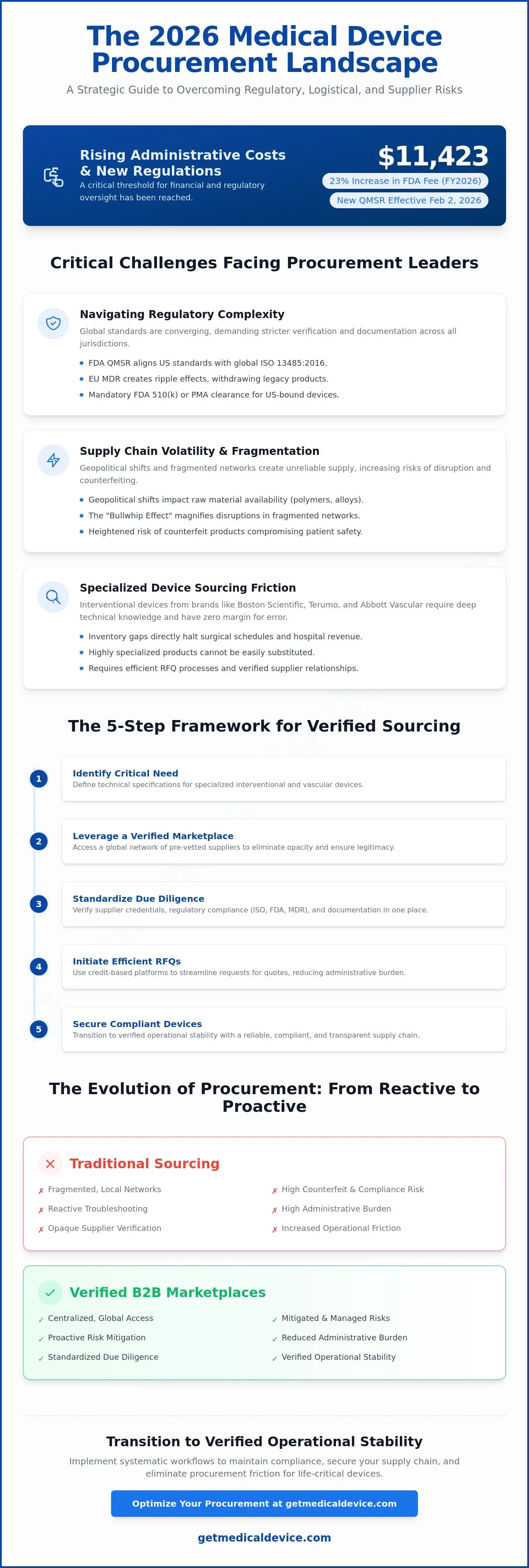
With the FDA's annual establishment registration fee rising 23% to $11,423 for FY2026, the financial cost of administrative oversight has reached a critical threshold. Procurement leaders understand that traditional sourcing methods frequently fail when confronted with the new Quality Management System Regulation (QMSR) that became effective on February 2, 2026. These medical device procurement challenges are compounded by unreliable supplier verification and the requirement for ISO 13485:2016 alignment across fragmented global networks. You likely recognize that a single documentation gap or a sudden disruption in specialized device availability can compromise entire clinical timelines.
This strategic guide provides the technical framework necessary to identify and mitigate the critical regulatory, logistical, and supplier risks currently impacting the industry. You'll learn how to establish a stable, verified supply chain while maintaining compliance across multiple jurisdictions. We'll examine the specific inputs required for efficient RFQ processes involving specialized brands such as Boston Scientific, Terumo, Asahi Intecc, and Abbott Vascular. By implementing these systematic workflows, organizations can transition from reactive troubleshooting to a state of verified operational stability.
Key Takeaways
- Analyze how geopolitical shifts impact raw material availability to secure the strategic sourcing of life-critical healthcare technology.
- Navigate the global ripple effects of EU MDR and the specific documentation requirements for FDA 510(k) clearance in US markets.
- Mitigate medical device procurement challenges by identifying the "Bullwhip Effect" and implementing safeguards against counterfeit risks in fragmented networks.
- Apply a five-step verification framework to transition from manual sourcing to efficient, credit-based RFQ platforms for interventional products.
- Leverage verified B2B marketplaces and supplier memberships to standardize due diligence and reduce administrative burdens in global procurement.
Table of Contents
- The Landscape of Medical Device Procurement Challenges in 2026
- Regulatory Compliance: Navigating Global Standards and MDR
- Supply Chain Volatility and Fragmented Supplier Networks
- Strategic Framework for Overcoming Procurement Challenges
- Optimizing Global Sourcing via Verified B2B Marketplaces
The Landscape of Medical Device Procurement Challenges in 2026
Medical device procurement is the strategic sourcing and acquisition of life-critical healthcare technology. It's no longer a simple administrative function but a core component of clinical risk management. In 2026, the macro-environment is increasingly volatile. Geopolitical shifts have restricted the availability of essential raw materials, particularly the specialized polymers and alloys required for advanced vascular components. These external pressures intensify medical device procurement challenges, forcing organizations to move away from passive purchasing toward active, data-driven risk mitigation.
The link between procurement efficiency and patient clinical outcomes is direct. When the supply chain is compromised, the availability of critical equipment fluctuates, which can delay life-saving interventions. Effective medical equipment management requires that the acquisition phase of a device's lifecycle is handled with technical precision. Organizations that fail to optimize these workflows face increased operational friction, higher costs, and potential gaps in patient care.
The Shift Toward Global B2B Sourcing
The industry's reliance on local, fragmented distributors is decreasing as global verified marketplaces become the standard. Digital transparency is now a mandatory feature of modern procurement workflows. It allows global procurement directors and clinical coordinators to verify supplier credentials before initiating a transaction. This shift toward centralized, verified platforms helps eliminate the opacity that often leads to supply chain disruptions. By using systematic verification processes, stakeholders can ensure that they're engaging with legitimate entities capable of meeting rigorous international standards.
Why Interventional Devices Require Specialized Procurement
Interventional and vascular devices face significantly higher procurement friction than general medical consumables. Sourcing specialized brands like Asahi Intecc, Terumo, or Boston Scientific requires a deep understanding of technical specifications. These products are used in neurovascular and cardiac procedures where a zero-failure requirement is the baseline. There's no room for error in the quality of a guidewire or a stent.
Inventory gaps in these specialized categories have severe consequences. A lack of specific vascular equipment disrupts surgical scheduling and immediately halts hospital revenue streams. Because these devices are highly specialized, they can't be easily swapped for generic alternatives. This necessitates a procurement strategy that prioritizes verified supplier relationships and efficient RFQ processes to maintain a consistent flow of high-stakes equipment.
Regulatory Compliance: Navigating Global Standards and MDR
Regulatory compliance acts as the primary filter in global sourcing. The tightening of the EU Medical Device Regulation (MDR) has created significant ripple effects across the industry. Manufacturers must now provide more robust clinical evidence to maintain certification, which has led to the strategic withdrawal of certain legacy products from the European market. This shift complicates medical device procurement challenges for hospitals that rely on specific interventional tools. Simultaneously, the United States market has moved toward international harmonization. As of February 2, 2026, the FDA Quality Management System Regulation (QMSR) is in full effect. This regulation replaces the previous Quality System Regulation and aligns United States requirements with the international standard ISO 13485:2016. This convergence means procurement teams must verify that every supplier adheres to a risk-based approach throughout the device lifecycle.
Sourcing non-compliant devices in highly regulated markets introduces unacceptable clinical and legal risks. Beyond the potential for patient harm, organizations face significant financial penalties and the seizure of goods by customs authorities. Compliance isn't optional. It's the technical foundation of a reliable supply chain. Procurement directors must ensure that products, especially US-bound interventional equipment, possess the necessary FDA 510(k) clearance or Premarket Approval (PMA) before finalizing any purchase agreement.
Documentation and Traceability Requirements
Every shipment must maintain a 'Golden Thread' of documentation to ensure clinical safety and legal entry. This thread includes the Certificate of Free Sale (CFS), which confirms the device is legally marketed in its country of origin. Without this document, international trade often stalls at the border. Additionally, the Unique Device Identification (UDI) system has become a critical tool for procurement tracking. It allows for precise identification during recalls or malfunctions. Organizations should prioritize verified medical device suppliers who provide transparent, immediate access to these regulatory files.
Vetting Supplier Regulatory Status
Vetting a supplier requires a clear distinction between the original equipment manufacturer (OEM) and an authorized global distributor. Procurement errors frequently occur when buyers assume a distributor holds the same certifications as the manufacturer. It's essential to verify the specific authorization letters that permit a distributor to sell brands like Abbott Vascular or Terumo in your jurisdiction. You must confirm that the supplier's registration is current and that their quality management systems meet the 2026 QMSR standards. Regulatory compliance is a non-negotiable procurement gatekeeper that dictates the legal and clinical viability of every professional transaction.
Supply Chain Volatility and Fragmented Supplier Networks
The "Bullwhip Effect" remains a primary disruptor in the 2026 medical device supply chain. This phenomenon occurs when minor fluctuations in clinical demand trigger exaggerated responses at the manufacturing level. When hospitals increase orders for vascular catheters in response to a minor shortage, manufacturers may overproduce, leading to eventual market gluts followed by sharp production cuts. These cycles exacerbate medical device procurement challenges by creating artificial scarcity and price volatility. Organizations that rely on static inventory models often fall into the trap of "Panic Buying," which ties up critical capital in excess stock and increases the risk of product expiration before clinical use.
Fragmented supplier networks further complicate this landscape. When procurement is distributed across dozens of unverified vendors, the lack of transparency leads to inflated lead times and increased administrative overhead. This opacity is particularly dangerous in the interventional radiology space, where the entry of grey market or counterfeit devices can occur. Without a centralized, verified framework, tracking the movement of high-stakes equipment becomes impossible. Systematic supplier management is the only way to replace reactive purchasing with strategic inventory control.
Mitigating the Risk of Counterfeit Devices
Procurement protocols must identify specific red flags when engaging with unverified suppliers. Inconsistent packaging, missing lot numbers, or prices that deviate significantly from market averages indicate potential grey market entry. The clinical dangers of using non-authentic guidewires or stents are severe. Substandard materials can lead to device fracture or acute thrombosis during sensitive procedures. Maintaining strict chain-of-custody documentation is a requirement for products from brands like Abbott Vascular. Every intermediary in the supply chain must provide verifiable proof of authorization to ensure the device's integrity from the factory to the sterile field.
Addressing Demand Unpredictability
Usage-based procurement strategies are replacing traditional static models to better handle demand unpredictability. Digital marketplaces offer real-time visibility into global stock levels, allowing procurement directors to see available inventory across multiple verified entities. This transparency reduces the reliance on local distributors who may be experiencing localized shortages. Using RFQ Response Credits on professional platforms enables teams to rapidly identify available inventory for brands like Terumo or Asahi Intecc. This targeted approach ensures that surgical scheduling remains uninterrupted while avoiding the financial burden of overstocking specialized equipment.
Strategic Framework for Overcoming Procurement Challenges
Mitigating medical device procurement challenges requires a transition from manual, decentralized sourcing to a structured, digital framework. Organizations must implement a five-step verification protocol for all global B2B interactions to ensure operational continuity. This protocol begins with the rigorous validation of supplier credentials and moves to the confirmation of regulatory alignment with the 2026 QMSR and ISO 13485:2016 standards. Third, procurement teams should execute a standardized Quality Agreement (QA) template that defines technical specifications and liability parameters. The fourth step involves auditing the supplier's technical capacity to fulfill specialized orders for brands like Boston Scientific. Finally, a continuous audit cycle must monitor ongoing performance and compliance metrics to prevent supply chain degradation.
A central component of this framework is the use of premium product listings to identify authorized stockists. These listings provide a verified path to high-demand equipment from Terumo and other specialized manufacturers, reducing the time spent on unverified search results. By integrating these structured steps, procurement directors can establish a stable infrastructure capable of withstanding market volatility.
Digital RFQ Management and Bid Evaluation
Digital RFQ management replaces the inefficiency of email-based sourcing with systematic data collection. You should structure every RFQ to elicit specific technical and regulatory data, including lot-specific documentation and current sterilization certificates. Transitioning to credit-based RFQ platforms increases supplier accountability. In these systems, suppliers utilize RFQ Response Credits to bid on inquiries, ensuring that only those with actual, verified inventory participate in the process. This mechanism filters out low-quality leads and focuses attention on viable transactions.
When evaluating bids, focus on the Total Cost of Ownership (TCO) rather than the initial purchase price. TCO includes the cost of regulatory verification, potential lead-time delays, and the clinical risk of device failure. A lower unit price from an unverified source often results in higher long-term costs due to customs seizures or clinical complications. You can access verified medical device suppliers to standardize this evaluation process and ensure every bid meets established quality thresholds.
Building Resilient Supplier Partnerships
Resilient procurement depends on the shift from transactional buying to strategic supplier relationship management (SRM). Verified memberships on B2B platforms serve as a foundation for this trust. These memberships signal a supplier's commitment to transparency and industry standards. When you engage with verified entities, you're more likely to secure priority allocations during periods of global shortage. This professional proximity allows for better forecasting and ensures that critical vascular and interventional equipment remains available for scheduled clinical procedures.
Optimizing Global Sourcing via Verified B2B Marketplaces
The resolution of modern medical device procurement challenges requires a shift toward centralized, digital marketplaces that prioritize technical verification. GetMedicalDevice facilitates this transition by acting as a formal intermediary between global healthcare providers and authorized distributors. Unlike traditional Group Purchasing Organizations (GPOs) that often focus on high-volume general supplies, a verified B2B marketplace provides the agility necessary to source specialized interventional and surgical equipment. This platform-driven approach allows procurement directors to bypass the limitations of local distributor networks, which are increasingly susceptible to regional shortages and logistical bottlenecks.
Accessing a global network through a verified portal ensures that hospitals can maintain a consistent supply of life-critical technology. The future of medical procurement is decentralized, verified, and digital. It's a system where data transparency and supplier accountability replace the opaque, manual workflows of the past. By utilizing these systematic tools, organizations can ensure that their acquisition processes remain resilient against the macro-economic and regulatory pressures of 2026.
The Role of Verified Supplier Memberships
Verified Supplier Memberships are the primary mechanism for reducing the administrative burden of due diligence. Every supplier on the GetMedicalDevice platform undergoes a rigorous vetting process to confirm their regulatory standing and operational capacity. This verification status increases the visibility of Premium Product Listings, which helps buyers quickly identify authorized stockists of high-end brands like Boston Scientific and Abbott Vascular. This structured environment builds technical trust between entities that may not have an established transactional history, ensuring that every shipment meets the clinical standards required for vascular and neurovascular procedures.
Leveraging RFQ Credits for Competitive Sourcing
The RFQ credit system standardizes the inquiry process to ensure maximum efficiency for both buyers and sellers. Suppliers utilize RFQ Response Credits to bid on specific inquiries, a mechanism that naturally filters for serious, capable participants. This system prevents the dilution of the procurement process by unvetted leads, as only suppliers with verified inventory and the technical capacity to fulfill the request will commit their credits. For procurement teams, this means that every response received is a viable, professional offer. To participate in this structured global ecosystem, organizations can Register as a Verified Supplier to access global medical device RFQs. This step is essential for any entity seeking to stabilize their supply chain and secure priority access to specialized medical devices in a competitive global market.
Establishing Operational Stability in the 2026 Supply Chain
Operational success requires a commitment to systematic verification and a shift toward digital transparency. By implementing a risk-based framework that aligns with 2026 QMSR standards, organizations can effectively mitigate the most persistent medical device procurement challenges. Integrating verified marketplaces and structured RFQ workflows is the only scalable way to manage supply chain volatility while maintaining clinical safety across multiple jurisdictions. It's the most effective method for securing clinical timelines and ensuring documentation is maintained throughout the device lifecycle.
Accessing a global network of authorized distributors for brands like Boston Scientific, Terumo, and Abbott Vascular provides the necessary resilience to handle sudden market disruptions. Utilizing a structured RFQ credit system ensures that you engage only with serious, capable suppliers who possess verified inventory. This methodical approach protects hospital revenue streams and prevents the risks associated with unverified sourcing. Secure your supply chain with a Verified Supplier Membership to gain immediate access to our verified global supplier network and premium product listings. Transitioning to these professional standards ensures your organization remains a stable leader in an increasingly complex global market.
Frequently Asked Questions
What are the primary challenges in medical device procurement today?
The primary medical device procurement challenges involve navigating the transition to the 2026 Quality Management System Regulation (QMSR) and managing supply chain volatility. Procurement teams must address fragmented supplier networks that often lack transparency, which leads to increased lead times and potential counterfeit risks. Additionally, the shift toward a risk-based approach requires more rigorous documentation and verification processes to ensure clinical safety and regulatory compliance across multiple global jurisdictions.
How does the EU MDR affect medical device sourcing in 2026?
The EU MDR requires manufacturers to provide extensive clinical evidence, which has resulted in the strategic withdrawal of various legacy devices from European markets. This reduces product availability and forces procurement directors to seek alternative, verified sources for critical interventional equipment. Compliance with these standards is mandatory for legal market entry, necessitating that sourcing teams verify the current certification status of every device before executing purchase agreements or long-term contracts.
What is the most effective way to verify a global medical device supplier?
The most effective verification method involves a multi-stage audit of the supplier's regulatory standing, technical capacity, and authorization status. Utilizing a verified B2B marketplace simplifies this process by providing pre-vetted supplier credentials and quality documentation. You must confirm that the supplier is an authorized distributor for specific brands. You should also ensure their quality management systems align with ISO 13485:2016 standards to maintain the integrity of the professional supply chain.
How can hospitals reduce supply chain risks for interventional cardiology products?
Hospitals can reduce risks by transitioning from static inventory models to usage-based procurement strategies that utilize real-time visibility into global stock levels. Engaging with a verified network of suppliers for specialized brands like Terumo and Boston Scientific ensures priority access to inventory during periods of artificial scarcity. This approach minimizes the financial burden of overstocking while preventing surgical delays caused by the "Bullwhip Effect" or localized distributor shortages.
Why is a verified membership important for B2B medical marketplaces?
A verified membership standardizes the due diligence process and builds technical trust between global entities that don't have established transactional histories. It signals a supplier's commitment to transparency and adherence to international regulatory standards, such as the 2026 QMSR. For buyers, this membership acts as a primary filter, ensuring that all interactions are conducted with legitimate entities capable of providing the necessary documentation and technical support for high-stakes medical equipment.
How do RFQ credits improve the medical device procurement process?
RFQ credits increase supplier accountability by requiring participants to commit a specific resource to respond to inquiries. This mechanism filters the marketplace for serious, capable suppliers who possess the actual inventory required to fulfill a request. It prevents the dilution of the procurement process by unvetted leads, allowing procurement directors to focus exclusively on viable, professional offers. This system streamlines the evaluation phase and reduces the time spent on non-productive communications.
What documentation is required for international medical device sourcing?
International sourcing requires a comprehensive "Golden Thread" of documentation, including the Certificate of Free Sale (CFS) and Unique Device Identification (UDI) data. You must also verify current ISO 13485:2016 certifications and, for United States markets, specific FDA 510(k) clearance or Premarket Approval (PMA) documentation. These records are non-negotiable for ensuring the legal entry of goods and maintaining the clinical safety standards required for interventional and vascular procedures.
Can I source brands like Boston Scientific and Abbott through B2B platforms?
You can source specialized brands like Boston Scientific, Abbott Vascular, and Asahi Intecc through verified B2B platforms that feature premium product listings. These platforms connect you with authorized global distributors who've been vetted for regulatory compliance and operational reliability. This centralized approach provides a more agile alternative to traditional local distributor networks, allowing you to identify available stock and compare technical specifications across a verified global network of professional suppliers.