Over 45% of healthcare organizations still face delayed deliveries because of fragmented supplier visibility. In a regulatory environment defined by the FDA’s Quality Management System Regulation and the Phase 2 Climate Excellence Standard, relying on manual RFQ processes introduces unacceptable operational risk. A centralized healthcare procurement platform has transitioned from a digital convenience to a critical piece of global infrastructure. It's the only way to ensure every medical device in your inventory meets the rigorous verification standards required in 2026.
You likely recognize that fragmented data and unverified suppliers are the primary bottlenecks in your current workflow. This guide demonstrates how to master the complexities of modern medical sourcing by identifying the structural features that drive procurement efficiency and supplier reliability. We'll examine the technical requirements for centralizing sourcing for major brands like Boston Scientific, Terumo, and Abbott Vascular. You'll also learn to implement automated compliance tracking and scalable RFQ management to secure your global supply chain against transparency gaps and counterfeit risks.
Key Takeaways
- Transition from manual ordering to integrated digital ecosystems to eliminate logistical friction in the post-GPO procurement landscape.
- Implement advanced spend analytics and contract lifecycle management to identify cost-saving opportunities within high-value medical device categories.
- Utilize a modern healthcare procurement platform to establish a "Verified Supplier" standard, ensuring product authenticity for specialized interventional equipment.
- Optimize the RFQ process for neurovascular and vascular devices by leveraging credit-based systems that prioritize high-quality supplier responses.
- Secure direct access to premium inventories from manufacturers such as Asahi Intecc and Terumo through integrated marketplace and distribution channels.
Table of Contents
- The Evolution of the Healthcare Procurement Platform
- Essential Capabilities of Modern Procurement Infrastructure
- Mitigating Supply Chain Risk Through Supplier Verification
- Streamlining the RFQ Workflow for Specialized Medical Equipment
- Leveraging GetMedicalDevice for Integrated Procurement Success
The Evolution of the Healthcare Procurement Platform
The modern healthcare procurement platform functions as a specialized digital ecosystem designed to replace the fragmented, manual workflows of the previous decade. By 2026, the transition from paper-based ordering to integrated digital systems is no longer optional for high-performing institutions. This shift is driven by the necessity for real-time inventory visibility and rigorous supplier audits. These platforms act as a functional bridge, connecting high-volume manufacturers with clinical end-users who require immediate access to critical medical devices. The platform isn't just a software tool; it's a verification framework that ensures every transaction aligns with the FDA’s Quality Management System Regulation (QMSR), which took effect on February 2, 2026.
From Traditional GPOs to Digital Marketplaces
Historically, hospitals relied heavily on a Group Purchasing Organization (GPO) to manage bulk procurement and secure volume discounts. While GPOs provide collective bargaining power, they often lack the granular control required for sourcing specialized medical equipment in 2026. Digital marketplaces address these limitations by enabling agile procurement strategies. This model allows supply chain managers to bypass the rigid, slow-moving structures of traditional organizations. It facilitates direct interaction with a verified medical device supplier for specific needs in interventional cardiology or neurovascular surgery. This agility is a direct response to the 12% rise in hospital procurement costs observed in 2025, allowing organizations to diversify their vendor base and mitigate the risks of single-source dependencies.
The Core Components of a 2026 Procurement Stack
A robust healthcare procurement platform in 2026 must integrate directly into clinical workflows to be effective. Inventory management modules are now expected to provide automated compliance tracking to meet the Phase 2 Climate Excellence Standard, which became effective on January 1, 2026. Centralized data is essential for multi-facility healthcare systems to maintain transparency across global supply chains and avoid the 45% delay rate caused by fragmented data in previous years. A unified stack provides a single source of truth for all procurement activities, from initial RFQ to final delivery.
Key requirements for a modern procurement stack include:
- Interoperability: Seamless data exchange with Electronic Health Records (EHR) to track device utilization and patient outcomes.
- Automated Verification: Systematic checks for supplier certifications and science-based carbon reduction targets to ensure regulatory compliance.
- Scalable RFQ Management: Tools that allow for precise bidding on premium inventories from brands like Boston Scientific, Terumo, and Abbott Vascular.
- Spend Analytics: Integrated modules that identify cost-saving opportunities by analyzing multi-facility purchasing patterns.
The platform serves as a critical intermediary. It translates the technical specifications of manufacturers like Asahi Intecc into actionable procurement data for clinical teams. This ensures that the right device reaches the right surgical suite without the delays inherent in legacy paper-based systems.
Essential Capabilities of Modern Procurement Infrastructure
A high-functioning healthcare procurement platform must operate as a sophisticated data engine rather than a simple digital catalog. With hospital procurement costs having risen by an average of 12% in 2025, organizations require infrastructure that provides immediate visibility into high-value spending. Modern systems integrate spend analytics to identify cost-saving opportunities across complex categories such as interventional cardiology and neurovascular surgery. This level of granularity allows procurement officers to aggregate demand across multi-facility systems, providing the leverage necessary to negotiate favorable terms with manufacturers like Boston Scientific and Terumo.
Strategic Sourcing and Spend Visibility
Effective sourcing requires the elimination of department-level "maverick spend," where clinicians bypass established protocols to order specialized devices independently. By centralizing all requisitions through a single portal, administrators can enforce adherence to contracted pricing and approved vendor lists. This centralization supports broader procurement strategies for system-wide interoperability, ensuring that supply chain data flows seamlessly into clinical workflows. Predictive modules within the platform also allow for demand forecasting, which is critical for managing high-turnover surgical consumables during peak procedure seasons. You can explore how to centralize these workflows by browsing premium medical product listings from industry-leading brands.
Regulatory and Compliance Automation
The regulatory landscape of 2026 demands automated verification to maintain operational continuity. The FDA’s Quality Management System Regulation (QMSR), which became effective on February 2, 2026, requires strict alignment with ISO 13485 standards. A modern healthcare procurement platform automates the collection and storage of Certificates of Conformance (CoC) and tracks Unique Device Identification (UDI) data throughout the entire lifecycle. This systematic approach reduces the risk of utilizing unverified or counterfeit devices in clinical settings.
Compliance modules should handle the following technical requirements:
- Supplier Quality Agreements: Digital management and storage of bilateral quality standards within the procurement portal.
- Emissions Tracking: Monitoring supplier progress toward a 50% reduction in Scope 1 and 2 emissions, as 71% of the sector's total emissions are currently attributed to Scope 3 supply chain activities.
- Contract Lifecycle Management (CLM): Automated alerts for contract expirations and renewal windows for major manufacturers like Abbott Vascular and Asahi Intecc.
- Digital RFQ Integration: Standardized Request for Quote systems that ensure all competitive bids meet pre-defined clinical and regulatory criteria.
The integration of digital RFQ systems allows for transparent, competitive bidding on specialized equipment. This process ensures that every quote received is backed by verified supplier data, eliminating the ambiguity often found in manual email-based negotiations. By utilizing a structured bidding environment, procurement teams can maintain a rigorous standard of supplier reliability while optimizing their total cost of ownership.
Mitigating Supply Chain Risk Through Supplier Verification
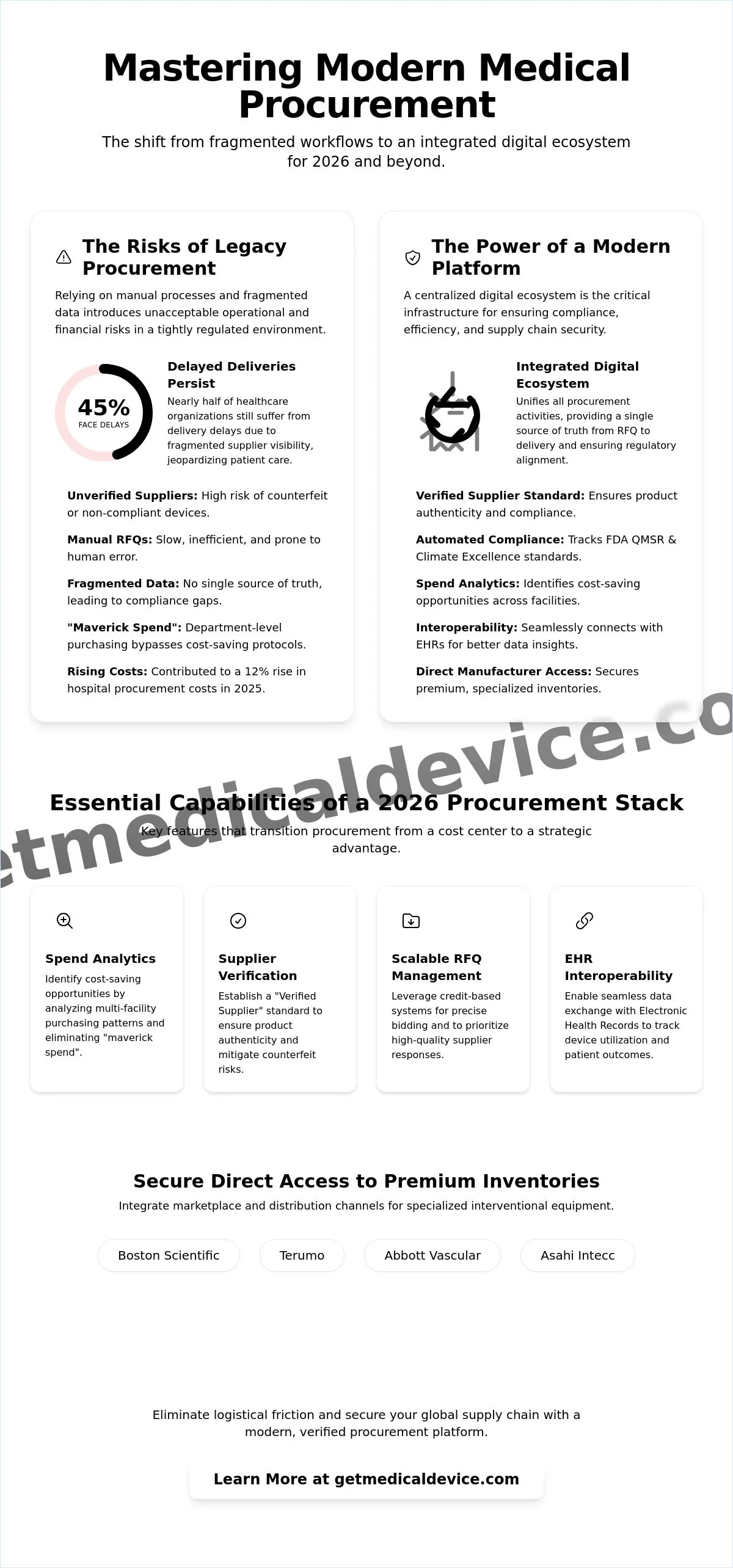
The primary challenge in modern sourcing is the maintenance of product authenticity within an increasingly complex global market. A healthcare procurement platform mitigates this risk by institutionalizing a rigorous verification framework that replaces ad-hoc vendor checks. This system ensures that high-stakes departments, such as interventional radiology and cardiology, receive only genuine components from trusted manufacturers. By centralizing third-party audits and historical performance data, the platform provides a level of due diligence that individual hospital credentialing teams cannot realistically maintain at scale. This centralized oversight is essential for navigating a landscape where over 45% of healthcare organizations still face delayed deliveries due to fragmented supplier visibility.
The Risks of Unverified Medical Supply Chains
The presence of counterfeit or unverified surgical devices represents a catastrophic failure point in clinical care. Beyond the immediate risk to patient outcomes, the legal impact of using non-compliant hardware includes significant malpractice liability and regulatory sanctions. Supply chain disruptions are frequently traced back to unreliable secondary market vendors who lack the infrastructure to guarantee delivery timelines. Verified Supplier status constitutes a rigorous regulatory and operational benchmark that serves as a mandatory prerequisite for clinical safety and supply chain integrity. Relying on unverified sources to save on short-term costs often results in long-term financial loss due to product recalls or surgical delays.
Implementing a Multi-Tiered Verification Framework
Verification is not a one-time event; it's a continuous process of monitoring and assessment. A 2026 healthcare procurement platform utilizes a multi-tiered approach to ensure supplier reliability. The initial vetting stage focuses on financial stability and regulatory standing, specifically checking for alignment with the FDA’s Quality Management System Regulation (QMSR) that took effect on February 2, 2026. Once a supplier is onboarded, the system tracks delivery performance and product quality metrics in real time.
Key components of this framework include:
- Regulatory Validation: Systematic confirmation of ISO 13485 certifications and current FDA registration status.
- Historical Performance Data: Analysis of previous fulfillment rates and product return frequencies to identify potential reliability gaps.
- Third-Party Audits: Integration of independent audit reports to verify manufacturing standards and ethical sourcing practices.
- Clinical Alignment: Ensuring that verified medical device suppliers provide the exact technical specifications required for complex procedures.
This systematic approach reduces the administrative burden on internal hospital teams, allowing them to focus on clinical outcomes rather than vendor documentation. By automating the verification of suppliers for brands like Abbott Vascular and Terumo, the platform ensures that the supply chain remains a stable asset rather than a source of operational risk. It creates a secure environment where procurement officers can confidently source from global entities like Asahi Intecc without compromising on quality or compliance.
Streamlining the RFQ Workflow for Specialized Medical Equipment
High-precision Request for Quote (RFQ) processes for vascular or neurovascular devices require technical parameters that go beyond simple unit pricing. In these specialized fields, a healthcare procurement platform must facilitate the exchange of complex data sets, including device dimensions, material biocompatibility, and specific clinical indications. Transitioning from manual, email-based bidding to a structured digital workflow reduces the tender-to-delivery cycle by eliminating administrative bottlenecks. This systematic approach ensures that surgical teams receive the exact instruments required for complex procedures without the delays associated with legacy procurement methods.
Structuring RFQs for Surgical Precision
The procurement of guidewires, catheters, and stents necessitates a level of detail that standard hospital supply systems often fail to capture. To maintain surgical standards, procurement officers must define critical parameters such as tip flexibility, torque response, and coating integrity within the RFQ. Utilizing standardized platform templates allows organizations to maintain consistency across multi-item bids for complex surgical kits. These templates ensure that all potential suppliers provide data in a uniform format, which is essential for accurate comparison. When sourcing from major manufacturers like Asahi Intecc or Terumo, having pre-defined technical requirements prevents the acquisition of sub-optimal hardware that could compromise patient outcomes.
Optimizing Bid Evaluation and Supplier Selection
Evaluating responses for specialized medical equipment requires a weighted scoring model that prioritizes technical specifications and supplier reliability over cost alone. While pricing remains a factor, the clinical performance of a neurovascular stent or a coronary balloon often outweighs marginal savings. A sophisticated healthcare procurement platform utilizes a credit-based response system to maintain the quality of the bidding pool. By requiring suppliers to use RFQ response credits to submit bids, the platform effectively filters for serious, capable vendors who have the inventory and regulatory standing to fulfill high-value orders.
The evaluation process should follow a linear progression toward fulfillment:
- Technical Validation: Systematic review of device specifications against clinical requirements.
- Compliance Verification: Automated checks for current FDA certifications and ISO 13485 alignment.
- Performance Scoring: Assessment of the supplier’s historical delivery accuracy and lead times.
- PO Generation: Seamless transition from an accepted bid to a formal purchase order (PO) within the centralized portal.
Digital collaboration tools within the portal allow for real-time clarification of technical queries between the hospital and the supplier. This transparency is vital when managing inventories from brands like Boston Scientific or Abbott Vascular, where specific product iterations may have distinct clinical applications. By centralizing these interactions, procurement teams create a documented audit trail that supports both financial accountability and clinical safety standards.
Leveraging GetMedicalDevice for Integrated Procurement Success
GetMedicalDevice operates as a specialized healthcare procurement platform that integrates a global marketplace with direct distribution capabilities. Unlike generic software solutions that lack specific inventory access, this portal provides a structured environment for sourcing high-precision interventional hardware. By centralizing the procurement lifecycle, organizations reduce the friction inherent in managing multiple vendor relationships and unverified secondary markets. This integration ensures that clinical requirements for specialized devices are met with systemic accuracy and logistical efficiency. The platform functions as a stable infrastructure where technical data and commercial transactions converge to support high-stakes medical environments.
Direct Access to Leading Interventional Brands
Sourcing specialized equipment requires a direct connection to established manufacturers to prevent the introduction of unverified components into the clinical setting. Through the portal, procurement teams can identify a verified Boston Scientific medical device supplier to secure authentic inventory for interventional cardiology procedures. The platform also facilitates the navigation of complex product portfolios from Terumo and Abbott Vascular within a single, unified interface. This capability ensures that specific iterations of stents, catheters, or guidewires are available to meet precise surgical requirements.
Maintaining supply chain continuity for critical surgical equipment is a primary objective for modern hospital systems. By consolidating premium inventories from brands like Asahi Intecc into one portal, the platform eliminates the need for fragmented searches across disparate manufacturer websites. This centralized access allows procurement officers to monitor stock levels and lead times with clinical precision, reducing the risk of procedural delays. The system is designed to handle the intricate specifications of vascular and neurovascular devices, ensuring that the transition from sourcing to delivery is managed through a documented, verified workflow.
The Strategic Advantage of Supplier Membership
For global distributors and manufacturers, the Verified Supplier Membership provides a standardized credential that enhances visibility within the B2B medical trade ecosystem. This status serves as a professional benchmark, signaling to hospital procurement officers that the entity meets rigorous regulatory and operational standards. Suppliers utilize RFQ Response Credits to engage with high-value procurement requests, ensuring that their bids reach organizations with active, verified requirements. This credit-based system maintains a high-quality marketplace by prioritizing capable entities that possess the necessary inventory and compliance documentation.
The future of B2B medical trade relies on a unified, global infrastructure that can handle the complexities of cross-border procurement. GetMedicalDevice provides this framework by offering a secure environment for high-value professional interactions. Key advantages of this integrated model include:
- Enhanced Visibility: Verified status increases the profile of distributors among major healthcare systems.
- Targeted Bidding: RFQ credits allow suppliers to focus resources on the most relevant procurement opportunities.
- Standardized Documentation: A unified portal ensures all product listings and bids adhere to industry-specific data requirements.
- Global Reach: The infrastructure supports scalable expansion into new markets while maintaining strict verification standards.
By leveraging this specialized healthcare procurement platform, both buyers and suppliers benefit from a more transparent and efficient trade process. It provides the technical and logistical tools necessary to navigate the regulatory requirements of 2026 while ensuring that clinical end-users have reliable access to the world's leading medical device brands.
Optimizing Your 2026 Procurement Infrastructure
Transitioning to a digital-first model is essential for navigating the rising costs and delivery delays currently affecting the industry. A centralized healthcare procurement platform ensures that every medical device in your inventory meets the rigorous standards of the FDA’s Quality Management System Regulation. By institutionalizing supplier verification and streamlining the RFQ process for specialized interventional hardware, organizations can effectively eliminate the risks associated with unverified secondary markets. This systematic approach provides the transparency needed to manage global supply chains with absolute certainty.
Maintaining supply chain integrity requires a stable infrastructure that connects clinical requirements with verified global inventories. GetMedicalDevice provides this bridge, offering direct access to authentic products from major manufacturers like Boston Scientific and Terumo. Our credit-based RFQ system ensures high-quality supplier engagement, while our global distribution network supports the consistent delivery of critical surgical equipment. Access the Verified Medical Device Marketplace to secure your facility's operational future with clinical precision. Implementing these structural changes will empower your team to achieve long-term efficiency and reliability in a complex global market.
Frequently Asked Questions
What is a healthcare procurement platform and how does it differ from a GPO?
A healthcare procurement platform is a digital infrastructure designed for direct sourcing and supplier verification, whereas a Group Purchasing Organization (GPO) focuses primarily on collective bargaining and volume discounts. Platforms provide granular control over specialized device sourcing and real-time inventory visibility that traditional GPOs often lack. They act as a functional bridge for direct transactions between manufacturers like Abbott Vascular and clinical end-users, ensuring a more agile supply chain.
How does a digital procurement platform ensure the authenticity of medical devices?
The system ensures authenticity through a "Verified Supplier" standard that requires mandatory audits and historical performance tracking. By institutionalizing a multi-tiered verification framework, the platform filters out unverified secondary market vendors. This systematic process is essential for meeting the FDA’s Quality Management System Regulation (QMSR) standards that took effect on February 2, 2026, reducing the risk of counterfeit hardware in surgical suites.
Can a healthcare procurement platform integrate with existing hospital ERP systems?
Modern platforms are designed for interoperability with existing hospital ERP and Electronic Health Record (EHR) systems. This integration ensures that procurement data flows into clinical workflows for accurate device tracking and utilization analysis. Centralizing these data streams helps mitigate the 45% delay rate caused by fragmented information across multi-facility healthcare networks, providing a single source of truth for all supply chain activities.
What are the benefits of using a credit-based RFQ system for medical sourcing?
A credit-based RFQ system ensures high-quality supplier bids by requiring vendors to use response credits for each submission. This mechanism filters for serious, capable suppliers who possess the inventory and regulatory standing to fulfill high-value orders. It effectively eliminates low-quality noise, allowing procurement officers to focus on technically superior responses from established brands like Terumo or Asahi Intecc.
How do platforms verify the regulatory compliance of international medical suppliers?
Platforms verify international compliance through automated tracking of ISO 13485 certifications and current FDA registration status. The system also monitors adherence to the Climate Excellence Standard, which requires suppliers to demonstrate progress toward specific emission reductions as of January 1, 2026. This systematic oversight reduces the administrative burden on internal hospital credentialing teams by providing a documented audit trail for every global vendor.
What specific features should a platform have for sourcing interventional cardiology devices?
Sourcing for interventional cardiology requires high-precision RFQ templates that define critical parameters like tip flexibility, torque response, and material biocompatibility. The healthcare procurement platform must offer direct access to premium product listings from specialized manufacturers such as Boston Scientific. These features ensure that surgical teams receive the exact instruments required for complex vascular procedures without the technical ambiguity found in manual systems.
How does digital procurement impact the total cost of ownership (TCO) for medical equipment?
Digital procurement reduces the total cost of ownership by identifying cost-saving opportunities through spend analytics and eliminating department-level "maverick spend." While hospital procurement costs rose by an average of 12% in 2025, centralized platforms mitigate these increases by optimizing contract lifecycle management. This leads to better long-term value by aligning clinical outcomes with systematic procurement efficiency and reduced administrative overhead.
Is a healthcare procurement platform suitable for small clinics as well as large hospital networks?
The platform is scalable and serves both small clinics and large hospital networks with equal efficiency. Smaller organizations gain access to premium inventories from brands like Abbott Vascular that might otherwise be difficult to source through traditional channels. Larger networks benefit from centralized data management across multiple facilities, ensuring transparency and consistency in global supply chain operations regardless of the organization's size.