

While the global cardiovascular devices market is projected to reach $89.86 billion in 2026, many procurement teams still rely on fragmented, opaque supplier networks that invite counterfeit risk. Managing cardiology device bulk purchasing requires more than just finding the lowest price; it demands a rigorous verification of supply chain integrity. You're likely facing increased pressure from the 2026 FDA Quality Management System Regulation (QMSR) and mandatory EUDAMED registration modules. We recognize that inefficient RFQ processes and fragmented data lead to costly procurement delays.
This guide provides a framework to master these complexities, ensuring you secure authentic inventory from brands like Abbott and Terumo while reducing administrative overhead. We'll detail how to verify global suppliers, optimize RFQ workflows, and navigate the shifting regulatory landscape to protect your clinical outcomes and procedural margins. By implementing a centralized B2B marketplace strategy, you can bypass traditional sourcing bottlenecks and maintain a stable, compliant inventory of interventional and vascular devices.
Key Takeaways
- Adopt digital-first procurement models to enhance supply chain resilience and manage the transition toward high-volume interventional cardiology inventory.
- Optimize your cardiology device bulk purchasing by segmenting high-turnover categories like guidewires, balloons, and stents to secure more favorable contract terms.
- Utilize a 5-point verification checklist and RFQ performance metrics to rigorously evaluate wholesale suppliers and mitigate global B2B market risks.
- Leverage verified B2B marketplaces and premium product listings to identify ready-to-ship inventory from global brands, reducing administrative overhead and procurement delays.
Table of Contents
- The Landscape of Cardiology Device Bulk Purchasing in 2026
- Essential Inventory Categories for High-Volume Cardiology
- Strategic Evaluation of Wholesale Medical Device Suppliers
- Streamlining Procurement via Verified B2B Marketplaces
The Landscape of Cardiology Device Bulk Purchasing in 2026
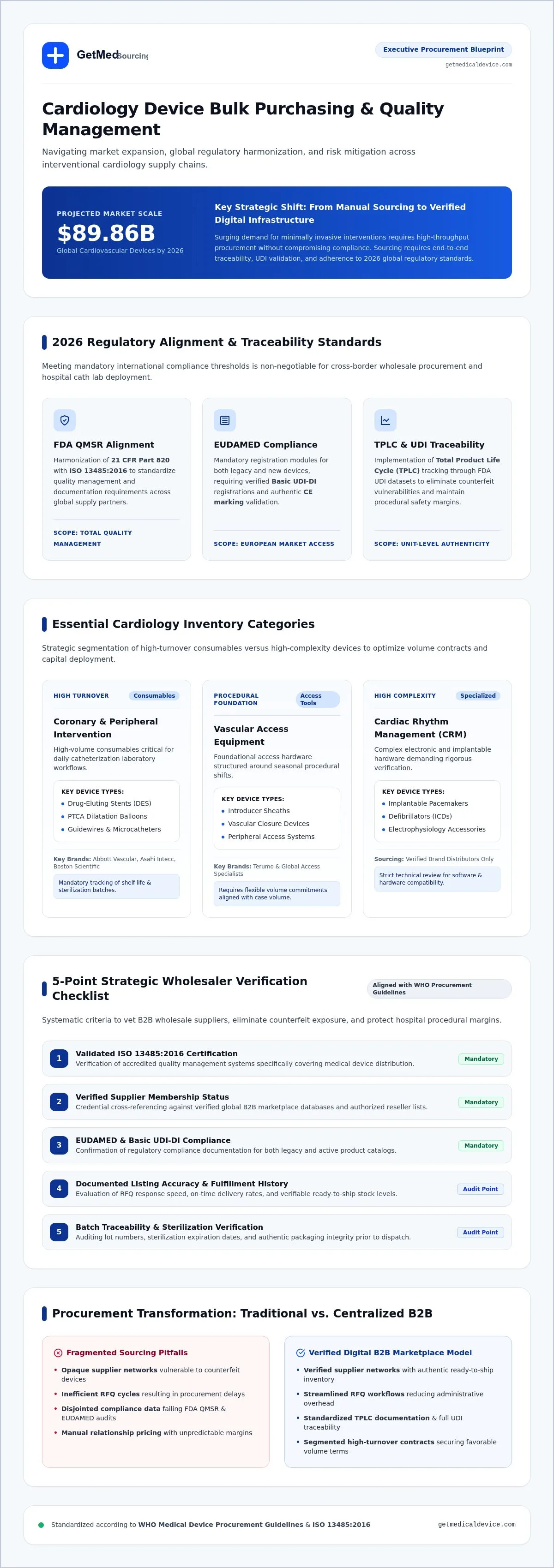
The procurement of interventional cardiology devices has transitioned from manual, relationship-based sourcing to a structured, digital-first infrastructure. This shift is driven by the necessity for real-time inventory visibility and documented supply chain resilience. In 2026, cardiology device bulk purchasing requires a systematic approach to traceability. It's no longer sufficient to secure high volumes; every unit must be verified through Unique Device Identifier (UDI) data to meet FDA QMSR and EUDAMED standards. Verified intermediaries serve as a critical barrier against counterfeit inventory, ensuring that high-volume contracts don't compromise clinical safety or regulatory compliance.
Market Drivers for Interventional Cardiology Equipment
The rising demand for minimally invasive procedures continues to accelerate, directly increasing the throughput requirements for coronary intervention products like stents and catheters. Regulatory harmonization, specifically the alignment of 21 CFR Part 820 with ISO 13485:2016, has standardized the documentation required for cross-border trade. This allows for more efficient bulk procurement across global markets. Procurement teams now prioritize suppliers who can demonstrate total product life cycle (TPLC) traceability, as hospital margins depend on the seamless integration of these high-turnover consumables.
Risk Mitigation in Global Procurement
Procurement officers must identify specific red flags when evaluating unverified B2B medical marketplaces. The absence of Basic UDI-DI registrations or inconsistent CE marking documentation indicates significant regulatory risk. Effective risk mitigation involves:
- Verification of ISO 13485:2016 certification for all wholesale partners.
- Confirmation of EUDAMED module compliance for legacy and new devices.
- Cross-referencing supplier credentials against verified membership databases.
Securing inventory from brands like Abbott and Terumo requires a framework that prioritizes structured documentation over simple volume discounts. This systematic approach to cardiology device bulk purchasing ensures that all acquisitions meet the necessary legal and clinical thresholds for immediate hospital deployment.
Essential Inventory Categories for High-Volume Cardiology
Effective cardiology device bulk purchasing requires categorizing inventory by clinical application. This ensures that high-turnover consumables remain in stock without overextending capital. Procurement teams must distinguish between Abbott Vascular coronary stents and peripheral systems to optimize volume contracts. Every item must be cross-referenced with the FDA Unique Device Identification system to guarantee authenticity and traceability.
Coronary and Peripheral Intervention Equipment
Standardizing your supply of guidewires and microcatheters from Asahi Intecc or Boston Scientific streamlines cath lab workflows. Bulk orders for drug-eluting stents (DES) and PTCA balloons require precise documentation of shelf-life and sterilization batches. For broader procedural needs, you can Explore Interventional Radiology Categories. Managing these high-volume categories requires a data-driven approach to vendor performance. This ensures that cardiology device bulk purchasing strategies align with clinical demand and regulatory mandates.
Vascular Access and Cardiac Rhythm Management
Vascular access is the foundation of interventional procedures. Bulk requirements for introducer sheaths and vascular closure devices from Terumo must reflect seasonal procedural shifts. In contrast, Cardiac Rhythm Management (CRM) devices like pacemakers and ICDs involve more complex technical parameters than neurovascular tools. These items require sourcing through verified brand distributors to ensure software and hardware compatibility. You can browse our verified product listings to identify ready-to-ship stock for these critical categories. Detailed technical specifications for CRM devices are non-negotiable for patient safety.
Strategic Evaluation of Wholesale Medical Device Suppliers
Evaluating wholesale partners requires a rigorous screening process to protect clinical workflows. Adhering to WHO medical device procurement guidelines ensures that your selection criteria account for total cost of ownership and quality assurance. A 5-point checklist for verifying B2B wholesalers includes:
- Validated ISO certifications for medical device distribution.
- Verified Supplier Membership status on global marketplaces.
- Documented history of premium listing accuracy and fulfillment.
- Transparent batch tracking and sterilization record availability.
- Proof of brand-authorized distribution channels for labels like Boston Scientific and Asahi Intecc.
The Verification Framework
Verified Status acts as a critical trust signal in international trade, confirming that a supplier has undergone third-party credentialing. Transparency in product documentation is non-negotiable for high-risk cardiology implants. For a deeper analysis of these standards, review our Global Medical Device Sourcing and Procurement Framework. This systematic approach reduces the risk of sub-standard inventory entering your facility and ensures that your supply chain remains resilient against market volatility.
Optimizing the RFQ Process for Cardiology
Successful cardiology device bulk purchasing depends on the precision of your Request for Quotation (RFQ). Structure your requests with exact technical specifications to attract high-capacity bidders. Our platform utilizes RFQ response credits to ensure you engage with active, responsive suppliers who possess verified inventory. This mechanism filters out dormant accounts and prioritizes partners capable of meeting high-volume cardiology demands without administrative friction. It's the most efficient way to manage complex bids for vascular access and interventional tools. To begin your procurement cycle, you can access our verified network to identify ready-to-ship stock.
Streamlining Procurement via Verified B2B Marketplaces
A centralized B2B marketplace functions as a high-precision tool for both clinical and financial efficiency. It consolidates fragmented supplier networks into a single, manageable interface. Premium product listings allow procurement officers to identify ready-to-ship cardiology stock from brands like Abbott and Terumo instantly. This transparency is vital for cardiology device bulk purchasing, where delays in inventory acquisition can disrupt scheduled interventional procedures. Moving from an initial RFQ to a finalized purchase agreement follows a structured digital workflow. First, define precise technical parameters for the required devices. Second, issue an RFQ to targeted, verified bidders. Third, evaluate responses based on lead times and documentation compliance. Finally, execute the bulk purchase agreement using platform-secured protocols.
Leveraging Platform Tools for Better ROI
Using Verified Supplier status allows organizations to bypass the lengthy manual vetting processes that typically stall procurement cycles. Instead of independently verifying ISO certifications and batch tracking for every new vendor, buyers rely on the platform's pre-screening infrastructure. This systematic verification ensures that every supplier in the network meets the 2026 regulatory thresholds for international trade. Integrated platform communications further streamline global logistics, providing a direct channel for documentation exchange and shipment tracking. These tools reduce administrative overhead while ensuring that all high-volume acquisitions remain compliant with hospital standards.
Future-Proofing Your Cardiology Supply Chain
Adopting digital procurement portals is essential to manage the inventory volatility expected throughout 2026. These systems provide real-time data on stock availability, allowing hospitals to pivot their sourcing strategies as market conditions shift. You can Access Premium Cardiology Products through our verified listings to ensure your facility maintains a continuous supply of essential vascular and rhythm management tools. This digital transition secures your supply chain against the risks of opaque pricing and unverified intermediaries, establishing a stable foundation for high-volume clinical operations. It's the most effective method for maintaining procedural consistency in a demanding global market.
Advancing Toward Integrated Cardiology Procurement
Transitioning toward a digital B2B infrastructure is a necessity for maintaining procedural consistency in high-volume clinical environments. By centralizing cardiology device bulk purchasing through verified portals, procurement teams mitigate the risks associated with fragmented networks and unverified intermediaries. This strategic shift ensures that interventional and vascular access inventory remains compliant with evolving global standards such as the FDA QMSR. Adopting these frameworks allows you to move beyond manual sourcing and focus on long-term clinical outcomes.
Our Verified Supplier Membership ensures rigorous vetting of all B2B partners, providing you with direct access to high-demand inventory from Abbott, Terumo, and Asahi Intecc. This structured approach eliminates administrative friction and guarantees the authenticity of every clinical tool. You're now equipped to handle 2026's supply chain complexities with clinical precision and financial efficiency. Access Verified Cardiology Inventory and Request Bulk Quotations to secure your facility's inventory requirements today.
Frequently Asked Questions
What are the primary risks associated with cardiology device bulk purchasing?
The primary risks in cardiology device bulk purchasing include counterfeit products, sub-standard device quality, and opaque pricing models. Fragmented supplier networks increase the likelihood of receiving inventory that lacks proper UDI tracking or regulatory documentation. These issues can lead to clinical failures and legal liability for the hospital. Implementing a centralized procurement strategy helps mitigate these risks by ensuring all acquisitions originate from verified entities with documented supply chain integrity.
How do I verify the authenticity of cardiology devices from global B2B suppliers?
Verification requires cross-referencing every device with the FDA Unique Device Identification (UDI) system and checking Basic UDI-DI registrations in EUDAMED. Buyers should prioritize suppliers with Verified Supplier Membership status, which indicates a third-party audit of their credentials. Reviewing batch tracking records and sterilization documentation is also essential. These systematic checks confirm that interventional cardiology equipment meets the necessary safety and performance standards for hospital deployment.
What is the benefit of using an RFQ system for medical device procurement?
An RFQ system streamlines cardiology device bulk purchasing by allowing buyers to solicit competitive bids from multiple vetted suppliers simultaneously. This process increases price transparency and reduces administrative overhead. It also helps identify active suppliers who possess ready-to-ship inventory. Using a credit-based RFQ system ensures that only responsive, high-capacity bidders participate. This significantly accelerates the procurement cycle for high-volume cardiology departments and surgical clinics.
Can I source specific brands like Boston Scientific and Terumo through B2B platforms?
Yes, specialized B2B marketplaces provide direct access to premium inventory from brands such as Boston Scientific, Terumo, and Abbott Vascular. These platforms act as an authoritative bridge between global buyers and brand-authorized distribution networks. By utilizing premium product listings, procurement officers can verify current stock levels for specific catheters, stents, and guidewires. This ensures the sourcing process remains efficient and adheres to brand-specific technical requirements.
What documentation is required for international bulk cardiology device orders?
International orders require a comprehensive set of documents, including a Certificate of Analysis (CoA), Certificate of Conformity (CoC), and proof of ISO 13485:2016 compliance. Shipping manifests must include detailed UDI data and sterilization batch numbers to satisfy customs regulations and hospital audit trails. Additionally, EUDAMED module registration is mandatory for devices entering the EU market. These documents provide the necessary traceability to ensure the total product life cycle is fully documented.