

Every month that a surplus stent or catheter remains in warehouse storage, its market value erodes while its regulatory risk profile expands. Most procurement managers view stagnant inventory as an inevitable loss, accepting the burden of depreciating assets and the complexity of secondary market compliance. It's a logistical bottleneck that consumes physical space and complicates financial audits. This guide demonstrates how to transform these liabilities into liquid capital by selling surplus medical devices through verified B2B infrastructure. You'll learn to manage the 2026 market shift where surplus liquidation is no longer a reactive task but a strategic procurement function. We will examine the transition toward global visibility, the verification protocols required for international trade, and the systematic workflow for recovering value from premium brands like Boston Scientific, Terumo, and Abbott Vascular. By following these structured parameters, organizations can clear warehouse space and secure recovered capital for new procurement initiatives while maintaining strict adherence to industry standards.
Key Takeaways
- Analyze the financial impact of inventory stagnation to understand the strategic necessity of proactive lifecycle management for 2026 procurement budgets.
- Implement a rigorous documentation process for selling surplus medical devices to maintain full compliance with FDA and international regulatory standards.
- Compare the recovery potential of specialized B2B marketplaces against direct buy-back programs, specifically for high-value brands like Boston Scientific and Abbott.
- Utilize a Verified Supplier Membership to establish professional credibility and access a global network of verified procurement entities.
Table of Contents
- The Economic Rationale for Selling Surplus Medical Devices in 2026
- Regulatory Compliance and Documentation for Secondary Market Sales
- Selecting the Optimal Channel: Marketplaces vs. Direct Buy-backs
- Maximising Recovery Value through Verified Supplier Memberships
The Economic Rationale for Selling Surplus Medical Devices in 2026
Stagnant inventory functions as a silent budget leak, locking up capital that should fund necessary technological upgrades. In 2026, the secondary market for medical devices is characterized by high demand for specialized interventional and vascular technologies. Facilities can recover significant capital by selling surplus medical devices, enabling the immediate procurement of next-generation hardware from brands like Boston Scientific or Terumo. Beyond financial recovery, redistributing these assets aligns with Environmental and Social Governance (ESG) goals by reducing medical waste and extending the utility of high-value equipment across global healthcare networks.
Identifying Liquidable Surplus vs. Obsolete Inventory
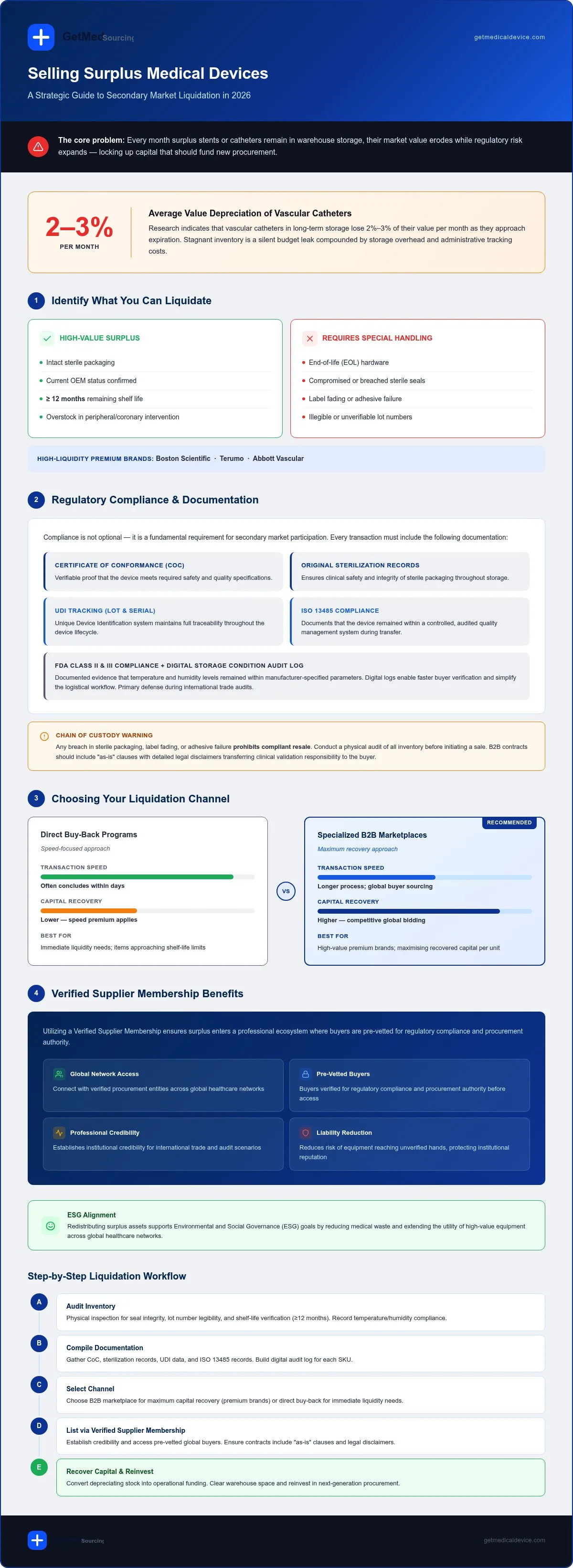
Effective liquidation requires a precise distinction between marketable surplus and obsolete waste. High-demand assets typically include overstock items with intact sterile packaging, current OEM status, and at least 12 months of remaining shelf life. While end-of-life (EOL) hardware may require specialized recycling, new and unused inventory in categories like peripheral intervention or coronary intervention maintains high liquidity. Organizations must verify lot numbers and sterilization dates to ensure all listed items meet the secondary market's rigorous safety standards.
The Hidden Costs of Warehouse Overload
Maintaining stagnant shelf space incurs direct storage overhead and substantial opportunity costs. Facilities often overlook the compounding expenses of climate-controlled square footage and administrative tracking for non-moving SKUs. Research indicates that vascular catheters in long-term storage can experience an average value depreciation of 2% to 3% per month as they approach expiration. Systematic processes for selling surplus medical devices clear this physical bottleneck, converting depreciating stock into immediate operational funding for critical care initiatives.
Regulatory Compliance and Documentation for Secondary Market Sales
Navigating the legalities of selling surplus medical devices requires a precise understanding of FDA medical device regulation for Class II and III equipment. Compliance isn't an optional step; it's a fundamental requirement for secondary market participation. Every transaction must include verifiable Certificates of Conformance (CoC) and original sterilization records to ensure clinical safety. Traceability is maintained through the Unique Device Identification (UDI) system, which allows for precise tracking of lot and serial numbers throughout the device's lifecycle. Adhering to ISO 13485 standards during the transfer of ownership protects both parties by documenting that the device remained within a controlled, audited quality management system. This documentation serves as the primary defense against regulatory scrutiny during international trade audits.
Maintaining Chain of Custody and Sterilization Integrity
Sellers must provide documented evidence that storage conditions, such as temperature and humidity levels, remained within manufacturer-specified parameters. Any breach in sterile packaging or signs of environmental stress, like label fading or adhesive failure, serves as a red flag that prohibits compliant resale. It's essential to conduct a physical audit of your inventory for compromised seals or illegible lot numbers before initiating a sale. This verification process ensures that the secondary market receives only high-integrity products that fulfill their intended clinical purpose. Maintaining a digital log of these audits facilitates faster buyer verification and simplifies the logistical workflow.
Liability Mitigation for the Selling Institution
Standardizing B2B contracts for selling surplus medical devices with "as-is" clauses and detailed legal disclaimers helps mitigate long-term liability for the selling facility. These legal frameworks should explicitly state that the buyer assumes all responsibility for final clinical validation and installation. Utilizing a Verified Supplier Membership ensures that your surplus enters a professional ecosystem where buyers are pre-vetted for regulatory compliance and procurement authority. This systematic approach reduces the risk of equipment falling into unverified hands, securing the institution's reputation while maximizing the recovery of capital from stagnant assets.
Selecting the Optimal Channel: Marketplaces vs. Direct Buy-backs
Determining the correct liquidation channel requires balancing immediate liquidity against maximum capital recovery. Direct buy-back programs prioritize speed, often concluding transactions within days. However, this convenience typically results in significant margin loss as the buyer must account for their own resale overhead. Selling surplus medical devices through specialized B2B marketplaces allows facilities to capture the full market value by connecting directly with end-users. Premium inventory from manufacturers like Abbott or Terumo maintains higher pricing stability in these dedicated hubs. For those managing specific interventional brands, reviewing a Sourcing Guide for Boston Scientific Medical Devices provides insight into the verification standards buyers expect.
The Advantage of Verified B2B Marketplaces
Verified status acts as a critical trust signal in high-value transactions, particularly within interventional radiology and vascular surgery. These platforms offer access to a diverse global network, including international clinics and regional distributors that local buy-back programs can't reach. When selling diagnostic hardware, facilities must also ensure all equipment meets HIPAA compliance requirements regarding data sanitization before listing. Global visibility ensures that specialized equipment finds the specific demand profile required to justify its original procurement cost.
Evaluating Buyer Trust and Verification Signals
Unverified marketplaces often attract non-professional buyers, increasing the risk of transaction failure or regulatory mishandling. In contrast, professional B2B hubs vet participants to ensure they possess the necessary procurement authority and clinical background. This structured environment directly impacts the final sale price, as verified buyers are willing to pay a premium for documented provenance and secure workflows. To maximize your recovery rates, apply for a Verified Supplier Membership to access targeted RFQ requests from global healthcare entities.
Maximising Recovery Value through Verified Supplier Memberships
Transitioning from reactive liquidation to a proactive surplus management strategy is essential for maximizing capital recovery. By utilizing Verified Supplier Memberships, organizations establish the long-term trust necessary for high-value B2B transactions. This membership model moves beyond one-off sales, providing a structured framework to manage inventory across interventional radiology, neurovascular, and peripheral categories. Adopting a systematic approach to selling surplus medical devices ensures that capital is not indefinitely tied to depreciating equipment. Professional listings on a global marketplace ensure that your assets reach verified procurement officers who prioritize documented provenance over the lowest price.
Strategic Use of RFQ Response Credits
Active monitoring of the Request for Quote (RFQ) system allows suppliers to identify high-intent buyers with immediate procurement needs. Using RFQ response credits, facilities can bid directly on bulk surplus requests from international hospitals and private laboratories. This targeted approach bypasses the passive waiting period associated with standard listings. Crafting competitive, data-driven bids for bulk procurement ensures that large volumes of stagnant stock are liquidated in single, efficient transactions. It doesn't just clear space; it secures the highest possible return on investment for premium brands like Asahi Intecc or Abbott.
Leveraging Global Sourcing Frameworks
Integrating surplus sales into a broader Global Medical Device Sourcing Strategy aligns liquidation with the wider supply chain lifecycle. Verified status significantly accelerates the RFQ conversion rate for vascular catheters by providing buyers with immediate assurance of regulatory compliance and storage integrity. This systematic integration ensures that selling surplus medical devices becomes a predictable revenue stream rather than a logistical burden. Facilities that adopt these verified B2B channels maintain leaner warehouses and more flexible procurement budgets, staying competitive in the evolving 2026 healthcare landscape.
Optimizing Your Asset Recovery Framework for 2026
Efficiently managing stagnant inventory requires a transition from reactive storage to a systematic liquidation workflow. This guide has established that successful recovery depends on rigorous adherence to documentation standards and the selection of high-visibility B2B channels. Organizations that prioritize clinical-grade verification and UDI traceability are best positioned to capture maximum market value. By selling surplus medical devices through a structured global marketplace, facilities can clear essential warehouse space and reinvest capital into next-generation interventional technologies. The 2026 procurement landscape favors suppliers who demonstrate transparency and operational competence in specialized categories like coronary and neurovascular intervention. Accessing global RFQs for brands such as Boston Scientific and Abbott ensures your assets meet active demand without the margin loss of traditional buy-backs. It's time to transform your depreciating stock into a liquid asset through a professional, compliant infrastructure. Become a Verified Supplier and Start Selling Surplus Today to secure your facility's financial and operational agility.
Frequently Asked Questions
Is it legal to sell surplus medical devices in 2026?
It's entirely legal to begin selling surplus medical devices provided the transaction adheres to current FDA and international regulatory frameworks for Class II and III equipment. Sellers must maintain a documented chain of custody and ensure all sterile packaging remains uncompromised throughout the storage period. Verification of the buyer's professional status is also a critical requirement to ensure that devices are used within appropriate clinical environments.
What documentation is required to sell excess interventional cardiology products?
Selling surplus medical devices in the cardiology sector requires original Certificates of Conformance (CoC), sterilization records, and Unique Device Identification (UDI) data. You must also provide storage logs verifying that temperature and humidity levels remained within manufacturer specifications. These documents establish the provenance and clinical integrity required by global procurement officers during the secondary market bidding process on verified B2B platforms like GetMedicalDevice.
How do I determine the fair market value for surplus surgical equipment?
Fair market value is determined by analyzing current secondary market demand, remaining shelf life, and the original manufacturer brand. Premium assets from brands like Abbott or Terumo typically retain higher value compared to generic alternatives. Monitoring active RFQ requests on B2B platforms provides real-time data on what international hospitals and clinics are currently willing to pay for specific surgical or interventional configurations.
Can I sell medical devices with near-term expiration dates?
You can list devices with near-term expiration, though liquidity significantly decreases as the date approaches. Most professional buyers require a minimum of six to twelve months of remaining shelf life to account for international shipping and clinical scheduling. It's essential to disclose expiration dates transparently in your product listings to maintain verified status and avoid transaction disputes during the final ownership transfer process.
What are the risks of selling medical equipment on unverified marketplaces?
The primary risks include regulatory non-compliance, legal liability for device failure, and financial fraud. Unverified platforms lack the vetting processes necessary to confirm a buyer's clinical credentials or procurement authority. Selling through a structured, verified B2B hub mitigates these risks by ensuring all participants adhere to industry standards and professional documentation protocols for high-stakes medical equipment, such as neurovascular catheters.