What if the substantial capital currently tied up in aging inventory could be systematically recovered before it reaches the point of total loss? With U.S. hospitals generating more than 14,000 tons of waste daily, the financial impact of inventory write-offs remains a critical operational challenge for medical device suppliers. Managing the logistical and compliance requirements for selling near-expiry medical devices requires a level of precision that many standard procurement workflows lack, often leading to regulatory anxiety and unnecessary fiscal waste. This guide provides a clear framework for transforming short-dated stock into liquid capital through compliant B2B offloading strategies.
You'll learn a structured workflow for identifying aging assets, ensuring adherence to international standards such as the FDA Quality Management System Regulation (QMSR), and leveraging global networks of verified buyers. We'll outline the steps necessary to move niche interventional devices from brands such as Boston Scientific, Terumo, and Abbott Vascular into markets where they're actively required. This methodical approach ensures a professional and secure recovery process that prioritizes transparency, regulatory alignment, and organizational efficiency.
Key Takeaways
- Identify assets with 6–12 months of sterilization life to recover up to 40% of capital that would otherwise be lost to expiration write-offs.
- Ensure total adherence to ISO 13485 standards by implementing mandatory disclosure protocols and First-In, First-Out (FIFO) rotation for all B2B listings.
- Execute a systematic 5-step strategy for selling near-expiry medical devices, prioritizing high-demand categories like vascular access supplies to maximize liquidity.
- Leverage a Verified Supplier Membership on specialized B2B platforms to optimize the visibility and sell-through rate of short-dated inventory through established procurement networks.
Table of Contents
- What are Near-Expiry Medical Devices and Why Sell Them?
- Regulatory Compliance and Ethical Standards for Selling
- How to Sell Near-Expiry Medical Devices: A 5-Step Strategy
- Leveraging B2B Marketplaces for Efficient Stock Recovery
What are Near-Expiry Medical Devices and Why Sell Them?
Near-expiry medical devices are defined as sterile inventory with approximately 6 to 12 months of remaining shelf-life. These items remain fully compliant for use but are nearing their sterilization limit. Near-expiry defines the strategic window between standard inventory and non-compliant waste. It's a proactive approach to asset lifecycle management that prevents clinical stock from becoming a total financial loss. By identifying these items early, suppliers can maintain a leaner, more efficient supply chain.
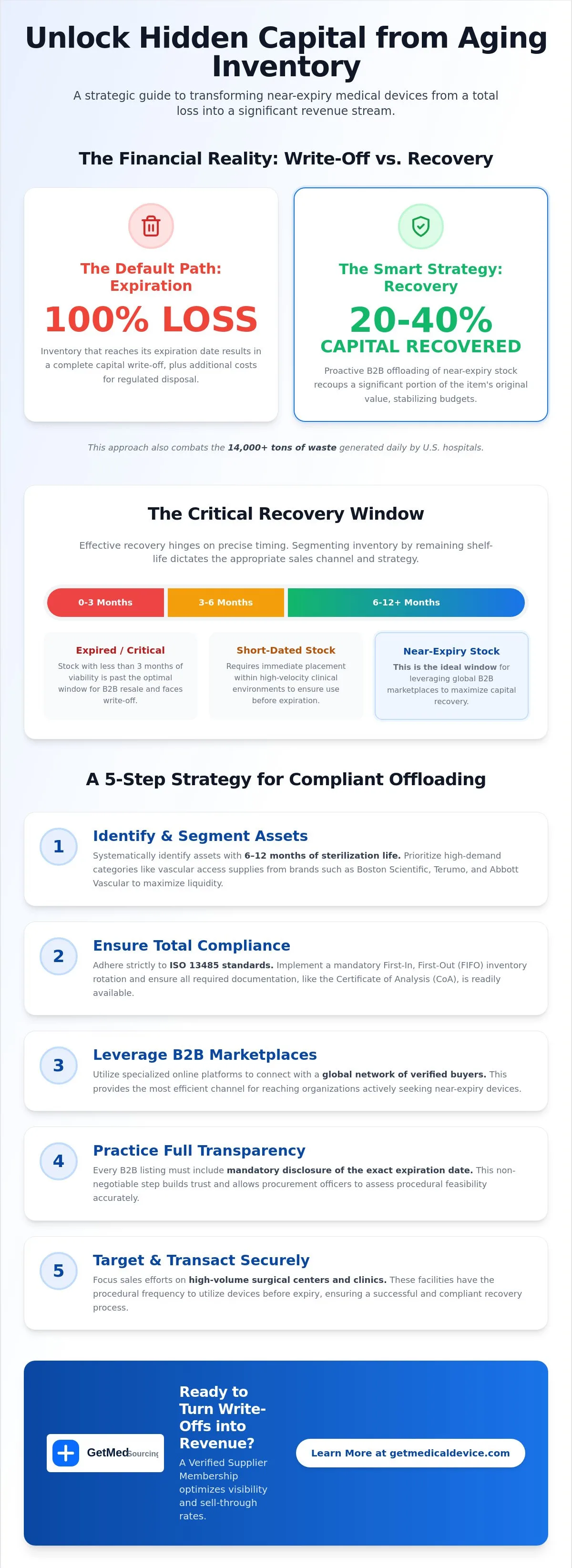
Selling near-expiry medical devices provides a clear financial imperative for healthcare organizations. Inventory that reaches its expiration date results in a 100% capital loss plus additional costs for regulated disposal. In contrast, proactive B2B recovery allows organizations to recoup 20% to 40% of the item's original value. This shift from total loss to partial recovery provides a predictable mechanism for stabilizing procurement budgets and reducing the burden of asset depreciation. It's a pragmatic solution for any medical device supplier seeking to optimize their bottom line.
Beyond financial recovery, this practice directly addresses the environmental crisis within healthcare. U.S. hospitals generate over 14,000 tons of waste daily, much of it consisting of unused, expired supplies. Redistributing inventory to facilities with higher patient volumes extends the utility of the shelf life of medical devices and reduces the volume of regulated medical waste sent to incinerators or landfills. Systematic offloading through verified channels ensures these resources aren't wasted and supports global sustainability goals.
Identifying the Recovery Window
Precise categorization is essential for effective inventory management. Organizations should distinguish between 'short-dated' stock, which typically has a 3 to 6-month window, and 'near-expiry' stock, which retains 6 to 12 months of viability. While near-expiry stock is suitable for global B2B marketplaces, short-dated items require immediate placement within high-velocity clinical environments to ensure use before the sterilization limit is reached. This distinction dictates the speed and channel of the recovery effort.
Targeting High-Turnover Buyers
High-volume surgical centers and clinics are the primary consumers of short-dated inventory. These facilities maintain the procedural frequency necessary to utilize specialized coronary intervention equipment before the expiration date. By focusing on selling near-expiry medical devices to these verified buyers, suppliers can ensure that high-value catheters, stents, and guidewires are deployed in clinical settings rather than discarded as obsolete stock. This targeted approach maximizes the probability of successful stock recovery.
Regulatory Compliance and Ethical Standards for Selling
Selling near-expiry medical devices requires strict adherence to international regulatory frameworks. While selling expired devices is a direct violation of safety protocols, offloading near-expiry stock is an accepted industry practice for inventory optimization. This distinction relies on the device remaining within its validated sterilization window. Every transaction must be supported by transparent data to protect both the buyer and the end-user.
The ISO 13485 standard provides the necessary structure for traceability and inventory rotation. Implementing a First-In, First-Out (FIFO) methodology ensures that devices with the shortest remaining shelf-life are prioritized for use or sale. Organizations often reference established protocols like the Managing Near-Expiry Medical Items framework to standardize their internal auditing processes. This systematic approach minimizes the risk of non-compliant stock entering the supply chain.
Transparency is a mandatory requirement in B2B marketplaces. Every product listing must clearly state the expiration date to allow procurement officers to assess procedural feasibility. For high-stakes interventional radiology equipment, the chain of custody must remain unbroken. A Verified Supplier acts as the guarantor of this process, ensuring that storage conditions have been maintained according to technical specifications. Suppliers can strengthen their market position by utilizing a Verified Supplier Membership to signal compliance.
Documentation Requirements
Legal offloading requires a comprehensive documentation package. This includes the original Certificate of Analysis (CoA) and sterilization records to verify the device's history. Buyers must receive evidence that the product has been handled within controlled environments. Packaging integrity must be verified before any transfer of ownership. A compromised sterile barrier immediately disqualifies a device from sale, even if the expiration date is months away. Maintaining these records ensures that the secondary market operates with the same precision as the primary supply chain.
How to Sell Near-Expiry Medical Devices: A 5-Step Strategy
Successfully selling near-expiry medical devices requires a structured methodology that integrates inventory control with market intelligence. Organizations must move beyond reactive offloading and implement a five-step recovery strategy designed to maximize capital return before sterilization limits are reached. This systematic approach ensures that aging stock is converted into liquid capital with minimal operational friction.
The process begins with a rigorous monthly inventory audit. Flagging stock at the 12-month expiry threshold allows for a sufficient marketing window to reach global buyers. Suppliers should consult the FDA guidance on medical device shelf life to ensure all identified items meet the technical requirements for secondary placement. Once flagged, categorize inventory by procedural demand. Prioritizing high-turnover items, such as vascular access supplies, increases the probability of rapid liquidation.
Pricing Strategies for Aging Inventory
Financial recovery is predicated on calculating the Liquidation Point. This is the specific price where the revenue from a sale exceeds the combined costs of continued storage and regulated disposal. Implementing tiered discounting creates a logical progression for buyers; prices should decrease systematically as the remaining shelf-life diminishes. This creates a predictable value proposition for procurement officers who manage high-volume facilities with immediate clinical needs.
Vetting Buyers Globally
Verified B2B marketplaces provide access to a broader network of licensed healthcare providers who are equipped to utilize short-dated stock. International markets often demonstrate higher demand for near-expiry interventional equipment due to differing clinical turnover rates and budget constraints. When engaging in cross-border transactions, adherence to the Global Medical Device Sourcing Framework ensures regulatory compliance and secure logistical transitions. Suppliers can optimize their recovery workflow by utilizing Premium Product Listings to reach these verified global procurement networks.
Leveraging B2B Marketplaces for Efficient Stock Recovery
Specialized B2B marketplaces provide the necessary infrastructure for selling near-expiry medical devices with high efficiency. Unlike general e-commerce platforms, a dedicated medical device products platform incorporates the technical parameters required for clinical procurement. This focus ensures that listings reach a qualified audience of procurement officers and clinical managers who prioritize device specifications over generic marketing. It's essential to recognize that general platforms don't offer the regulatory oversight or the niche buyer network required for medical trade.
Utilizing a Verified Supplier Membership significantly enhances the credibility of these listings. This status validates the supplier's operational history and adherence to storage standards. Industry analysts report that a verified status leads to a higher sell-through rate for near-expiry inventory because it mitigates the buyer's risk regarding chain of custody. Suppliers can further optimize this recovery by using RFQ Response Credits to target hospitals with urgent procurement needs. This proactive approach positions aging stock as a strategic solution for budget-constrained facilities without compromising patient safety or clinical standards.
Building Trust with Premium Listings
Transparency drives successful transactions in the secondary market. Premium Product Listings should include high-resolution photographs of the original packaging and the printed expiration date to eliminate technical ambiguity. Comprehensive data and sterilization records must be accessible to potential buyers. Integrating this documentation with a Verified Medical Device Supplier profile establishes a permanent record of compliance. This centralized approach simplifies due diligence and expedites the final sale of near-expiry medical devices.
Optimizing Asset Recovery Through Strategic Offloading
Implementing a structured approach to inventory management transforms aging stock from a liability into a recoverable asset. Organizations that prioritize systematic monthly audits and strict adherence to ISO 13485 standards can recover significant capital that would otherwise be lost to expiration write-offs. This proactive methodology ensures that high-value interventional and surgical products are deployed in clinical settings rather than being discarded as regulated medical waste.
Successfully selling near-expiry medical devices requires a platform that mirrors the precision of the medical industry itself. GetMedicalDevice provides the stable, global infrastructure needed to connect with an extensive network of verified B2B buyers. By utilizing specialized categories for surgical products and a credit-based RFQ system for rapid inventory liquidation, suppliers can maintain complete transparency in the chain of custody while optimizing their bottom line.
Become a Verified Supplier on GetMedicalDevice to offload your inventory today and establish a more resilient, capital-efficient supply chain through professional asset recovery.
Frequently Asked Questions
Is it legal to sell medical devices that are close to their expiration date?
Yes, selling near-expiry medical devices is a legal and standard industry practice provided the items are within their validated sterilization window and all dates are transparently disclosed. Compliance with ISO 13485 and FDA QMSR standards is required to ensure the chain of custody remains intact. Buyers must be licensed healthcare entities capable of utilizing the stock before the stated deadline.
What is the difference between expired and near-expiry medical devices in B2B trade?
The primary difference lies in clinical compliance and legal liability. Near-expiry devices retain 6 to 12 months of shelf-life and are fully authorized for clinical use. Expired devices have surpassed their validated safety window, making them non-compliant waste that cannot be legally sold for patient care. B2B trade focuses exclusively on the recovery of near-expiry stock to prevent total capital loss.
Which medical device categories have the highest resale value when near-expiry?
High-turnover interventional devices, such as coronary stents, catheters, and vascular access supplies, maintain the highest resale value. These categories are in constant demand by high-volume surgical centers that can deploy inventory rapidly. Surgical products and specialized diagnostic equipment also perform well in secondary markets due to their high initial procurement costs and frequent procedural use.
How much of the original cost can I recover by selling aging stock?
Suppliers typically recover between 20% and 40% of the original procurement value when offloading inventory through verified B2B channels. This recovery rate depends on the remaining shelf-life and the current market demand for the specific device category. While this represents a discount from the original price, it's a significant improvement over the 100% loss associated with expiration and disposal fees.
Can I sell near-expiry devices to international buyers?
Yes, international buyers often represent the most active market for near-expiry inventory due to high patient volumes and budget-conscious procurement needs. Selling near-expiry medical devices globally requires adherence to established sourcing frameworks to ensure cross-border regulatory compliance. Verified marketplaces facilitate these transactions by connecting suppliers with a global network of vetted healthcare providers and distributors.