

Adding a second sourcing region won’t, by itself, secure a medical device supply chain. Reducing risk in medical device supply chain operations also means understanding supplier dependencies and checking sources to help prevent counterfeit or substandard devices from entering procurement. Unpredictable lead times for critical interventional products make those checks operationally important, not just administrative.
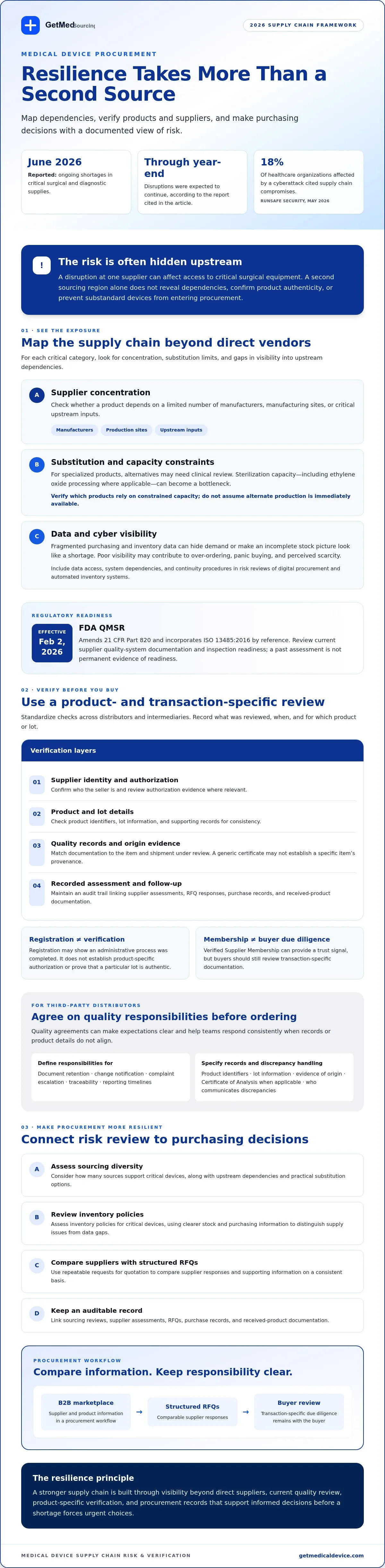
A disruption at one supplier can affect access to critical surgical equipment. The challenge is to identify vulnerabilities beyond direct suppliers and verify sources before a shortage forces urgent decisions. In June 2026, Modern Healthcare reported ongoing shortages in critical surgical and diagnostic supplies, with disruptions expected to continue through year-end.
This article outlines a 2026 framework for assessing supply chain exposure and verifying suppliers and products. It covers how to assess sourcing dependencies, compare supplier responses through structured RFQs, and build a procurement process designed to reduce stockout risk.
Key Takeaways
- Map supplier dependencies beyond direct vendors to identify concentration risks and visibility gaps across multiple tiers.
- Use a repeatable verification process that reviews quality documentation alongside supplier credentials, rather than relying on basic compliance checks alone.
- Reduce risk in medical device supply chain operations by assessing sourcing diversity and inventory policies for critical devices.
- Use a B2B marketplace and structured RFQs to compare responses from verified suppliers and support informed procurement decisions.
Table of Contents
- Identifying Modern Vulnerabilities in the Medical Device Supply Chain
- The Multi-Tiered Verification Framework: Beyond Basic Compliance
- Operational Strategies to Mitigate Procurement Disruptions
- Leveraging B2B Marketplaces for a Resilient 2026 Supply Chain
Identifying Modern Vulnerabilities in the Medical Device Supply Chain
Reducing risk in medical device supply chain operations starts with mapping dependencies, not just listing direct suppliers. A specialized interventional radiology device may depend on a narrow set of manufacturers, component sources, or sterilization providers. If one constrained step interrupts supply, alternatives may require clinical review before adoption. For each critical category, assess supplier concentration, substitution options, and visibility into upstream dependencies.
Concentration Risk in Specialized Manufacturing
For vascular access products, concentration risk arises when supply depends on a limited number of manufacturers, sites, or critical upstream inputs. Sterilization capacity, including ethylene oxide processing where applicable, can become a bottleneck. Verify which products depend on constrained capacity rather than assuming alternate production is immediately available. The vascular access product category can help identify items that warrant closer sourcing review.
Data Silos and the Visibility Challenge
Relationship-based sourcing can support continuity, but without digital audit trails, procurement teams may not be able to confirm supplier changes, documentation status, or upstream dependencies. Fragmented inventory and purchasing data can also obscure demand. If teams can’t distinguish a real shortage from incomplete stock information, they may over-order, contributing to panic buying and perceived scarcity. A structured supply chain risk management process connects risk identification with documented assessment and mitigation.
Regulatory requirements are also shifting. The FDA’s QMSR took effect February 2, 2026, amending 21 CFR Part 820 and incorporating ISO 13485:2016 by reference. Suppliers’ quality-system documentation and inspection readiness therefore warrant current review. Don’t treat a past assessment as permanent evidence of readiness.
Digital procurement and automated inventory systems introduce cyber exposure alongside efficiency. RunSafe Security reported in May 2026 that 18% of healthcare organizations affected by a cyberattack cited supply chain compromises. Include data access, system dependencies, and continuity procedures in risk reviews. These checks can help identify vulnerabilities before they disrupt procurement or inventory decisions.
The Multi-Tiered Verification Framework: Beyond Basic Compliance
Reducing risk in medical device supply chain procurement requires checks that extend beyond a supplier’s direct relationship with the manufacturer. Standardize vetting across distributors and other intermediaries, and record what was reviewed, when, and for which product or lot. ISO 13485:2016 provides a quality management system reference. Since February 2, 2026, the FDA’s QMSR has incorporated it by reference. A standard can guide a review, but it doesn’t replace verification of a specific supplier and transaction.
Defining a Verified Medical Device Supplier
Registration and verification are not interchangeable. Registration may show that an entity completed a specific administrative process, but it doesn’t establish that a seller is authorized for a particular product or that a specific lot is authentic. Check supplier identity, authorization evidence where relevant, product and lot details, and supporting records for consistency. A Verified Supplier Membership in a B2B marketplace can provide a trust signal, but buyers should still review transaction-specific documentation. UL Solutions’ resilient supply chain framework also supports a systematic approach to supplier resilience.
Establishing Quality Agreements for Procurement
For third-party distributors, a quality agreement can clarify responsibilities before an order is placed. Define document retention, change notification, complaint escalation, traceability, and reporting timelines. Specify who provides records such as a Certificate of Analysis when applicable, product identifiers, lot information, and evidence of origin. Match each document to the product and shipment under review. A generic certificate may not establish the provenance of a specific item. Document how discrepancies will be handled and who is responsible for communicating them.
Maintain an audit trail linking supplier assessments, RFQ responses, purchase records, and received-product documentation. A marketplace’s Verified Supplier Membership and structured RFQ process can help procurement teams compare supplier information, while the buyer remains responsible for due diligence. Explore medical device listings to review supplier and product information within a procurement workflow.
Operational Strategies to Mitigate Procurement Disruptions
Reducing risk in medical device supply chain operations requires plans that can adapt when a primary source is delayed or unavailable. Start by identifying critical products with limited substitutes, then establish qualified alternatives before a disruption occurs. For coronary intervention and neurovascular supplies, maintain a secondary sourcing list. Confirm product requirements, supplier documentation, and clinical acceptability in advance.
Brand Diversification Tactics
Brand diversification can reduce dependence on one manufacturer’s product range, but alternatives aren’t automatically interchangeable. Compare sourcing options from Boston Scientific and Abbott Vascular. Assess offerings from Terumo and Asahi Intecc against device specifications and clinical requirements. Before substituting products, have qualified clinical and procurement stakeholders verify compatibility for each consumable. For coronary intervention and neurovascular categories, record approved alternatives, supplier contacts, and documentation status on the secondary sourcing list.
Inventory Buffer Management
Just-in-time inventory can limit excess stock, but it leaves less room to absorb lead-time variability. Safety stock provides a buffer for high-turnover surgical products, yet excessive inventory can increase expiry and obsolescence risk. Set buffer levels according to product criticality, usage patterns, replenishment variability, and the time needed to qualify an alternate source.
A practical starting formula is: safety stock = service factor × average daily demand × standard deviation of lead time, assuming demand is relatively stable. Adapt the calculation when demand also varies.
Review inventory thresholds alongside sourcing options, and consider whether regional sourcing hubs could reduce exposure to particular geopolitical or transportation bottlenecks. Treat hubs as one diversification option, not a substitute for verifying supplier capability and product documentation. Procurement teams can compare supplier responses through structured RFQs and use marketplace listings to identify potential sources. Review medical device supplier options to support your sourcing assessment.
Leveraging B2B Marketplaces for a Resilient 2026 Supply Chain
A B2B marketplace can bring supplier listings and procurement inquiries into a more structured workflow, reducing information scattered across email threads and contacts. For global medical device sourcing, this can make it easier to find potential sources, submit consistent requirements, and keep a clearer record of supplier responses. Centralization supports visibility, but buyers should confirm that product availability and lead-time information is current before making purchasing decisions.
Digital RFQs and Price and Risk Comparison
A structured Request for Quote lets procurement teams compare supplier responses against the same requirements. Use RFQ Response Credits to request information from a wider pool of suppliers, then evaluate each response on more than price. Compare quoted lead times, product and lot documentation, supplier verification status, and any gaps that need clarification. GetMedicalDevice’s Verified Supplier Membership provides a trust signal within the marketplace, but it doesn’t replace transaction-specific due diligence. Resolve inconsistent documentation or unclear availability before placing an order.
This approach makes reducing risk in medical device supply chain decisions more systematic. Buyers can compare responses rather than relying on fragmented conversations or a single source’s estimate. Keep RFQ details, supplier replies, and follow-up questions together so the rationale for a sourcing decision is traceable.
The Future of Transparent Procurement
Moving from disconnected emails to structured B2B medical device marketplaces can help procurement teams organize supplier information and compare options. Platform membership standards can establish a consistent verification baseline, while buyers remain responsible for checking documentation and confirming transaction details. For high-priority surgical or laboratory products, record what the supplier has confirmed about availability and lead time, and revisit those details as purchasing needs change.
Review medical device supplier listings on GetMedicalDevice to compare potential sources and support a more transparent procurement process.
Build a More Resilient Procurement Process
Reducing risk in medical device supply chain operations takes more than reacting to shortages. Use a repeatable process: map supplier dependencies, verify each source and its documentation, and maintain qualified alternatives for critical products. Base inventory decisions on demand and lead-time variability rather than relying on one model across every category.
Digital marketplaces and structured RFQs can bring supplier information and responses into a more consistent comparison process. GetMedicalDevice provides access to medical device supplier listings, including suppliers offering products from brands such as Boston Scientific and Terumo. Its Verified Supplier Membership and RFQ Response Credits support supplier discovery and structured procurement inquiries. Buyers should still confirm product availability, lead times, and transaction-specific documentation directly with suppliers.
Strengthen your sourcing workflow by reviewing potential suppliers and comparing responses. Explore medical device supplier options on GetMedicalDevice to support more informed purchasing. A documented, adaptable process can help your team prepare for disruption with greater clarity.
Frequently Asked Questions
What are the primary risks in medical device procurement today?
Key risks include dependence on a limited number of suppliers, poor visibility into upstream sources, unpredictable lead times, and counterfeit or substandard products. Procurement systems can also face cybersecurity threats that disrupt purchasing or inventory data. Assess risk by product criticality: identify devices with few acceptable alternatives, the documentation required with each order, and how the team will respond if supply or information is interrupted.
How do I verify a medical device supplier's authenticity?
Verify the supplier’s identity and relationship to the product, then match the offered device to relevant product identifiers and transaction documents. Review applicable quality records, lot details, and evidence of origin, and resolve inconsistencies before ordering. Registration or marketplace verification status can inform your review, but it doesn’t establish the authenticity of every item or shipment. Keep records of checks and supplier responses for each procurement decision.
What is a medical device supplier quality agreement?
A supplier quality agreement documents how a buyer and supplier handle quality-related responsibilities. It can define document retention, traceability, change notifications, complaint escalation, and reporting timelines. For a third-party distributor, specify which records must accompany an order and who will provide them. The agreement supports consistent communication and accountability, but procurement teams should ensure its terms fit the transaction and their organization’s requirements.
How can a B2B marketplace reduce supply chain risk?
A B2B marketplace can organize supplier listings and procurement requests in one place, making it easier to compare responses and keep a record of sourcing decisions. GetMedicalDevice offers Verified Supplier Memberships, Premium Product Listings, and RFQ Response Credits. Buyers can use RFQs to compare supplier-provided information, such as quoted lead times and documentation, while confirming current availability and order details directly with each supplier.
Why is brand diversification important for hospital procurement?
Brand diversification can give procurement teams additional sourcing options if a primary supplier or product becomes unavailable. It works best when alternatives are identified and reviewed before a disruption, rather than selected under urgent conditions. Products from different brands aren’t automatically interchangeable. Confirm technical requirements and clinical acceptability with the appropriate stakeholders, and document which alternatives are approved for each critical product category.