

A hospital device negotiation is rarely decided by unit price alone. In negotiating with hospital procurement managers, a credible case connects clinical fit, operational impact, supply terms, and supporting documents to the hospital’s stated purchasing priorities. Whether supplying specialized clinical equipment or routine essentials like personal protective equipment from B2B vendors such as nextgenfze.ae, institutional buyers require complete alignment between product standards and supply terms.
That can be difficult when evaluation criteria are unclear, decision-making roles vary, or a missing document stalls progress. Procurement teams must manage cost while protecting quality and continuity, so broad claims about savings or outcomes are unlikely to move a discussion forward. Focus on evidence relevant to the product and the hospital’s stated needs.
This guide explains how to prepare a focused value case, identify who influences the decision, and respond to commercial objections without overstating what the evidence supports. It also covers documentation, Value Analysis Committee review, and how to end each meeting with agreed criteria, responsibilities, and next steps. This structure keeps discussions focused on what the hospital needs to evaluate and how both parties will move the process forward.
Key Takeaways
- Separate procurement’s commercial role from clinical evaluation and end user input, then clarify the institution’s decision criteria.
- Prepare for negotiating with hospital procurement managers by mapping stakeholders and matching each product claim to relevant documentation.
- Structure price discussions around scope, service expectations, supply terms, and documented value.
- Close with a written recap of open items, responsibilities, and decision milestones tied to the hospital’s process.
Table of Contents
- What Hospital Procurement Managers Need From a Medical Device Supplier
- Build an Evidence-Based Value Case Before the Procurement Meeting
- How to Negotiate Price, Terms, and Objections Without Losing Focus
- Move From Negotiation to a Clear Sourcing Decision
What Hospital Procurement Managers Need From a Medical Device Supplier
Procurement managers coordinate the commercial process. They assess purchasing requirements, compare terms, and help ensure the decision follows institutional procedures. Clinical evaluators and end users address different questions, such as whether a device suits its intended use and how it fits into care workflows. These roles may overlap, but one contact rarely represents every part of the review.
Criteria vary by institution, product category, and purchasing route-whether acquiring complex diagnostic systems or specialized patient-environment aids from suppliers such as Find Memory Care. Before negotiating with hospital procurement managers, ask how the opportunity will be evaluated, who contributes to the decision, when reviews take place, and what format the proposal must follow. A request for a product summary, supporting documents, or a formal tender response calls for different preparation. These questions help clarify how the opportunity fits the hospital’s sourcing process.
Map the hospital stakeholders before discussing terms
Build a concise stakeholder map using the roles the hospital identifies. Record each person’s function, priorities, and required input. For example, procurement may coordinate commercial review, clinical users may assess workflow fit, and Value Analysis Committee participants may review evidence and organizational priorities. Treat these as possible roles, not assumptions about who has final authority.
- Procurement: process, commercial terms, and proposal requirements.
- Clinical users: intended use and practical workflow considerations.
- Value analysis participants: evidence, fit, and review criteria.
Confirm who owns each decision and who needs the supporting materials before setting negotiation priorities.
Separate product fit from commercial evaluation
Ask the hospital to define clinical, operational, and commercial suitability, and clarify what evidence supports each assessment. Describe product capabilities only when current documentation supports the claim, and distinguish documented facts from assumptions. Structured supplier and product information can make the discussion easier to assess while keeping the commercial proposal separate from clinical review.
Agree on evaluation criteria before discussing price concessions, or you risk negotiating against priorities the hospital has not defined. Confirm the review timeline and required proposal format, then document open questions and the person responsible for resolving each one.
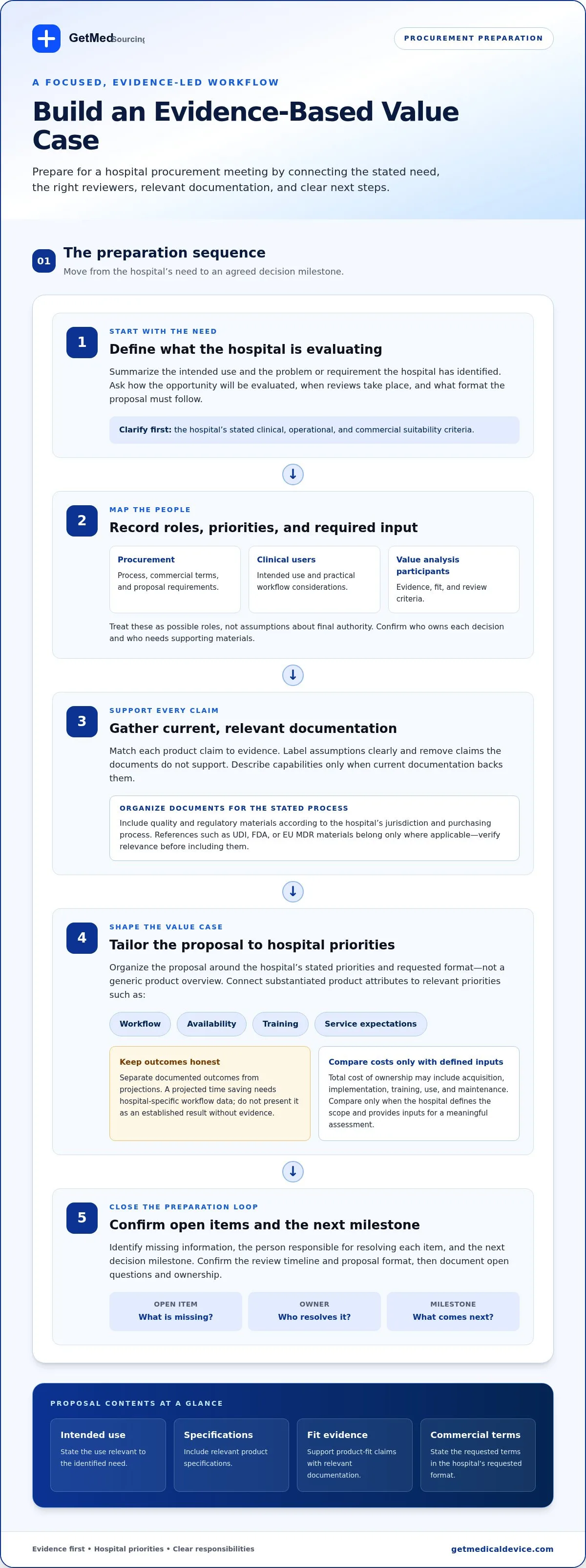
Build an Evidence-Based Value Case Before the Procurement Meeting
A focused proposal makes it easier for the hospital to assess a device against its stated need. Use this preparation sequence before negotiating with hospital procurement managers:
- Define the need. Summarize the intended use and the problem or requirement the hospital has identified.
- Map stakeholders. Note who will review clinical fit, operational considerations, commercial terms, and supporting evidence.
- Gather evidence. Match each product claim to current, relevant documentation. Label assumptions clearly and remove claims the documents do not support.
- Tailor the case. Organize the proposal around the hospital’s priorities and requested format, rather than sending a generic product overview.
- Confirm next steps. Identify missing information, the responsible parties, and the next decision milestone.
Prepare a focused proposal and supporting documents
Make the proposal easy to review: state the intended use, relevant product specifications, evidence of product fit, and requested commercial terms. Organize quality and regulatory documents according to the hospital’s stated jurisdiction and purchasing process. References such as UDI, FDA, or EU MDR materials belong only where applicable, so verify their relevance before including them. A structured medical device product listing can also help present supplier and product information consistently.
Translate product value into hospital priorities
Connect substantiated product attributes to priorities the hospital has identified, such as workflow, availability, training, or service expectations. Separate documented outcomes from projections. For example, a projected time saving needs hospital specific workflow data. Do not present it as an established result without evidence.
Total cost of ownership is the full set of relevant costs over the period and scope the hospital defines, which may include acquisition, implementation, training, use, and maintenance. Compare these factors only when the hospital provides the scope and inputs needed for a meaningful assessment. Keep the analysis proportionate to the request, and avoid unsupported clinical, savings, or performance promises.
For suppliers organizing product information for buyer discovery, GetMedicalDevice provides a marketplace for medical device sourcing and supplier listings.
How to Negotiate Price, Terms, and Objections Without Losing Focus
A lower price can seem like the simplest answer when the hospital’s value criteria have not been made explicit. In negotiating with hospital procurement managers, first establish what the comparison includes. Ask which requirement or benchmark is driving the concern, then check that your proposal scope and assumptions match the hospital’s request. Use verified evidence to explain differences without disparaging another supplier.
Respond to price pressure with questions and evidence
Clarify whether the concern relates to unit price, included scope, expected service, or supply terms. If the hospital is comparing offers, confirm that the products and terms being compared are equivalent. A concise side by side review can show where a difference comes from without overstating product value.
| Factor | What to clarify |
|---|---|
| Price | Unit basis and included items |
| Scope | Products, quantities, and proposed terms |
| Service expectations | Applicable training and support responsibilities |
| Supply terms | Agreed availability, delivery expectations, and timing |
| Documented value | Evidence supporting relevant product attributes |
Do not discount unilaterally. Link each concession to a defined change, such as a revised scope, volume, timing, or another mutually agreed term. State what changes in return and capture the revised terms in writing.
Keep non-price terms explicit
Review delivery expectations, training, support, documentation, and payment terms where applicable. Separate negotiable commercial terms from product specifications or regulatory requirements, which should not be treated as bargaining variables. If contract language or jurisdiction specific requirements need interpretation, flag them for appropriate review rather than making assumptions.
Immediately after the discussion, record open questions, owners, decision dates, and agreed actions. This creates a usable record for the next review and clarifies who will provide each item. Suppliers can also use GetMedicalDevice’s sourcing and procurement request platform to present product information and respond to active procurement requests.
Move From Negotiation to a Clear Sourcing Decision
A productive discussion needs a defined handoff into the hospital’s sourcing process. After negotiating with hospital procurement managers, send a written recap that distinguishes confirmed terms from items still under review. Include the agreed scope, evidence supplied, unresolved questions, owners, and decision milestones. This record helps each stakeholder see what has been settled and what remains necessary for evaluation.
Make the next step easy to evaluate
Keep the recap concise and assign each action to a named owner. Confirm which additional documents or clarifications the hospital expects, who will provide them, and the requested date. Set the follow up for a milestone in the hospital’s stated process, such as a committee review or completion of a documentation check, rather than sending repeated generic check ins.
- Scope: Products and commercial terms under consideration.
- Evidence: Documents supplied and any remaining requests.
- Actions: Owners, deliverables, and target dates.
- Decision path: The next review point and expected milestone.
If supplier verification becomes part of the review, record the hospital’s specific documentation request and provide relevant materials through the appropriate process.
Use structured discovery to reach relevant buyers
Accurate listings help buyers identify relevant supplier inventory and review product information during sourcing. A medical device product catalog can support product discovery and category review as buyers define their requirements. Keep supplier details clear and current so the information presented aligns with the opportunity under discussion.
For suppliers, GetMedicalDevice’s verified supplier marketplace provides sourcing and discovery infrastructure. RFQ response credits enable suppliers to submit responses to active procurement requests. These tools support visibility and participation in the process, but they do not guarantee selection or replace the hospital’s evaluation criteria.
Explore GetMedicalDevice for medical device sourcing and supplier discovery as one channel for presenting relevant inventory and responding to procurement requests.
Put a Clear Sourcing Path Into Motion
Apply your negotiation plan to a live sourcing process. Treat each hospital discussion as a defined project: identify the decision milestone, assign follow up actions, and keep supplier information aligned with the buyer’s request. That discipline makes negotiating with hospital procurement managers a repeatable process rather than a series of disconnected conversations.
For suppliers seeking buyer visibility, GetMedicalDevice’s Verified Supplier Membership provides verified status and visibility to global buyers. RFQ response credits let suppliers respond to active procurement requests, giving them a channel to present relevant information when a request aligns with their inventory.
Explore medical device sourcing on GetMedicalDevice to discover supplier and product opportunities and engage with active procurement requests. Use the platform to present relevant inventory and respond to requests that fit your products.
Frequently Asked Questions
How do you prepare for a meeting with a hospital procurement manager?
Prepare a concise agenda and a clear objective for the meeting. Before negotiating with hospital procurement managers, identify the hospital’s stated evaluation criteria, participants, and purchasing process. For example, decide whether you need agreement on proposal scope, confirmation of a review pathway, or clarification of missing information. Bring relevant product and quality documents, and label assumptions so they are not mistaken for verified facts.
Should medical device suppliers offer a discount in the first negotiation?
No, a first meeting discount should not be automatic. Find out whether the concern is price, the proposal’s scope, or a comparison with another offer. If the hospital requests a concession, consider what specific change would justify it, such as a revised quantity or timing. Record the condition alongside the proposed adjustment so the revised offer is clear and both parties understand what it covers.
Who is involved in a hospital medical device purchasing decision?
The decision may involve procurement, clinical users, value analysis participants, and other stakeholders, depending on the institution and product. Their responsibilities can differ: one person may manage the purchasing process while another evaluates clinical use or operational fit. Ask the procurement contact who must review the proposal and who approves the outcome. Confirm whether reviewers assess materials sequentially or in parallel so you can plan responses appropriately.
How should a supplier follow up after a hospital procurement meeting?
Follow up through the hospital’s preferred channel and make the message useful to the next decision maker. If a committee will review the proposal, organize attachments by topic and use filenames that identify their contents and revision dates. Address each requested clarification directly, and distinguish new information from material already submitted. Avoid routine check ins without a question, update, or item that advances the review.
What should a supplier do when a hospital requests information it does not have ready?
Acknowledge the request, clarify the exact document or answer needed, and give a realistic date for an update. Do not replace formal evidence with an unsupported assurance. If the request concerns regulatory or contract interpretation, route it to an appropriately qualified internal resource rather than offering an informal interpretation. Keep a record of the request and notify the procurement contact if the expected response date changes.
