

The lowest unit price does not always produce the lowest-cost case. Medical device sourcing for ambulatory surgery centers works best when device selection aligns with procedure mix, clinical requirements, expected use, and purchasing terms, including for specialized cardiac devices such as stents, catheters, and cardiac rhythm management devices.
Cost control involves more than comparing quotes. Devices must meet procedure and care-team needs, while sourcing decisions also account for purchasing consistency, supplier capability, and the risk of holding items that are rarely used.
This article explains how ASCs can align sourcing decisions with procedure needs, assess suppliers, and manage purchasing costs without overlooking specialized cardiac devices. It also covers the considerations that shape cardiac device sourcing, helping procurement teams evaluate options against clinical needs and operational requirements.
Key Takeaways
- Match device selection to the ASC’s procedure mix and clinical requirements so purchasing decisions reflect actual use.
- Assess total resource use, including inventory needs and procedural workflow, rather than comparing purchase prices alone.
- Use a value analysis process to weigh clinical fit, vendor capabilities, and purchasing terms consistently.
- Apply the same sourcing discipline to stents, catheters, and cardiac rhythm management devices, where specialized requirements shape the evaluation.
Table of Contents
- ASC supply chain complexity and shifting outpatient procedure needs
- ASC cost savings and resource utilization
- Facility vendor selection and value analysis committees
- Sourcing stents, catheters, and cardiac rhythm management devices
- GetMedicalDevice: Verified Supplier Membership
ASC supply chain complexity and shifting outpatient procedure needs
ASC supply chains must adapt as procedure mix changes. In 2018, 5,700 U.S. ambulatory surgery centers performed 23 million procedures. The number of centers may vary over time. These figures reflect a broad care setting, but each center’s purchasing needs depend on its specialties, scheduled cases, and clinical protocols.
Specialty growth can change which devices and supplies a center needs on hand. The number of U.S. ASCs specializing in spinal surgery rose from 35 in 2013 to 145 in 2019. Total joint replacements in ASCs are projected to increase by 77% through the end of 2026. For procurement teams, strategic planning means reviewing the procedure schedule and adjusting inventory categories as services evolve, rather than relying on past purchasing patterns.
Sterile, procedure-specific kits can consolidate the items needed for a case and reduce the need for preoperative sterilization. A procedure-in-a-box approach can also help match supplies to scheduled procedures and limit excess inventory. Kit contents should reflect the center’s actual requirements, so unused components do not undermine the intended inventory reduction.
CMS changes have also supported movement of procedures into outpatient settings. Medicare removed total knee arthroplasty from its inpatient-only list in 2018. The Centers for Medicare & Medicaid Services approved two cervical spine procedures for ASCs in 2018. ASCs seeking Medicare and Medicaid reimbursement must comply with CMS Conditions for Coverage and Conditions of Participation. Accreditation requirements and applicable CMS rules should therefore inform device selection and purchasing records.
Supply shortages can disrupt scheduled procedures, affect patient care, and force changes to case plans. ASCs can reduce this risk by tracking procedure demand, setting replenishment points for essential items, and identifying clinically acceptable alternatives through their established review process. These steps help teams respond when a supplier cannot fulfill an order as planned.
ASC cost savings and resource utilization
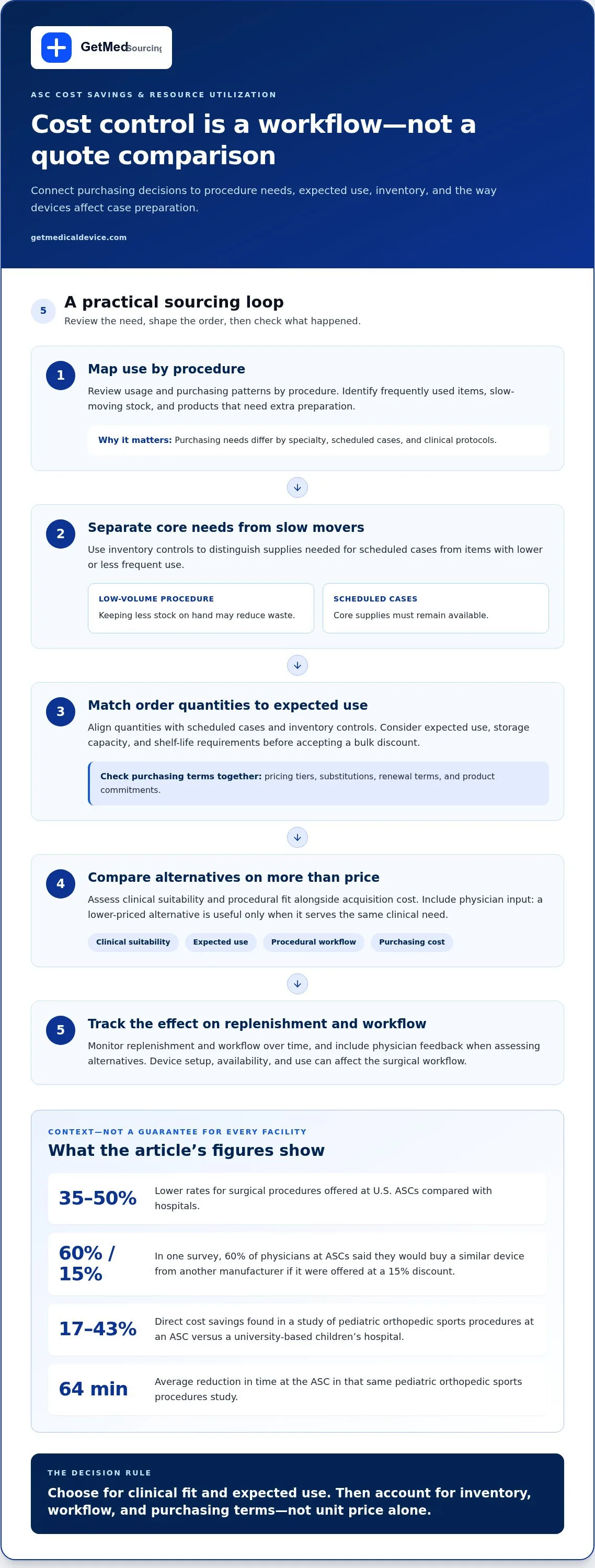
ASC savings depend on how purchasing, staffing, and operating-room time work together. U.S. ASCs have offered surgical procedures at rates 35% to 50% lower than hospitals. This operating model makes supply chain decisions consequential: excess inventory ties up resources, while poorly matched devices can disrupt case preparation. Compare products by clinical suitability and expected use, not acquisition cost alone.
Physician input can identify where a device’s value justifies its cost. In one survey, sixty percent of physicians at ASCs said they would buy a similar device from another manufacturer if it were offered at a 15% discount. That preference supports structured comparisons, but price should remain one factor alongside clinical performance and procedural fit. A lower-priced alternative is useful only when it serves the same clinical need.
Time is another resource. A study of pediatric orthopedic sports procedures found direct cost savings of 17% to 43% at an ASC compared with a university-based children’s hospital. The study also found an average 64-minute reduction in time at the ASC. These findings show why procurement teams should consider how device setup, availability, and use affect the surgical workflow, rather than assessing purchase terms in isolation.
To improve efficiency, review usage and purchasing patterns by procedure. Identify frequently used items, slow-moving stock, and products that need extra preparation. Then align order quantities with scheduled cases and inventory controls. For example, keeping less stock on hand may reduce waste for a low-volume procedure, while core supplies must remain available for scheduled cases. Track the effects on replenishment and workflow over time, and include physician feedback when assessing alternatives. This links sourcing decisions to resource use without treating every product as a cost-cutting opportunity.
Facility vendor selection and value analysis committees
ASC procurement benefits from a documented process that incorporates clinical and operational input. A consistent review connects each device’s role to facility needs and gives purchasing decisions a clear rationale.
Vendor Selection and Value Analysis
A value analysis committee reviews clinical fit, operational impact, and purchasing terms before a facility adopts a device. This process helps providers compare products using shared criteria rather than price or individual preference alone. In ASCs, 70% of physicians were primary decision-makers or directly influenced medical device and equipment purchasing, compared with slightly less than 45% at hospitals. Include physician and procurement perspectives in the review. For medical device sourcing for ambulatory surgery centers, this structure makes decision criteria visible across teams.
Contract Negotiation and Bulk Discounts
Contract negotiation sets commercial terms, product scope, and purchasing commitments between an ASC and its vendor. Group purchasing organizations serve ASCs through negotiated contracts; the appropriate arrangement depends on purchasing categories and participation terms. GPOs typically charge manufacturers administrative fees of 1-3% of contracted sales. These fees are not the ASC’s savings, so compare contract terms with actual purchasing needs.
When considering bulk discounts, weigh potential savings against expected use, storage capacity, and shelf-life requirements. Negotiate based on purchasing patterns and contract scope, not order quantity alone. Review pricing tiers, substitutions, renewal terms, and product commitments together. This helps prevent a lower unit price from leading to excess inventory or limiting future purchasing choices.
Device Quality and Vendor Verification
Supplier verification involves reviewing whether supplier and device documentation supports traceable purchasing. Before approval, examine product identifiers, manufacturer information, relevant quality documents, and supplier credentials. Match each item to the device clinicians requested, and keep records linking the product to its supplier.
For medical device sourcing for ambulatory surgery centers, compare product identifiers and lot details with current recall notices from manufacturers and official authorities. Document the review and any follow-up in facility procurement files. Reassess documentation if the supplier, product, or purchasing arrangement changes. These practices give the ASC a consistent basis for reviewing supplier records and responding to safety notices.
Sourcing stents, catheters, and cardiac rhythm management devices
Specialized cardiac procurement should align clinical requirements with product documentation and purchasing terms. Stents, catheters, and rhythm management devices each need a product-specific evaluation.
Sourcing Cardiac Devices and Supplies
Cardiac device sourcing matches a procedure’s clinical requirements with suitable products, manufacturers, and supply arrangements. A broad product category alone does not establish whether an item fits a planned case. Define the requested device category, intended use, and relevant product identifiers with clinical and procurement teams. Compare supplier records with those requirements before purchase, and retain the documentation behind the decision.
For stents and catheters, organize requests by procedure and the clinical specifications provided by the care team. For cardiac rhythm management devices, review the requested device category and manufacturer information as separate procurement criteria. FDA requirements also matter: medical device manufacturing facilities operate under FDA Current Good Manufacturing Practice regulations. At the state level, 43 states require ASC licensure before opening, while 35 states and Washington, D.C. have certificate-of-need programs. These rules concern facility authorization and planning, not a universal device-purchasing checklist.
Buying, Leasing, and Consignment Options
Buying, leasing, and consignment allocate inventory, payment, and ownership differently. Buying can give a facility direct control of purchased stock, but unused items can tie up inventory resources. Leasing can provide access to equipment over an agreed term, while consignment terms define how stock is held and accounted for. Contracts should specify responsibilities, product identification, replenishment, and how unused items are handled.
Compare each arrangement against procedure demand, storage capacity, and the facility’s operating process. A purchase may suit predictable use; a different arrangement may better fit equipment needs that are intermittent. Document who manages records and how the facility reconciles inventory with cases. For cardiac rhythm management procurement, review cardiac rhythm management devices alongside the ASC’s clinical and purchasing criteria.
GetMedicalDevice: Verified Supplier Membership
GetMedicalDevice supports ASC procurement through access to medical devices and a B2B platform connecting suppliers with buyers. Its Verified Supplier Membership and Premium Product Listings give suppliers a way to present inventory, while RFQ Response Credits let suppliers respond to procurement requests. For an ASC sourcing stents, catheters, or cardiac rhythm management devices, this marketplace can help identify supplier offerings relevant to purchasing requirements.
Use the GetMedicalDevice platform when comparing product categories or preparing a request for quotation. Define the clinical need, product category, and purchasing requirements so suppliers can assess the request clearly. The platform supports supplier discovery and RFQ responses; clinical evaluation and purchasing decisions remain with the ASC. Contact GetMedicalDevice to discuss your sourcing requirements.
Make the Next Sourcing Decision More Deliberate
Create a reusable sourcing brief for each device category, covering clinical requirements, purchasing criteria, and records needed for review. When procedure plans or suppliers change, the brief gives procurement and clinical teams a consistent starting point. A disciplined approach to medical device sourcing for ambulatory surgery centers can make future evaluations more structured without treating every product or case alike.
For supplier discovery and procurement requests, GetMedicalDevice offers Verified Supplier Membership, Premium Product Listings, and RFQ Response Credits. These platform options support supplier visibility and responses to buyer requests. Use your documented requirements to guide the discussion and assess whether listed medical devices fit the facility’s needs. Contact GetMedicalDevice to discuss sourcing and take the next step with a clear procurement brief.
Frequently Asked Questions
What medical devices and supplies do ambulatory surgery centers need to source?
ASCs source the devices, instruments, and consumables required for their approved procedures and specialties. Examples include surgical instruments, anesthesia and patient-monitoring equipment, sterile supplies, implants, catheters, and procedure-specific kits. A center performing endoscopy has different recurring needs from one handling orthopedic or cardiac cases. Build the item list from scheduled procedures, clinical protocols, and the equipment already available in each operating room.
How do ASCs evaluate and select medical device vendors?
ASCs evaluate suppliers by comparing their products and purchasing terms with the facility’s clinical, operational, and documentation requirements. For a practical comparison, provide each supplier with the same request details, including product family, REF or UPN code, quantity, destination, timing, and documentation expectations. Compare responses side by side, then independently review supplier legitimacy and product suitability before deciding whether to purchase.
What are typical prices and costs for ASC surgical equipment and supplies?
There is no single typical price for ASC equipment and supplies. Costs depend on the item and purchasing circumstances. A specific price is provided after a quote request; key factors include device category, product specifications, quantity, supplier, destination, and commercial terms. Separate capital equipment from recurring consumables in budget planning, since replacement frequency and purchasing arrangements affect total spending differently.
What FDA requirements apply to purchasing medical devices for ambulatory surgery centers?
Medical device manufacturing facilities operate under FDA Current Good Manufacturing Practice regulations. Verify product documentation and supplier credentials before approval.
What accreditation and CMS rules affect ASC medical device sourcing?
Accreditation requirements and applicable CMS rules should inform device selection and purchasing records. ASCs seeking Medicare or Medicaid reimbursement must comply with CMS Conditions for Coverage and Conditions of Participation.