

Small medical device firms don’t need to copy the sales structure of Boston Scientific or Abbott to compete for buyers. The right medical device sales channels for small business can extend market reach without the fixed costs of building a large field sales force. Yet gaining access to centralized procurement teams and earning trust across borders remain real challenges.
In this guide, you’ll learn how to assess digital marketplaces, distributors, and direct sales, then identify two or three channels that fit your resources and growth goals. We’ll cover how digital platforms can connect suppliers with procurement requests, how verified supplier status can strengthen credibility, and where traditional relationships still matter. You’ll also see how GetMedicalDevice’s Verified Supplier Membership, Premium Product Listings, and RFQ Response Credits support supplier visibility and access to relevant opportunities. The result is a practical framework for building a more focused sales approach and establishing a credible presence in the global supply chain.
Key Takeaways
- Compare medical device sales channels for small business by reach, margin, and speed to market before committing resources.
- Assess how a B2B marketplace can help your business become discoverable to global procurement teams through relevant product listings.
- Build a verified digital presence to support trust with buyers and strengthen your position in the international supply chain.
- Choose high-intent product categories, such as vascular access, to focus your listings and align them with procurement needs.
Table of Contents
- The 2026 Medical Device Sales Landscape: Traditional vs. Digital
- Digital B2B Marketplaces: The SME Sales Equalizer
- Evaluating Channel Performance: GPOs, Distributors, and Direct
- Building a Scalable Multi-Channel Strategy
The 2026 Medical Device Sales Landscape: Traditional vs. Digital
Medical device sales channels are the routes small and medium-sized enterprises use to present products to buyers, respond to procurement needs, and grow sales without building infrastructure beyond their means. The medical device category spans a wide range of products, so channel choice should reflect the intended buyers and purchasing process.
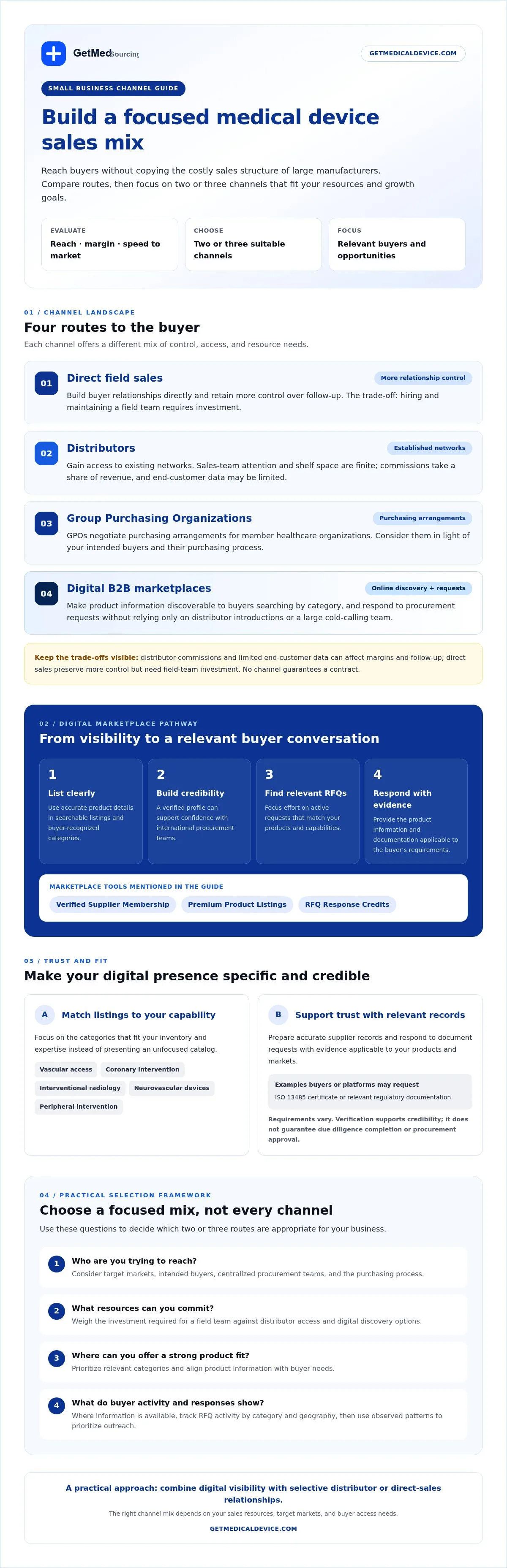
The ecosystem includes direct field sales, which give suppliers greater control over buyer relationships; distributors, which provide access to established networks but take a share of revenue; Group Purchasing Organizations (GPOs), which negotiate purchasing arrangements for member healthcare organizations; and B2B marketplaces, where suppliers can present products and engage with procurement requests online. The best medical device sales channels for small business depend on available sales resources, target markets, and the need for buyer access.
Why the Legacy Distribution Funnel Is Narrowing
Distributors can extend reach, but their sales teams and shelf space are finite. Established brands such as Abbott Vascular may be easier to place than a niche product from a newer supplier, leaving smaller firms to compete for attention. Distributor commissions and limited access to end-customer data can also reduce margins and make it harder for manufacturers to own follow-up relationships. Direct sales preserve more control but require investment in hiring and maintaining a field team.
Digital Marketplaces Expand Visibility
Digital-first channels give smaller suppliers another route to discovery without relying solely on distributor introductions or a large field force. Online listings can reduce some customer-acquisition work by making product information accessible to buyers searching for specific categories. Marketplaces such as GetMedicalDevice also offer Verified Supplier Membership, Premium Product Listings, and RFQ Response Credits. Verified status can help establish credibility with international procurement teams, while RFQ responses let suppliers target relevant opportunities.
Procurement is also becoming more centralized, with buying decisions involving clinical, financial, and administrative stakeholders. Suppliers need clear product information and evidence of value across those audiences. Digital category pages help buyers explore specialized areas such as coronary intervention and interventional radiology. Pairing digital visibility with selective distributor or direct-sales relationships can help SMEs broaden access while retaining more control over how they reach buyers.
Digital B2B Marketplaces: The SME Sales Equalizer
A B2B marketplace gives suppliers a digital route to buyers who are already searching for products or issuing procurement requests. For SMEs, this can create visibility beyond existing distributor relationships and reduce reliance on a large cold-calling team. It doesn’t guarantee a contract: suppliers still need relevant products, clear information, and timely responses to buyer requirements.
Use Premium Product Listings to present product details in a searchable format, and keep descriptions accurate and aligned with the categories buyers use. RFQ systems can help focus sales effort on active requests rather than broad, unqualified outreach. With GetMedicalDevice, suppliers can use RFQ Response Credits to pursue relevant surgical and vascular leads.
Verification Builds Buyer Confidence
For a small supplier entering international markets, buyer confidence can be a significant hurdle. Verification helps establish a credible presence, but it isn’t a substitute for due diligence or a guarantee of procurement approval. Prepare accurate supplier records and respond to document requests with evidence applicable to your products and markets. Buyers or platforms may request materials such as an ISO 13485 certificate or relevant regulatory documentation; requirements vary, so don’t imply one document applies to every supplier.
A Verified Supplier Membership can help an SME present a verified profile alongside established names such as Terumo and Asahi Intecc. This creates a clearer basis for consideration, while product quality, compliance, and buyer fit remain essential. For businesses working with digital health products, the FDA’s Digital Health Center of Excellence provides information on the agency’s work in this area.
Target Categories and Markets
Focus listings on the product categories that match your inventory and capabilities. For example, suppliers can explore demand in neurovascular devices or peripheral intervention rather than presenting an unfocused catalog. Track RFQ activity by category and geography where that information is available, then use observed patterns to prioritize outreach. This makes medical device sales channels for small business more targeted and manageable.
To assess a digital route, review GetMedicalDevice’s supplier membership, product listing, and RFQ options against your sales priorities.
Evaluating Channel Performance: GPOs, Distributors, and Direct
Compare channels against three operational measures: margin retained after commissions or discounts, access to target buyers, and time and effort required to enter a market. Direct sales offer more control over customer relationships but require sales capacity. Distributors can provide established reach, while reducing margin and access to buyer data. GPOs can open doors to participating healthcare organizations, but a contract doesn’t guarantee orders; suppliers still need to demonstrate product value and meet each buyer’s procurement requirements.
- Margin: Account for commissions, discounts, and the internal cost of serving accounts.
- Reach: Assess whether the channel connects with your priority facilities and decision-makers.
- Speed to market: Consider onboarding, procurement review, and the resources needed to support sales.
For medical device sales channels for small business, a hybrid approach can balance reach and control. A digital marketplace can surface procurement opportunities, while a local niche distributor or independent representative provides market relationships. For a surgical product manufacturer, an effective mix may pair digital listings and RFQ responses with selective local representation, based on buyer access, product fit, and available sales capacity.
Use Representatives Selectively
Evaluate independent reps for relevant account relationships, product-category experience, and clear reporting practices. For surgical products, define territory, target accounts, responsibilities, and performance measures before engagement. A performance-based agreement may help align compensation with results, but clarify payment triggers and expense responsibilities to manage cash flow.
Assess Direct-to-Hospital Readiness
Digital portals can help specialized suppliers reach hospital buyers without relying exclusively on an intermediary. Direct selling also places responsibility on the supplier to coordinate order fulfillment and provide accurate, market-appropriate product and regulatory documentation. Requirements vary by device and destination. In 2026, the FDA’s QMSR took effect on February 2, while four EUDAMED modules became mandatory in the EU on May 28. Confirm which requirements apply to your products and markets before choosing a sales route.
Compare your channel priorities with GetMedicalDevice’s Verified Supplier Membership, Premium Product Listings, and RFQ Response Credits.
Building a Scalable Multi-Channel Strategy
Build your channel plan in stages. A verified digital presence can support buyer confidence, while focused listings and disciplined RFQ responses help turn visibility into sales opportunities. Use digital channels to test market interest, then add field sales selectively where account value justifies the cost.
- Establish a verified profile. Keep supplier information accurate and current so procurement teams can assess your business with confidence.
- List products in relevant categories. Place suitable inventory in a focused area such as vascular access, and ensure listing details reflect the products you can supply.
- Respond to relevant RFQs. Use RFQ Response Credits selectively to pursue procurement requests that match your product range, target markets, and capacity.
- Expand field sales deliberately. Use revenue and buyer engagement to inform investment in sales coverage for high-value accounts, rather than building a large field team before demand is established.
This staged approach makes medical device sales channels for small business more manageable: digital discovery supports reach, and targeted relationship-building supports complex accounts.
Make RFQ Responses Specific
Address the buyer’s stated clinical and procurement needs directly. Confirm product fit, provide accurate technical information, and identify any requested documentation you can supply. Before using credits, assess whether the request matches your capabilities and commercial priorities. For interventional oncology opportunities, pursue an RFQ only when the product and request are a genuine fit; don’t assume a category or lead is available.
Audit Channel Performance
Review each channel against qualified inquiries, RFQ response activity, resulting orders, time invested, and margin retained. Separate early visibility from realized sales, since a listing or procurement response alone doesn’t establish return on investment. Reassess target categories and geographies as buyer inquiries change. Where marketplace activity data is available, use it alongside direct buyer feedback to decide whether to adjust listings, pursue different RFQs, or expand local sales coverage. Update the plan as sourcing priorities shift, while maintaining accurate supplier and product information.
Turn Channel Priorities Into a Scalable Growth Plan
Choosing medical device sales channels for small business is a resource-allocation decision. Digital marketplaces can extend buyer visibility and surface relevant RFQs, while distributors and direct sales can support selected markets and complex accounts. A verified supplier presence provides a foundation for international trust, but each opportunity still requires accurate product information, buyer fit, and consistent follow-up.
Review channel performance using qualified inquiries, RFQ activity, sales outcomes, and the time required to support each route. Then direct effort toward the channels that align with your products and growth capacity. A measured approach helps avoid the cost of scaling a field team before demand is clear, while preserving options for high-value relationships.
GetMedicalDevice offers Verified Supplier Membership, Premium Product Listings, and RFQ Response Credits to help suppliers present their business and pursue surgical and interventional procurement requests. Its marketplace supports visibility among international distributors and hospital buyers. Access the global medical device marketplace and become a verified supplier to put your channel strategy into action. With focused execution, your business can build a credible presence and compete for relevant opportunities.
Frequently Asked Questions
What is the most cost-effective sales channel for a medical device startup?
There isn’t one lowest-cost channel for every startup; the right choice depends on product, target buyers, and sales capacity. A B2B marketplace can help a small supplier reach procurement opportunities without first hiring a large field team. Compare membership, listing, and RFQ expenses with the time required to respond and follow up. Track qualified inquiries and sales, then adjust the channel mix based on results.
How do small businesses compete with major brands on B2B marketplaces?
Small businesses can compete for buyer attention by making their supplier profiles complete, using focused product listings, and targeting specific procurement needs rather than trying to match a major brand’s breadth. Verified status can help establish credibility, while accurate technical information supports buyer evaluation. Respond promptly and selectively to relevant requests. Marketplace visibility can create an opportunity to be considered, but it doesn’t guarantee a contract or purchase.
Can a small medical device company sell directly to hospitals?
Yes, a small company can pursue direct hospital sales if it can meet the relevant product, documentation, and procurement requirements. Before approaching a facility, identify its purchasing process and decision-makers, prepare clear product and regulatory information, and plan how orders and buyer questions will be handled. Direct sales can preserve more control over the customer relationship, but they require staff time and a process for supporting accounts.
What is the role of a Verified Supplier Membership in medical sales?
A Verified Supplier Membership gives suppliers a verified presence on a B2B marketplace, which can support buyer confidence during initial evaluation. It helps procurement teams distinguish a supplier profile and review its product information, but it isn’t a regulatory approval, a purchasing contract, or a guarantee of sales. Suppliers should keep their business details accurate and provide any applicable documentation buyers request during due diligence.
How do RFQ credits help small businesses find new buyers?
RFQ Response Credits allow suppliers to respond to active procurement requests from buyers such as hospitals, clinics, and international distributors. They can help a small business focus outreach on requests that match its inventory and capabilities instead of relying only on cold calls. Review each RFQ’s requirements before responding, and provide precise information. Credits enable responses, but they don’t guarantee buyer engagement or an order.

