
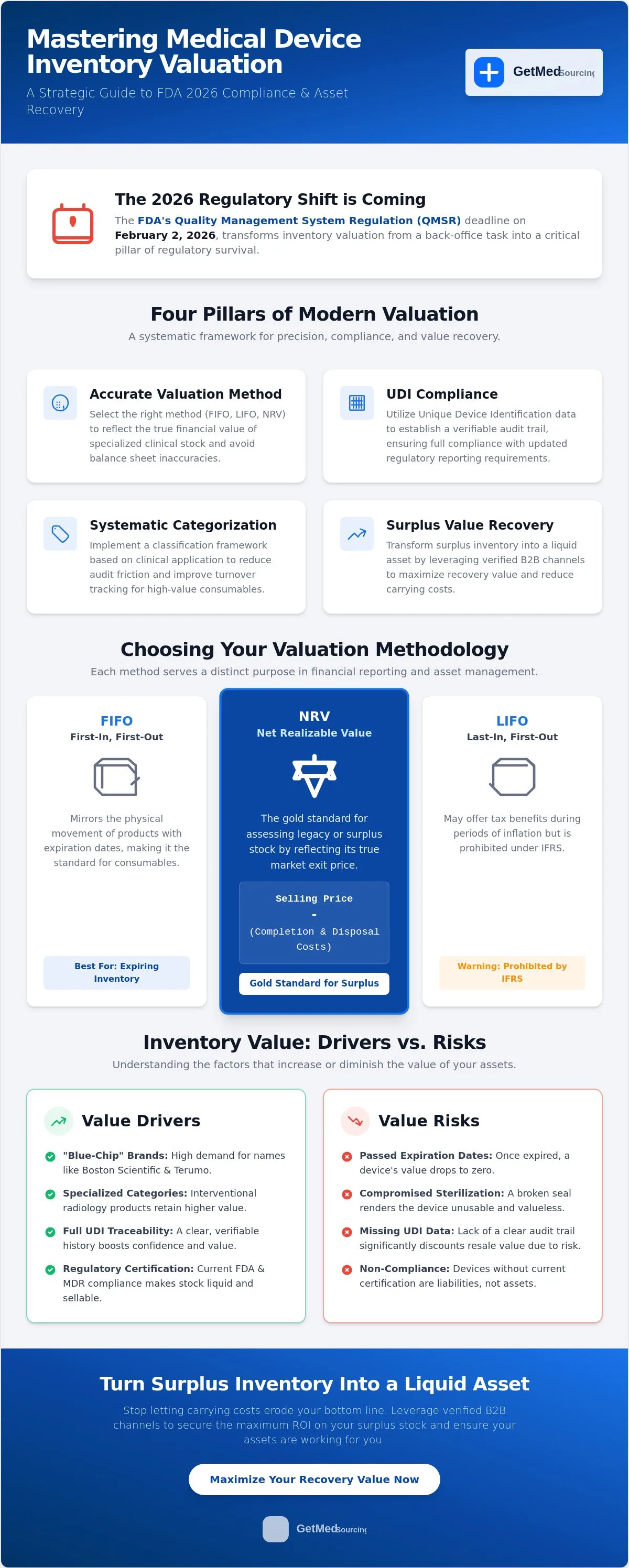
The transition to the FDA’s Quality Management System Regulation on February 2, 2026, has turned medical device inventory valuation from a back-office accounting task into a critical pillar of regulatory survival. You likely understand the difficulty of maintaining accurate valuations for specialized assets like neurovascular catheters while navigating the strict requirements of UDI compliance. Maintaining surplus inventory without a clear financial strategy often results in high carrying costs and preventable waste.
This guide provides a systematic framework to master the methodologies necessary for precise financial reporting and B2B resale recovery. You'll learn how to integrate ISO 13485:2016 standards with modern accounting practices to optimize your balance sheet. We will preview the essential steps for tracking turnover and leveraging marketplace data to secure the maximum ROI on your surplus stock through verified professional channels.
Key Takeaways
- Identify the most effective medical device inventory valuation method by evaluating the financial impact of FIFO, LIFO, and Net Realizable Value on your specific clinical stock.
- Utilize Unique Device Identification (UDI) data to establish a verifiable audit trail, ensuring compliance with updated 2026 regulatory reporting requirements.
- Implement a systematic categorization framework based on clinical application to reduce audit friction and improve turnover tracking for high-value consumables.
- Transform surplus inventory into a liquid asset by leveraging verified B2B channels to maximize recovery value and reduce long-term carrying costs.
Table of Contents
- Understanding the Foundations of Medical Device Inventory Valuation
- Choosing the Right Valuation Methodology: FIFO, LIFO, and NRV
- Step-by-Step Guide to Executing an Inventory Valuation Audit
- Optimizing Surplus Value Through Verified B2B Channels
Understanding the Foundations of Medical Device Inventory Valuation
Effective medical device inventory valuation is the systematic process of assigning specific monetary value to clinical stock for purposes of financial reporting and asset management. This procedure requires a high degree of precision to ensure that balance sheets accurately reflect the current market worth of specialized medical assets. By Understanding the Foundations of Medical Device Inventory Valuation, organizations manage the transition from procurement to utilization or resale with greater efficiency.
The role of Unique Device Identification (UDI) is central to establishing a verifiable audit trail. Unlike general commodities, high-value consumables require granular tracking to maintain their financial integrity. A UDI allows for the immediate verification of a device's origin, batch, and compliance status. This data directly impacts the residual value of legacy stock; a device without a clear, verifiable UDI history is often valued at a significant discount because of the increased risk of non-compliance or authenticity issues.
The "useful life" of inventory in this sector isn't just a function of time but of biological and chemical stability. For vascular access products, expiration dates and sterilization cycles act as the primary value drivers. Once a sterilization seal is compromised or the expiration date passes, the asset's value effectively drops to zero. Valuation models must account for these hard stops to prevent overstating inventory worth. It's fundamentally different from capital equipment valuation, which focuses on depreciation-heavy cycles over years. Consumable valuation is turnover-heavy and requires real-time adjustments based on shelf-life proximity.
Regulatory Impact on Asset Value
Compliance status with FDA and MDR standards dictates the liquidity of surplus inventory. Devices that lack current regulatory certification cannot be legally sold or used, rendering them liabilities rather than assets. Verified Medical Device Suppliers maintain higher valuation recovery because their stock carries documented proof of compliance, which reduces the risk for B2B buyers and accelerates the transaction process.
Inventory Categories and Their Value Drivers
Value retention varies significantly across clinical specialties. Products within interventional radiology typically maintain higher resale percentages than general surgical products because of their specialized nature. Inventory from "blue-chip" manufacturers like Boston Scientific and Terumo acts as a stable asset. These brands command consistent demand in the secondary market, allowing for predictable recovery rates during surplus liquidation.
Choosing the Right Valuation Methodology: FIFO, LIFO, and NRV
Selecting an appropriate medical device inventory valuation methodology requires balancing tax efficiency with clinical reality. First-In, First-Out (FIFO) is the standard for consumables because it mirrors the physical movement of products with expiration dates. Conversely, Last-In, First-Out (LIFO) might offer tax benefits during periods of inflation, though it's prohibited under International Financial Reporting Standards (IFRS). Organizations must also adhere to the "Lower of Cost or Market" (LCM) rule. This ensures that assets aren't overstated on the balance sheet. This is especially critical for specialized devices from innovators like Abbott Vascular. Rapid innovation cycles in vascular technology can render older models obsolete before they're utilized, making historical cost a poor indicator of actual value.
Calculating Net Realizable Value (NRV)
In 2026, Net Realizable Value (NRV) has become the gold standard for assessing legacy or surplus stock. The formula is precise: Estimated Selling Price minus the Costs of Completion and Disposal. To determine an accurate selling price, procurement officers should analyze current liquidity data from verified medical device listings. This market-based approach provides a realistic recovery figure that traditional book value often misses. When Executing an Inventory Valuation Audit, using NRV prevents financial inaccuracies during year-end reporting by reflecting the true exit price of the asset.
Inventory Turnover and Carrying Costs
The medical device sector targets an inventory turnover ratio of 10.9. Falling below this benchmark suggests logistical inefficiencies that lead to high carrying costs. These expenses include climate-controlled storage, insurance, and specialized handling protocols required for sterile stock. Over time, these cumulative costs erode the initial value of the inventory. It's vital to identify slow-moving assets early to mitigate these losses. High-demand categories like peripheral intervention equipment require frequent monitoring. Consistent tracking ensures the turnover remains healthy and carrying costs don't exceed the asset's potential resale value in the B2B marketplace.
Step-by-Step Guide to Executing an Inventory Valuation Audit
Executing a rigorous audit ensures that medical device inventory valuation reflects actual warehouse conditions rather than theoretical ledger entries. A systematic approach minimizes discrepancies between physical stock and financial documentation. Follow these five instructional steps to verify your asset base.
- Step 1: Categorize inventory by clinical application. Prioritize high-value categories like neurovascular or cardiac rhythm management. Grouping assets this way, alongside peripheral intervention and wound care, improves tracking accuracy for specialized stock.
- Step 2: Verify UDI and lot numbers. Cross-reference every item's Unique Device Identification against manufacturer records. This confirms authenticity and ensures the device isn't subject to active recalls or safety alerts.
- Step 3: Assess physical condition. Inspect sterile packaging integrity for all high-value items. Compromised seals immediately invalidate the asset's clinical and financial value.
- Step 4: Apply valuation methodology. Use your chosen framework, such as FIFO or NRV, to calculate the current value. Consult KPMG's guide to inventory accounting standards to ensure alignment with global standards.
- Step 5: Identify surplus stock. Flag items with low turnover or approaching expiration dates. These "slow-moving" assets are prime candidates for B2B liquidation to recover capital.
The Role of Digital Marketplaces in Auditing
Modern procurement officers use a b2b medical device marketplace to benchmark current market prices during the audit phase. This real-time data provides a more accurate Net Realizable Value than historical purchase prices. Maintaining a "Verified Supplier" status is essential when listing audited inventory. It signals to global buyers that the stock has undergone a systematic verification process, often resulting in higher recovery rates. You can list your verified inventory here to optimize your resale recovery.
Common Audit Pitfalls to Avoid
One primary risk is "phantom inventory," where items remain on the books despite being physically absent or discarded. This inflates the medical device inventory valuation and leads to inaccurate tax filings. Additionally, don't ignore "hidden" costs associated with older devices. Certain legacy stock may require expensive regulatory re-certification or specialized testing before it can be legally resold. Failing to account for these expenses results in an overstated Net Realizable Value.
Optimizing Surplus Value Through Verified B2B Channels
To maximize the financial outcome of a medical device inventory valuation, organizations must transition from viewing surplus as a sunk cost to treating it as a liquid asset. Strategic B2B listing allows for the recovery of capital that would otherwise be lost to obsolescence or disposal fees. Verified Medical Device Suppliers consistently achieve higher valuation recovery because their listings carry the necessary trust markers for international procurement. Using RFQ response credits provides a data-driven method to gauge market interest before committing to a full liquidation. High-demand assets from manufacturers like Asahi Intecc serve as a strategic entry point to attract global distributors and secondary market buyers who prioritize brand reliability.
Leveraging Premium Product Listings
Verification and documentation are the primary drivers of realized value for surplus surgical products. Detailed listings that include sterilization dates, lot numbers, and high-resolution imagery reduce the perceived risk for buyers. This transparency is especially critical for niche neurovascular equipment. Precision and authenticity are non-negotiable in these clinical applications. Digital platforms provide the global reach necessary to connect specialized inventory with clinical facilities that require these specific device configurations but face local supply constraints. By providing comprehensive data, sellers ensure their stock remains competitive against newer iterations.
Building a Long-Term Recovery Strategy
A sustainable inventory management model requires a quarterly valuation review. It's a proactive approach that identifies surplus stock well before it reaches critical expiration windows. Integrating a verified medical device procurement framework allows organizations to balance their buy-side and sell-side activities within a single, verified ecosystem. This systematic oversight ensures that the financial integrity of the warehouse is maintained. Every asset is positioned for maximum ROI throughout its clinical lifecycle, preventing the accumulation of dead stock that drains organizational resources.
Maximizing Asset Recovery Through Systematic Valuation
Maintaining a precise medical device inventory valuation is a fundamental requirement for operational stability in 2026. Success depends on the transition from traditional book value to market-realization models that account for rapid innovation and regulatory shifts. Implementing a structured audit process protects your balance sheet from the erosion caused by expiring consumables and obsolete technology. Strategic liquidation through professional channels transforms dormant stock into immediate capital.
You are invited to Join as a Verified Supplier to optimize your inventory recovery and access global B2B buyers. The platform offers verified status for premium brands like Terumo and Abbott Vascular while providing access to an extensive global network of hospital procurement officers. Our credit-based RFQ system ensures efficient bidding and transparent price discovery for every transaction. Secure your financial future by turning inventory management into a proactive engine for growth.
Frequently Asked Questions
What is the difference between book value and market value for medical devices?
Book value represents the historical cost of the asset as recorded on the balance sheet, often adjusted for depreciation in the case of capital equipment. Market value reflects the current price a willing buyer in the B2B marketplace is prepared to pay today. For specialized clinical consumables, market value is heavily influenced by technological relevance and proximity to expiration dates.
How often should a hospital conduct a medical device inventory valuation?
Hospitals should perform a comprehensive medical device inventory valuation at least once per fiscal year to ensure accurate financial reporting. High-turnover departments, such as interventional cardiology or neurovascular units, benefit from quarterly reviews. Frequent assessments allow procurement teams to identify slow-moving stock early, which reduces the risk of asset write-offs due to expiration.
Does UDI compliance impact the financial value of my medical stock?
UDI compliance directly maintains the financial value of medical stock by providing a verifiable audit trail for every unit. Devices with complete UDI documentation achieve higher Net Realizable Value in secondary markets because they guarantee traceability and regulatory alignment. Stock lacking verifiable UDI data is classified as high-risk inventory, which significantly lowers its valuation during B2B liquidation.
What is the "Lower of Cost or Market" (LCM) rule in medical procurement?
The "Lower of Cost or Market" rule is an accounting principle requiring inventory to be recorded at either its original purchase cost or its current market replacement value, whichever is lower. This protocol prevents organizations from overstating assets on financial statements. It's especially relevant for specialized devices where rapid innovation cycles can quickly drive market prices below the original procurement cost.
How can I recover value from surplus or near-expiry medical devices?
Value recovery is maximized by listing surplus inventory on verified B2B digital platforms to access a global network of hospital procurement officers. This strategy allows organizations to offload devices to facilities with immediate clinical requirements before the products expire. Converting surplus stock into liquid capital reduces carrying costs and avoids the financial loss associated with professional disposal services.