
The global refurbished medical equipment market is projected to reach 23.6 billion dollars in 2026, yet many organizations continue to let working capital stagnate in aging SKUs and specialized equipment. It's a persistent operational challenge to manage high storage costs and approaching expiration dates on sterile products while attempting to maintain a lean, agile supply chain. You're likely seeking a methodical process to offload these assets without compromising regulatory standing or financial returns. This guide provides a systematic framework for implementing professional medical device inventory liquidation strategies that recover capital for newer product lines. By following this structured approach, you'll gain access to a global network of verified buyers and professional procurement workflows. We'll examine the necessary inputs for inventory rationalization, the impact of the 2026 FDA Quality Management System Regulation (QMSR) on asset resale, and the logistical steps required to convert stagnant hardware into liquid resources.
Key Takeaways
- Establish a systematic framework for SKU rationalization to identify stagnant inventory and prioritize specific assets for immediate capital recovery.
- Implement professional medical device inventory liquidation strategies to mitigate the financial impact of approaching sterilization expiration dates and excessive storage overhead.
- Maintain rigorous compliance and traceability standards during the ownership transfer of Class II and Class III devices to ensure a documented paper trail.
- Utilize verified global networks and RFQ response credits to increase visibility and secure competitive bids for surplus stock from major manufacturers.
- Transition from passive inventory holding to active capital redistribution to enhance organizational agility and fund newer product lines.
Table of Contents
- The Strategic Role of Inventory Liquidation in Medical Supply Chains
- Core Strategies for Liquidating Excess Medical Equipment
- Executing a Compliant and Documented Liquidation Process
- Optimizing Liquidation ROI with Verified Platforms
The Strategic Role of Inventory Liquidation in Medical Supply Chains
Medical device inventory liquidation is the formal, systematic process of offloading surplus or stagnant stock to recover working capital. It's a critical mechanism for maintaining supply chain liquidity and ensuring that resources are allocated efficiently. Professionals must accurately identify what is excess inventory to prevent it from becoming a permanent financial liability on the balance sheet. Primary drivers for these actions include rigorous SKU rationalization, rapid technological model updates, and the approaching expiration dates of sterile products.
When inventory remains stagnant, it consumes capital that's better utilized for R&D or the procurement of next-generation medical technologies. Adopting a liquidation-first mindset is necessary for products with high depreciation rates. These items lose value quickly as newer, more efficient models enter the market. Delaying the decision to liquidate often results in a total loss of asset value once sterilization dates pass. Effective medical device inventory liquidation strategies turn these potential losses into recoverable assets.
The Financial Burden of Stagnant Medical Assets
Warehousing specialized devices, such as coronary intervention products, involves significant hidden costs. These assets require specialized climate-controlled environments and frequent regulatory audits to ensure their continued integrity. Inventory carrying cost for sterile medical environments is the cumulative expense of maintaining stock, encompassing specialized storage, insurance, and the opportunity cost of tied-up capital.
The risk profile of holding inventory past its primary market window is severe. As clinical standards evolve, older devices become obsolete, leaving organizations with unsellable stock. Proactive liquidation allows for the recovery of funds before these assets reach zero value. By treating liquidation as a standard phase of the product lifecycle, organizations maintain the agility needed to respond to shifts in healthcare demand. It's about moving from a reactive disposal model to a proactive capital redistribution strategy.
Core Strategies for Liquidating Excess Medical Equipment
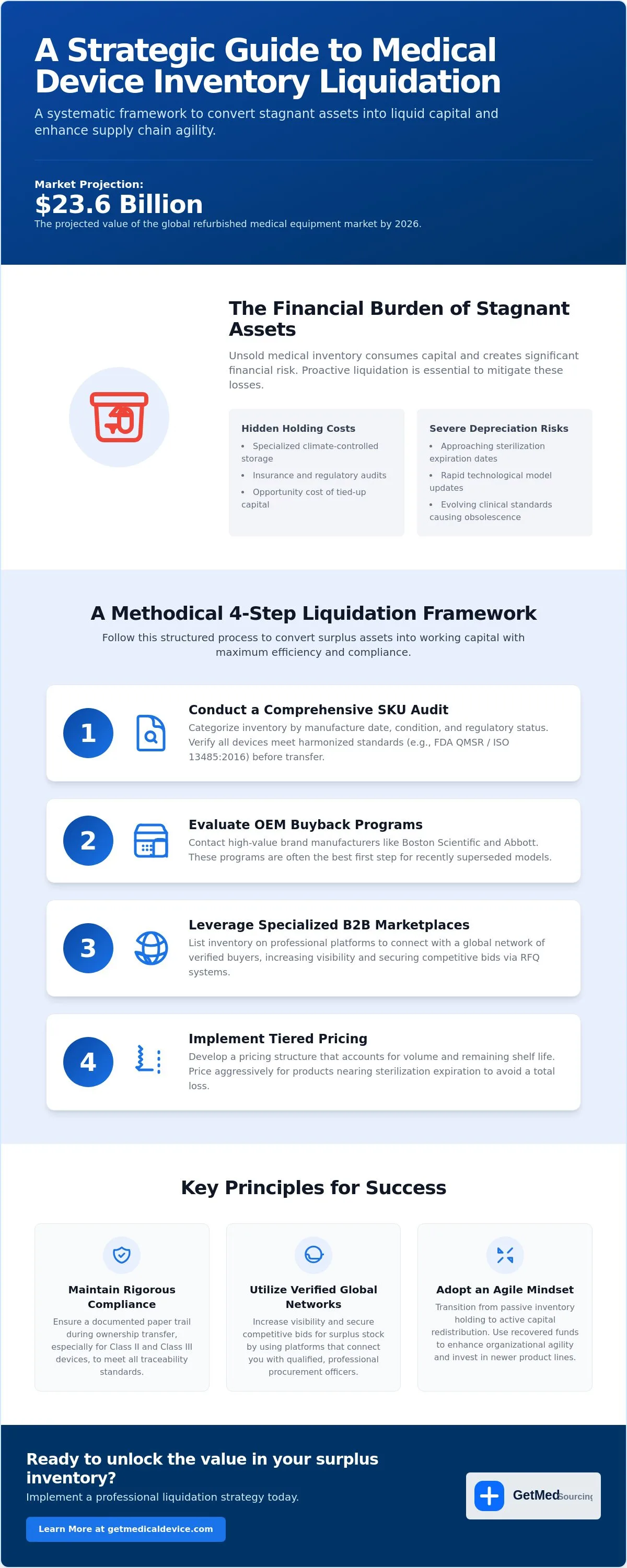
Executing successful medical device inventory liquidation strategies requires a methodical four step framework. This process ensures that organizational assets are converted into capital with minimal friction and maximum regulatory compliance. Following these steps allows procurement officers to maintain a lean inventory profile while recovering value from stagnant SKUs.
- Step 1: Conduct a Comprehensive SKU Audit. Categorize all surplus inventory by manufacture date, current condition, and regulatory status. Given the February 2026 FDA QMSR updates, you must verify that all devices meet the harmonized ISO 13485:2016 standards before attempting a transfer of ownership.
- Step 2: Evaluate OEM Buyback Programs. High value brands such as Boston Scientific and Abbott Vascular occasionally offer buyback or trade in credits for newer product generations. Contacting these manufacturers directly is a necessary first step for recently superseded models.
- Step 3: Leverage Specialized B2B Marketplaces. Move beyond local demand constraints by listing inventory on platforms designed for the medical industry. These channels connect sellers with global buyers who have specific needs for equipment that may be surplus in your region.
- Step 4: Implement Tiered Pricing. Develop a pricing structure that accounts for volume and remaining shelf life. Products approaching their sterilization expiration dates should be priced for rapid movement to avoid a total loss of asset value.
Leveraging Global B2B Marketplaces for Rapid Recovery
Traditional auction sites often lack the technical infrastructure to handle specialized neurovascular devices. These high stakes assets require a platform that prioritizes verification and professional documentation. Utilizing a system that features verified medical device suppliers ensures that your premium stock is visible to qualified procurement officers rather than casual buyers. Within these marketplaces, RFQ (Request for Quote) systems allow you to gauge market interest and respond to specific needs without publicizing broad price reductions. This maintains the perceived value of your inventory while facilitating direct negotiations with serious entities.
Remarketing vs. Bulk Liquidation: Choosing the Right Path
Choosing between direct remarketing and bulk liquidation depends on your recovery timeline and asset type. Direct remarketing to other clinical facilities typically yields a higher ROI but requires more administrative resources for individual transactions. Conversely, bulk sales to international distributors offer immediate capital recovery and lower logistical overhead. Categories such as peripheral intervention are particularly well suited for global redistribution due to consistent demand across diverse geographic markets. Organizations seeking to streamline this process often find that securing a verified supplier membership provides the necessary tools to manage these complex global transactions efficiently.
Executing a Compliant and Documented Liquidation Process
Transferring ownership of Class II and Class III medical devices is a high-stakes regulatory event that requires adherence to strict documentation protocols. It's not merely a financial transaction; it's a transfer of clinical responsibility that must be recorded within your Quality Management System (QMS). Effective medical device inventory liquidation strategies prioritize a complete paper trail that maintains traceability from the original manufacturer to the final liquidator. This documentation is essential for satisfying the February 2, 2026, FDA Quality Management System Regulation (QMSR) requirements, which now harmonize with international ISO 13485:2016 standards.
Rigorous documentation prevents the risk of devices entering the "grey market," where products are sold through unauthorized channels without proper climate control or handling records. Bypassing verified channels exposes your organization to significant legal liability if a liquidated device is involved in a clinical failure. Ensuring every transaction is anchored by a formal audit trail protects the integrity of your supply chain and your professional standing.
Buyer Verification and Credentialing
A professional liquidation workflow requires thorough vetting of all potential buyers to ensure they're authorized to handle specialized medical hardware. You must collect and verify essential documents, including current medical licenses, corporate tax IDs, and relevant import or export permits. Utilizing platforms that pre-vet participants significantly reduces the administrative burden of this process and ensures devices don't end up in unauthorized clinical use. This level of scrutiny aligns with the Global Medical Device Sourcing and Procurement framework, which emphasizes verified B2B interactions. Organizations that operate as a verified medical device supplier typically have these verification protocols already integrated into their procurement systems.
Documentation Standards for Secondary Market Sales
Every liquidation sale must be governed by a comprehensive Medical Device Sales Agreement that specifies the "as-is" condition, sterilization status, and the transfer of liability. This agreement should include the Unique Device Identifier (UDI) for every SKU to maintain the traceability required by global regulators. A Certificate of Free Sale is a mandatory document in international liquidation that confirms the device is legally sold in the country of origin and meets all applicable safety standards. Including maintenance logs and calibration certificates for active equipment further validates the asset value and ensures the buyer can integrate the device into their own compliant QMS.
Optimizing Liquidation ROI with Verified Platforms
Maximizing the financial return on surplus assets requires moving beyond passive listings. Premium product listings ensure that stagnant stock receives priority visibility among global procurement officers. By utilizing RFQ response credits, organizations can actively bid on procurement requests for items similar to their excess inventory. This proactive engagement converts passive stock into active capital more rapidly than traditional disposal methods. The "Trust Dividend" associated with a verified membership allows sellers to command higher prices, as buyers are willing to pay a premium for reduced regulatory and logistical risk.
Transitioning from reactive liquidation to an agile inventory model involves using real-time market data to identify surplus before it reaches critical expiration windows. This shift allows for a more fluid redistribution of assets based on global demand shifts rather than local obsolescence. Implementing these medical device inventory liquidation strategies ensures that the supply chain remains lean and responsive to technological advancements. It transforms the liquidation department from a cost center into a strategic source of recovered capital.
Integrating Liquidation into Long-term Supply Chain Strategy
The objective is to move away from inefficient annual "clean-outs" toward a continuous inventory rationalization process. This methodical approach ensures that capital isn't unnecessarily tied up in depreciating hardware for extended periods. Market data obtained during the liquidation process provides valuable insights into the secondary market value of specific categories. This information should inform future procurement decisions for high-turnover items like vascular access and surgical products.
For organizations looking to replace liquidated stock with verified equipment, exploring categories such as endoscopy or cardiac rhythm management provides a compliant path to modernization. This creates a circular procurement loop where liquidated assets fund the acquisition of newer, higher-demand technologies. By maintaining a continuous flow of inventory through verified B2B platforms, supply chain managers can maintain higher levels of liquidity and operational flexibility.
Advancing Toward Agile Inventory Management
Transitioning from stagnant stock to liquid capital is no longer optional in a high-compliance, fast-moving healthcare market. We've established how rigorous SKU rationalization and strict documentation standards protect your organization's regulatory standing while maximizing asset recovery. Implementing these medical device inventory liquidation strategies ensures that your facility remains focused on clinical innovation rather than the costs of specialized storage. By treating liquidation as a proactive phase of the product lifecycle, you maintain the agility required to adopt next-generation technologies as they emerge.
To execute these complex logistical workflows with precision, you require a stable, global infrastructure that prioritizes verified processes. Become a Verified Supplier on GetMedicalDevice to liquidate your inventory through our global network. This membership provides direct access to a verified network of global procurement officers and offers premium listings for high-value interventional brands. You'll also utilize a credit-based RFQ system designed for active lead generation, allowing you to respond directly to market demand. Maintaining a lean, modernized inventory profile is well within reach when you leverage professional B2B tools designed for the medical industry.
Frequently Asked Questions
What are the most common reasons for medical device inventory liquidation?
The primary drivers for medical device inventory liquidation include SKU rationalization, rapid technological updates in specialized fields like interventional cardiology, and approaching sterilization expiration dates. Organizations often offload assets to recover working capital and reduce the high overhead associated with climate-controlled warehousing. Systematic liquidation allows facilities to fund the procurement of newer product lines while maintaining a lean, responsive supply chain.
Is it legal to sell excess medical device inventory to international buyers?
Selling excess medical inventory to international buyers is legal provided you adhere to export regulations and the specific import requirements of the destination country. It's a common component of medical device inventory liquidation strategies to reach global buyers where demand for specific models remains high. You must maintain rigorous documentation, including a Certificate of Free Sale and verified sterilization records, to ensure the transfer remains compliant.
How can I verify the credentials of a B2B medical equipment buyer?
Verification requires a structured collection of professional documentation, including current medical licenses, corporate tax IDs, and relevant import or export permits. Utilizing a professional B2B marketplace that pre-vets participants is a reliable method to ensure buyers are authorized to handle specialized hardware. This systematic approach reduces the risk of devices entering unauthorized clinical environments and maintains the integrity of your organization's secondary market transactions.
What is the difference between medical device liquidation and a fire sale?
Professional medical device inventory liquidation strategies differ from fire sales through their systematic, value-driven approach. While a fire sale involves desperate price reductions for immediate cash, liquidation is a strategic redistribution of assets through verified global networks. This process focuses on maximizing ROI and maintaining regulatory compliance rather than simply disposing of stock at any cost, ensuring that asset value is recovered efficiently.
How do I ensure regulatory compliance when liquidating Class III medical devices?
Compliance for Class III devices depends on maintaining absolute traceability within your Quality Management System. You must record every Unique Device Identifier (UDI) and ensure a formal sales agreement clearly defines the transfer of liability and sterilization status. Adherence to the February 2026 FDA QMSR updates is mandatory, requiring that all liquidation workflows align with harmonized international standards for high-risk medical hardware.