
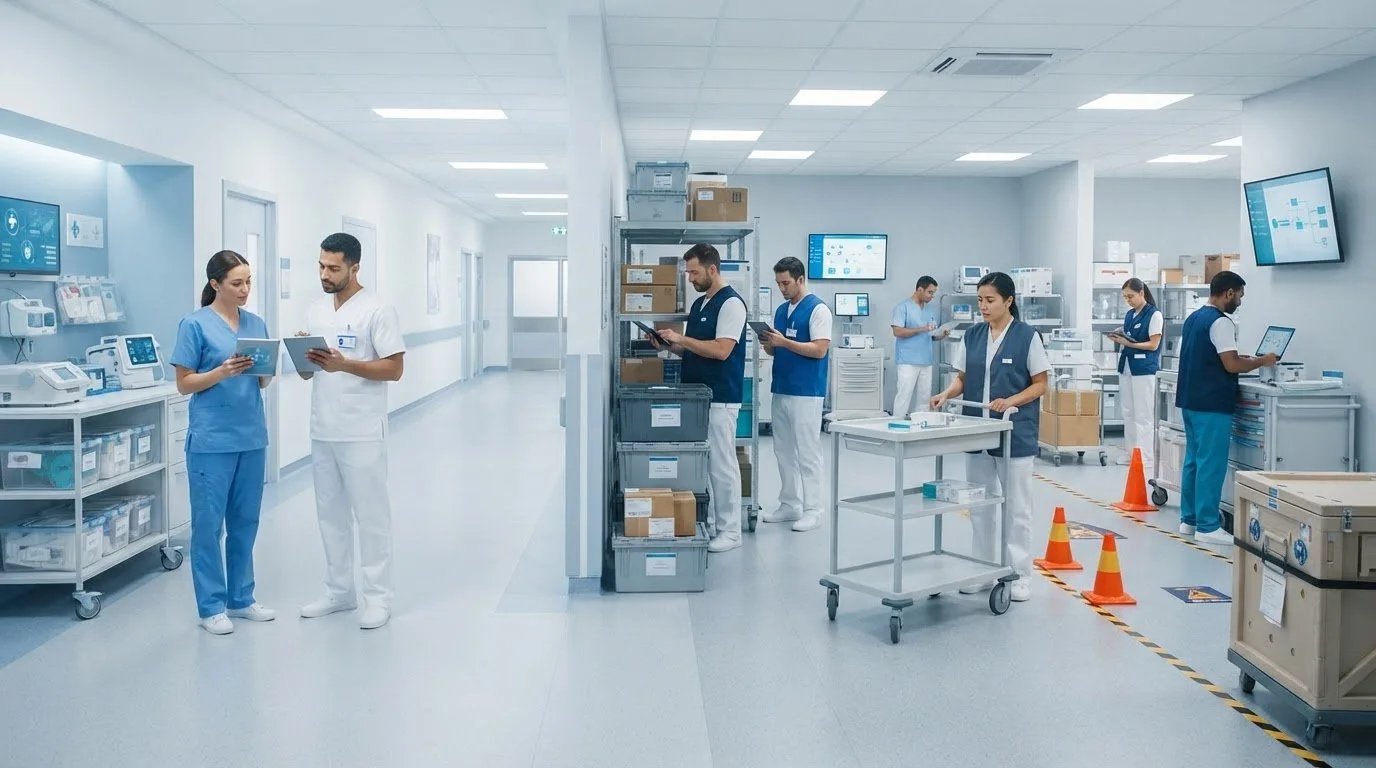
A supply interruption rarely stays within procurement. A delayed medical device can affect procedure schedules, clinical workflows, and decisions about appropriate alternatives. The impact of supply chain disruption on hospitals is therefore both clinical and operational, especially when teams lack clear visibility into inventory and supplier risks.
Hospitals already recognize that shortages can disrupt care. The challenge is identifying which supplies need priority before constraints escalate. Preparedness depends on connecting procurement information with clinical requirements, current stock levels, and realistic sourcing options.
This article explains how disruptions move from supplier constraints to patient-care and operational effects. It also outlines practical steps for prioritizing critical supplies, monitoring supplier risk, and coordinating response across teams. Supplier listings and procurement-request channels can help teams discover and compare sourcing options as part of that process.
Key Takeaways
- Trace how upstream shortages, transport interruptions, supplier changes, and demand shifts can create distinct hospital risks.
- Assess the impact of supply chain disruption on hospitals across patient care, staffing, operations, and finances.
- Build a response sequence that maps critical supplies, monitors risk signals, evaluates alternatives, and assigns cross-functional responsibilities.
- Compare sourcing approaches using supplier details and procurement-request visibility to inform resilience planning.
Table of Contents
- How supply chain disruption affects hospitals beyond procurement
- Clinical, operational, and financial effects of hospital supply disruption
- How hospitals can prepare for and respond to supply disruptions
- How supplier visibility and sourcing options support hospital resilience
How supply chain disruption affects hospitals beyond procurement
A hospital supply chain disruption is an interruption or constraint in the flow of goods needed for clinical care. It differs from routine procurement variation: a delayed order or supplier change becomes a disruption when it limits access to a clinically necessary item or requires teams to adjust planned workflows.
Causes can arise at different points. An upstream shortage may restrict supply before an order is placed. A transport interruption can delay an otherwise available item. A supplier change may affect product specifications or ordering processes, while a sudden increase in demand can reduce available stock. Each constraint may lead teams to assess alternatives, delay a procedure, or revise a workflow. The impact of supply chain disruption on hospitals depends on what is affected, how quickly the constraint is identified, and what responses are appropriate.
Which hospital supplies and dependencies can be affected?
Potentially affected categories include medical devices, consumables, and supplies tied to a specific procedure. Interventional and surgical workflows may depend on several compatible items, not just the primary device. If one required component is unavailable, staff may need to assess an alternative, adjust the procedure plan, or reschedule, depending on clinical suitability and local protocols. These are possible effects, not inevitable outcomes of every shortage.
Why visibility matters before a shortage reaches the bedside
Procurement teams need a clear view of inventory, supplier identity, product details, and open purchasing requests to identify exposure early. Useful checks include comparing on-hand stock with upcoming needs, flagging orders that have changed status, and recording which products have limited alternatives. Without that information, a developing constraint may be harder to distinguish from ordinary order variation, delaying escalation and coordination. The broader principles of supply chain management emphasize the flow of goods and information. In hospitals, visibility helps connect those flows to clinical requirements. Supplier information and sourcing channels can inform assessment, while clinical teams evaluate any proposed alternative before use.
Clinical, operational, and financial effects of hospital supply disruption
The impact of supply chain disruption on hospitals varies with an item’s clinical importance, the availability of acceptable alternatives, and the time needed to adapt. A constraint involving a noncritical consumable may be manageable, while an unavailable procedure-specific device can require a more complex clinical and operational response. A shortage alone does not establish patient harm; the actual effect depends on the care involved and the response available.
Potential patient-care and clinical workflow consequences
If a device required for a planned procedure is unavailable, the care team may need to assess a clinically appropriate alternative or reschedule. Substitution decisions belong to qualified clinicians working within hospital protocols. An alternative should not be treated as interchangeable solely because it serves a similar general purpose. Teams must consider its suitability for the specific patient and procedure before changing the plan.
Operational and financial pressure on hospital teams
Even when care can proceed, resolving a shortage can add coordination work. Staff may need to locate alternatives, confirm product details, obtain approvals, and revise procedure schedules. These steps draw time from procurement, clinical, and administrative teams. Changes to plans may also affect room schedules and related workflows, depending on the hospital’s circumstances.
Financial pressure can arise if teams need to pursue urgent purchasing or evaluate substitute products outside routine procurement plans. The effect depends on the item, purchasing arrangements, and available options; it should not be assumed that every disruption increases expenditure. Broader global sourcing and procurement practices provide useful context for understanding how supplier options and purchasing processes shape a response.
Assess each event by clinical criticality, acceptable alternatives, and the operational effort required to implement a change. Medical device listings can help procurement teams discover relevant products and suppliers. Use product and supplier details to support internal assessment, then route any proposed purchase through established clinical and procurement review.
How hospitals can prepare for and respond to supply disruptions
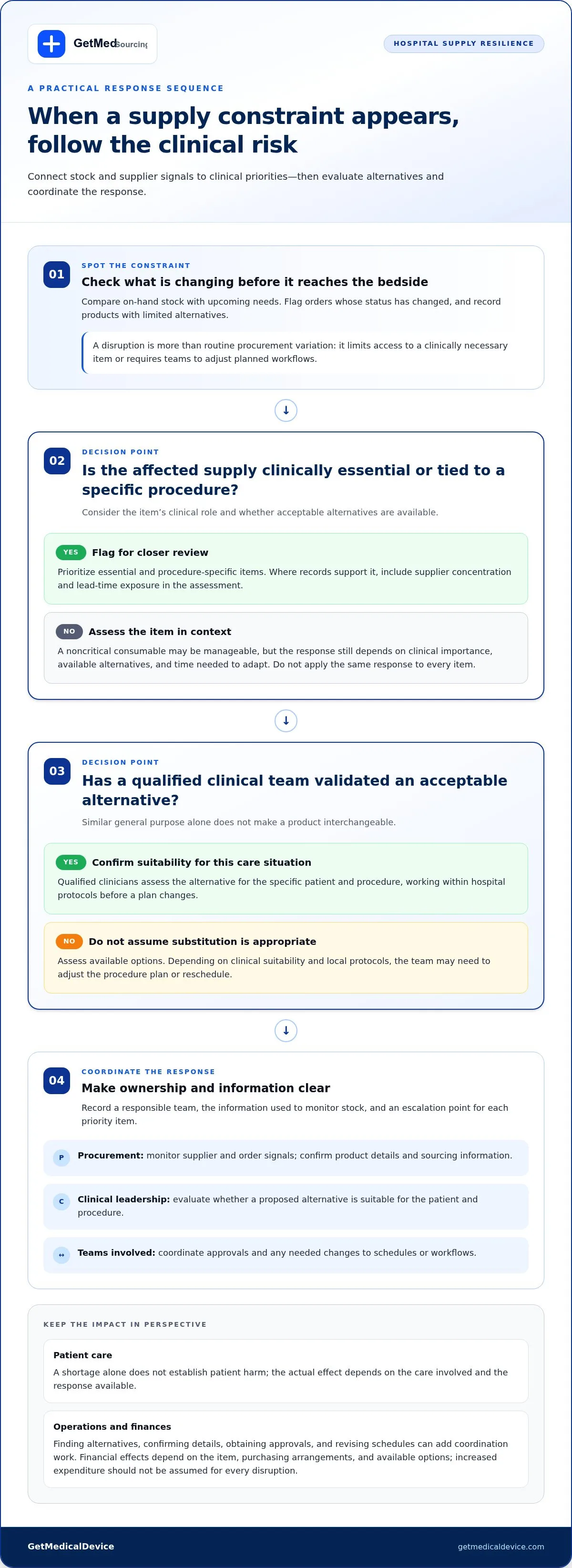
A practical response starts before a shortage reaches clinical teams. Hospitals can establish a repeatable sequence: map critical supplies, monitor risk signals, assess alternatives, then coordinate decisions and communication. This approach helps teams evaluate the potential impact of supply chain disruption on hospitals using clinical priorities and current information rather than reacting to each constraint in isolation.
Prioritize supplies by clinical importance and substitutability
Classify supplies according to their clinical role and whether a qualified team has validated an alternative. Flag essential and procedure-specific items for closer review. Where internal records support it, include supplier concentration and lead-time exposure in the assessment. For each priority item, record the responsible team, the information used to monitor stock, and the escalation point for a potential shortage. Use these priorities to guide inventory checks and contingency planning rather than applying the same response to every item.
Coordinate communication and contingency decisions
Assign clear roles. Procurement monitors supplier and order signals; clinical leadership evaluates clinical suitability; operations assesses schedule and workflow implications; finance reviews purchasing impacts. Establish an escalation path consistent with local policies, including who convenes the response and who communicates decisions to affected teams.
Document scenario plans for constraints such as delayed orders, reduced quantities, or supplier changes. Record decision ownership, approved alternatives, any conditions for use, and the teams that need updates. Review plans periodically so contact points and procedures remain usable.
A hospital response sequence is to identify critical supplies, detect and verify emerging constraints, assess clinically appropriate alternatives, and coordinate documented decisions across procurement, clinical leadership, finance, and operations. For additional risk controls, consult your published guide on reducing risks in medical device procurement.
Use medical device listings as one sourcing reference to discover products and suppliers relevant to identified needs. Compare product details with the hospital’s requirements and include the results in the established review process.
How supplier visibility and sourcing options support hospital resilience
Supplier visibility helps procurement teams assess options before a constraint becomes urgent. A single-source approach can simplify coordination and support consistent purchasing, but it concentrates exposure if that source is disrupted. Diversified sourcing may broaden options while adding supplier-management and product-evaluation work. The appropriate balance depends on clinical requirements, hospital policies, and the availability of suitable alternatives. Better visibility can inform planning, but it cannot remove the impact of supply chain disruption on hospitals.
What to document when assessing a supplier or alternative
Record the supplier’s identity, manufacturer information, product details, and relevant supporting documentation. Compare these details with the hospital’s clinical, procurement, and operational requirements, and route any proposed alternative through the appropriate internal review. Supplier verification or marketplace membership supports supplier discovery and trust, but it does not replace hospital due diligence, product assessment, or applicable regulatory review. For additional verification context, consult the published guide on verified medical device suppliers.
When digital sourcing channels may help procurement teams
Searchable product categories can help teams locate relevant sourcing options and identify suppliers for further assessment. For example, teams reviewing interventional needs can explore coronary intervention devices. Product listings and procurement-request visibility can support discovery and supplier comparison. Teams should still confirm product details and assess them against clinical requirements and internal processes.
Use digital sourcing as one part of a broader process: define the requirement, review supplier and product information, then complete the hospital’s established checks. Browse medical device listings to explore sourcing options for your procurement research.
Strengthen preparedness through visibility and coordinated sourcing
The impact of supply chain disruption on hospitals depends on more than whether an item is delayed. Clinical criticality, suitable alternatives, and the hospital’s ability to identify and coordinate a response all shape the consequences. Mapping priority supplies, monitoring supplier risks, and documenting decision pathways can help teams act with greater clarity.
Supplier visibility and sourcing diversity can support preparedness, but neither guarantees uninterrupted supply. Hospitals still need to assess product details, supplier information, and alternatives against clinical requirements and internal review processes.
GetMedicalDevice is a global B2B marketplace for medical device sourcing. Verified Supplier Memberships and premium product listings help suppliers present their inventories to buyers, while RFQ response credits let suppliers participate in active procurement requests. Hospitals and other buyers can use the platform to discover medical device suppliers and review sourcing options, alongside established due diligence.
Explore medical device sourcing options on GetMedicalDevice to review supplier listings and procurement opportunities as part of your hospital’s sourcing research. Pair that visibility with clear priorities and coordinated decisions to strengthen readiness for changing supply conditions.
Frequently Asked Questions
What is the impact of supply chain disruption on hospitals?
The impact of supply chain disruption on hospitals can include constrained access to devices, consumables, or other clinically necessary goods. Depending on the item and available alternatives, a hospital may need to adjust inventory priorities, purchasing, schedules, or workflows. Effects vary by product and facility. A shortage alone does not establish a specific clinical outcome; assess the actual consequences using documented evidence and local circumstances.
How do medical supply shortages affect patient care?
Medical supply shortages may affect care if a clinically necessary item is unavailable and no suitable alternative can be used under hospital protocols. A clinical team may consider rescheduling a procedure or changing a workflow based on patient needs and local circumstances. These are possible responses, not automatic outcomes. Avoid assuming that a shortage causes patient harm unless a documented case or relevant evidence supports that conclusion.
What causes hospital supply chain disruptions?
Disruptions can result from manufacturing constraints, supplier changes, transport interruptions, unexpected demand, or dependence on limited sources. The cause and severity vary by product and region. Hospitals can improve risk awareness by tracking inventory and supplier information, identifying critical items, and defining how teams will detect and escalate emerging constraints. Reviewing these factors helps distinguish developing supply risks from routine purchasing variation.
How can hospitals prepare for supply chain disruptions?
Hospitals can prepare by mapping clinically critical supplies, identifying items with limited alternatives, monitoring inventory and supplier signals, and setting cross-functional escalation procedures. Scenario planning clarifies who assesses clinical suitability, coordinates operations, reviews purchasing implications, and communicates decisions. Document the process and align it with clinical judgment, institutional policy, applicable requirements, and evidence. Review plans periodically so responsibilities and escalation steps remain clear.
Can supplier diversification prevent hospital supply disruptions?
Supplier diversification may reduce reliance on a single source for some products, but it cannot prevent every disruption or guarantee availability. Each alternative still requires assessment against clinical needs, quality expectations, applicable requirements, and hospital procedures. Diversification can also add supplier-management and product-review work. Evaluate the trade-offs for each critical item and treat additional sourcing options as one element of a broader resilience plan.