

What if your medical device business is active on a supplier platform but still difficult for buyers to find? Buyers search by product category, device terminology, and procurement requirements, so a generic profile may not connect your inventory with the right needs. Maximizing visibility on a supplier platform takes more than frequent updates. It starts with clear supplier information, well-organized product listings, and relevant responses to procurement requests.
This guide offers a practical workflow for improving discoverability and helping buyers evaluate your business. You’ll learn how to organize your profile around the categories and terms buyers use, present inventory information clearly, and focus on RFQs that match your products and capabilities. Verification, premium product listings, and RFQ response credits support different parts of that process, but don’t guarantee rankings, inquiries, or sales. The goal is to make it easier for suitable buyers to find, assess, and engage with your supplier business.
Key Takeaways
- Separate profile discovery, product discovery, and qualified buyer engagement to identify which part of your platform presence needs attention.
- For maximizing visibility on a supplier platform, align your supplier profile and product listings with accurate categories and buyer-relevant terminology.
- Use a consistent RFQ review process to prioritize requests that fit your products, geographic scope, and stated capabilities.
- Record available profile, listing, and RFQ activity as a baseline, then assess whether inquiries align with your business focus.
Table of Contents
- What Visibility on a Medical Device Supplier Platform Actually Means
- Build a Supplier Profile and Product Presence Buyers Can Evaluate
- Use Relevant RFQ Responses to Turn Visibility into Buyer Engagement
- Measure and Improve Supplier-Platform Visibility with a Repeatable Workflow
What Visibility on a Medical Device Supplier Platform Actually Means
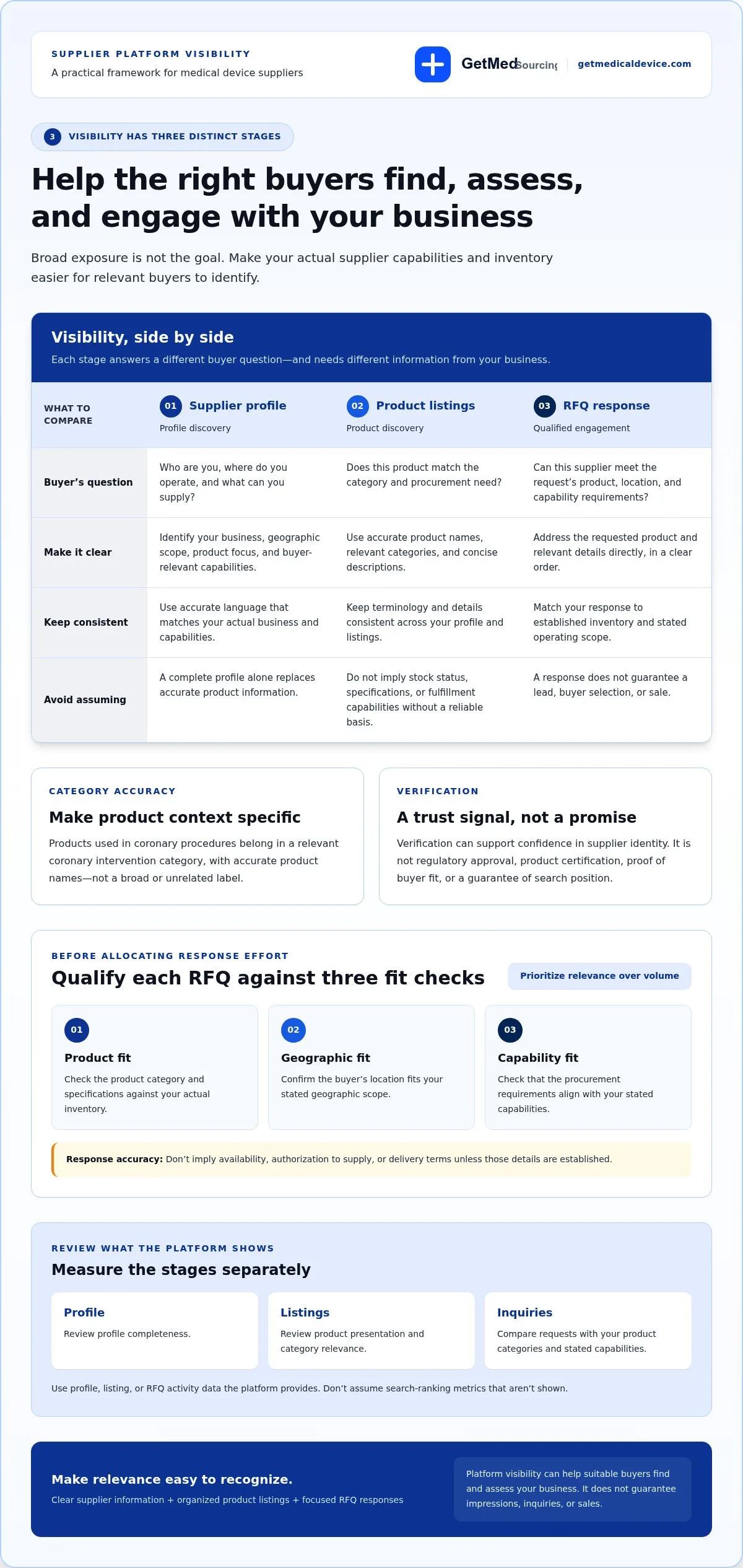
Platform visibility means relevant buyers can find and assess your business and inventory. It does not guarantee impressions, inquiries, or sales. For medical device suppliers, visibility has three stages: buyers discover the supplier profile, locate relevant products, and decide whether to engage. A complete profile helps buyers evaluate your business, but it cannot replace accurate product information or a relevant response to a procurement need.
Broad exposure alone is not enough. A supplier specializing in vascular equipment gains little from attention from buyers seeking unrelated products. Maximizing visibility on a supplier platform means making your actual capabilities easier for the right buyers to identify, rather than pursuing the largest possible audience. Verification can help establish supplier identity, but it is not regulatory approval or product certification.
How healthcare buyers discover suppliers and products
Buyers may assess supplier information alongside product categories and procurement requirements. Clear terminology helps connect those needs. For example, a listing for products used in coronary procedures should appear in a relevant coronary intervention category and use accurate product names. The broader context of a medical device matters too: buyers evaluate specific equipment, not just general supplier descriptions.
Which visibility signals suppliers can assess
Review profile completeness, product presentation, and qualified inquiries separately. A profile may be clear while listings remain too broad. Listings may be relevant even when incoming requests don’t fit your capabilities. Use the profile, listing, or RFQ activity data the platform provides, and don’t assume search-ranking metrics that aren’t shown. To assess inquiry relevance, compare each request with your product categories and stated capabilities.
Build a Supplier Profile and Product Presence Buyers Can Evaluate
A useful supplier profile helps buyers quickly understand who you are, where you operate, which medical device categories you focus on, and what procurement needs your business can address. Keep these details consistent across your profile and listings. Avoid broad claims that obscure your specialty. Describe your geographic scope and capabilities accurately so buyers can assess relevance before making an inquiry.
Evaluation checklist: identify your supplier business, geographic scope, product focus, and buyer-relevant capabilities in clear, consistent terms. This is the foundation for maximizing visibility on a supplier platform: your profile establishes context, while organized product information helps buyers find inventory that matches their requirements.
Make product information easier to match to buyer needs
Use accurate product names, relevant categories, and concise descriptions that explain the procurement context. For example, products intended for coronary procedures belong under an appropriate coronary intervention category, not a broad or unrelated label. Consistent details across medical device product listings make relevant options easier for buyers to compare. State only information you can support, and don’t imply stock status, specifications, or fulfillment capabilities without a reliable basis.
Use verification as a trust signal, not a visibility promise
Supplier verification can support confidence in the business identity shown on a profile. Pair it with clear product information and relevant categories so buyers can assess your business and inventory together. Verification alone does not establish regulatory approval, certify a product, determine whether it suits a buyer’s requirements, or guarantee a particular search position. Treat it as one part of a complete, accurate supplier presence.
Review your profile and listings from a buyer’s perspective. Can buyers identify your product focus and understand what you offer without interpreting vague claims? A well-organized set of product listings gives them a clear starting point.
Use Relevant RFQ Responses to Turn Visibility into Buyer Engagement
A relevant RFQ response connects a buyer’s stated requirement with products and capabilities your business can actually provide. Select requests carefully. Responding to every opportunity can consume time without improving the quality of buyer engagement, and a response does not guarantee a lead or sale. To maximize visibility on a supplier platform, prioritize fit and make your information straightforward to evaluate.
Qualify an RFQ before allocating response effort
Compare each request with your inventory and operating scope before drafting a response. Check the product category and specifications, whether the buyer’s location fits your geographic scope, and whether the procurement requirements align with your stated capabilities. Don’t imply that a product is available, that you’re authorized to supply it, or that particular delivery terms apply unless those details are established. This qualification step helps direct your effort to relevant requests.
Make each response easy for buyers to assess
Organize your response around the buyer’s requirements instead of relying on general promotional language. Address the requested product and relevant details directly, then present supporting information in a clear order. Accurate, concise answers help buyers assess fit, but they don’t ensure selection. For additional context on supplier credibility in procurement, consult this verified medical device supplier guide.
- Review the request and identify its product, location, and capability requirements.
- Confirm that the request aligns with your actual inventory and stated scope.
- Prepare a complete response using relevant, supportable product information.
- Record the response and track follow-up or outcomes using available platform records.
Use response history to assess relevance, not to assume a performance benchmark. Note whether requests match your product categories and capabilities, then refine which opportunities receive attention. Explore supplier participation on GetMedicalDevice as one way to connect product visibility with active procurement requests.
Measure and Improve Supplier-Platform Visibility with a Repeatable Workflow
Improving visibility is a review cycle, not a one-time profile update. Before making changes, record the activity data available for your supplier profile, product listings, and RFQ responses. Note whether inquiries and procurement requests align with your product categories, geographic scope, and stated capabilities. This baseline helps distinguish increased activity from more relevant engagement.
A practical visibility review cycle
At regular intervals, check that business details remain accurate, listings reflect your current product focus, category coverage is appropriate, and RFQ responses address buyer requirements. Track qualified inquiries separately from mismatched ones. If buyers repeatedly request a category you don’t supply, review whether your profile or listings clearly explain your focus. Change one information or response practice at a time, then compare the available activity over a consistent review period.
- Profile: Check business identity, geographic scope, and capability details.
- Listings: Review product names, descriptions, and category relevance.
- Engagement: Track RFQ responses and whether resulting inquiries fit your offering.
Choose platform support that matches the objective
Different tools support different parts of the workflow. Verified Supplier Membership supports supplier identity, premium product listings support product visibility, and RFQ response credits provide access to responses for active procurement requests. These tools have distinct functions; they don’t guarantee ranking, inquiries, or sales. For broader context on changes in digital supplier discovery, review this B2B medical device marketplace analysis.
Use the data available to guide adjustments, while recognizing that platform activity alone may not explain why a buyer chose to engage. Maximizing visibility on a supplier platform means refining your presence to support relevant discovery and evaluation, then reviewing whether the results fit your business objectives. Review GetMedicalDevice supplier membership to consider which platform tools align with your visibility workflow.
Put Your Visibility Workflow into Practice
Make your next step measurable: choose one profile, listing, or RFQ practice to refine, then review whether it helps connect your business with relevant procurement needs. Maximizing visibility on a supplier platform is an ongoing process. Make your supplier presence easier for suitable buyers to assess, and keep your approach aligned with your capabilities. For growing businesses seeking to expand their reach across digital commerce channels, resources like angliamarket.com also offer practical avenues to start selling online and manage inventory effectively.
GetMedicalDevice gives suppliers distinct tools for this work: Verified Supplier Membership, premium product listings, and RFQ response credits. The global marketplace serves buyers including hospitals, clinics, and international distributors. These offerings support supplier identity, product presentation, and RFQ participation, without guaranteeing rankings, inquiries, or sales.
Assess which platform tools align with your current visibility priorities. Review GetMedicalDevice supplier membership and build a focused approach to reaching relevant medical device buyers.
Frequently Asked Questions
How can a medical device supplier increase visibility on a supplier platform?
Use terminology that accurately describes your inventory and matches how relevant buyers search. For example, “neurovascular catheter supplier” is more specific than “medical equipment” when it reflects your actual product focus. Maximizing visibility on a supplier platform also involves reviewing the language in buyer requests and inquiries. If buyers use different accurate terms for your products, consider including those terms in relevant listings.
Does verified supplier membership guarantee more leads or a higher search position?
No. Verified Supplier Membership provides verified supplier status, but it doesn’t guarantee more leads, a higher search position, or sales. Treat verification as one element of your supplier presentation, not as evidence of product certification or regulatory approval. Assess its role alongside accurate listings and relevant RFQ participation, using activity data available through the platform rather than assuming a ranking effect.
What information should a medical device supplier include in a platform profile?
Include your business identity, geographic scope, product focus, and capabilities in terms buyers can understand. Make the distinction between broad specialties and the specific equipment you supply clear. For example, a profile focused on interventional, vascular, or surgical equipment should state that focus plainly. Keep terminology consistent across your profile and listings, and include only claims about products or capabilities you can support.
How should suppliers decide which medical device RFQs to answer?
Answer RFQs that align with your products, operating scope, and ability to address the buyer’s stated requirements. Before using a response credit, identify any request details that remain unclear or depend on information you can’t substantiate. Don’t infer a match from a broad category alone. A precise fit assessment helps direct response effort toward requests your business can address accurately.
How do suppliers measure visibility on a B2B medical device platform?
Use the activity measures the platform actually provides, such as available profile, listing, or RFQ records. If impression or search-position data aren’t shown, don’t treat them as known. Instead, review whether inquiries and requests relate to your product focus, and note recurring mismatches. Compare activity across consistent review periods to assess whether a specific profile or listing adjustment corresponds with more relevant engagement.


