

In the high-stakes medical procurement sector, an unmanaged influx of inquiries isn't a sign of growth; it's a systemic failure that compromises operational integrity. You likely recognize the persistent frustration of sorting through a high volume of unqualified inquiries and the logistical delays caused by manual data entry from multiple marketplaces. Verifying the legitimacy of international buyers often creates a bottleneck that prevents your team from securing essential contracts. This guide establishes a rigorous framework for how to manage inbound leads from a B2B platform with clinical precision, ensuring every RFQ is handled with a focus on regulatory alignment and high-value conversion.
You'll learn to implement a streamlined, automated lead triage process that increases your ROI on marketplace memberships. We will outline the exact steps to transform anonymous inquiries into verified, stable procurement partnerships through a verification-first architecture. This methodical approach prioritizes accuracy and efficiency, allowing your organization to act as a highly competent facilitator in the global medical supply chain.
Key Takeaways
- Apply a clinical verification protocol to differentiate raw inquiries from high-value procurement requests. This ensures organizational resources are allocated exclusively to legitimate institutional buyers.
- Optimize internal workflows by learning how to manage inbound leads from a B2B platform through automated ingestion and systematic triage. This framework minimizes manual entry errors and accelerates the lead-to-contract cycle.
- Execute a response strategy that prioritizes speed and technical accuracy to meet the 24-hour window required for medical device procurement. Addressing clinical specifications early facilitates trust with global distributors.
- Utilize marketplace data and RFQ credits to scale bidding across high-performing categories like vascular access. Transitioning from passive reception to active procurement bidding maximizes the ROI of verified memberships.
Table of Contents
- The Architecture of Inbound Lead Management in Medical B2B
- Implementing a High-Precision Lead Triage and Verification System
- Optimizing Response Speed and RFQ Conversion Strategies
- Scaling Your B2B Sales Engine via Marketplace Integration
The Architecture of Inbound Lead Management in Medical B2B
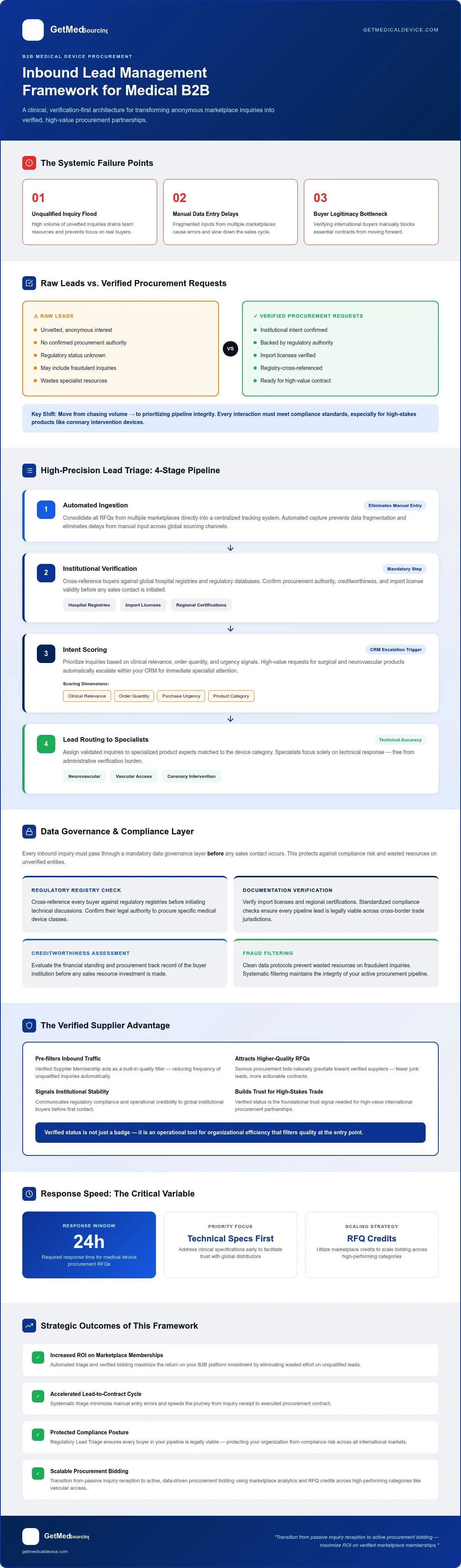
Inbound lead management is defined as the systematic process of capturing, verifying, and routing inquiries from a B2B platform. In the medical device sector, it's vital to distinguish between raw leads and verified procurement requests. While raw leads represent unvetted interest, verified requests signify institutional intent backed by regulatory authority. Understanding how to manage inbound leads from a B2B platform requires a shift from chasing volume to prioritizing pipeline integrity. This is especially critical when handling high-stakes products like coronary intervention devices, where every interaction must meet stringent compliance standards.
Many suppliers mistakenly view platform-based inquiries as low-intent inquiries. However, professional marketplaces function as formal intermediaries for hospitals and global distributors. When you master how to manage inbound leads from a B2B platform, you can transform these anonymous inquiries into high-value procurement contracts through clinical precision and documented workflows.
The Fragmentation Challenge in Global Sourcing
Global sourcing requests often arrive from diverse international distributors, each utilizing different communication standards. This variety creates data silos that cause significant delays in response times. A centralized management system is necessary to consolidate these global medical device inquiries into a single, instructional workflow. Without this centralization, critical technical specifications or logistical requirements can be lost during the handoff from the platform to your internal sales team.
Establishing an Industry-Standard Data Governance Layer
Every inbound inquiry must pass through a data governance layer before any sales contact occurs. This process involves cross-referencing buyers against regulatory registries to ensure compliance. Utilizing clean data prevents your organization from wasting resources on unverified entities or fraudulent inquiries. By implementing a systematic verification protocol, you ensure that your sales energy is reserved for legitimate institutional buyers with the authority to execute high-value contracts.
Implementing a High-Precision Lead Triage and Verification System
Efficiently processing procurement inquiries requires a structured, multi-stage architecture. Understanding how to manage inbound leads from a B2B platform begins with automated ingestion. Consolidating RFQs directly into a tracking system eliminates the delays associated with manual data entry and prevents data fragmentation. Once captured, institutional verification is mandatory. This involves cross-referencing buyers against established global hospital registries to confirm their procurement authority and creditworthiness.
Intent scoring allows your team to prioritize inquiries based on clinical relevance, quantity, and urgency. High-value requests for surgical products should trigger immediate escalation within your CRM. Finally, lead routing assigns these validated inquiries to specialized product experts. Whether the request concerns neurovascular components or vascular access tools, routing ensures the technical response is accurate. Mastering how to manage inbound leads from a B2B platform ensures your specialists aren't burdened by administrative verification tasks.
The Role of Verified Supplier Status in Lead Quality
Maintaining a Verified Supplier Membership acts as a critical pre-filter for inbound traffic. This status signals institutional stability and regulatory compliance to global buyers, which naturally attracts higher-quality RFQs; it's a tool for organizational efficiency. It reduces the frequency of unqualified inquiries, allowing your team to focus on serious procurement bids. Verified status builds the necessary trust for high-stakes international trade interactions.
Standardizing Compliance Checks for International Buyers
Cross-border medical device trade demands rigorous documentation. You must verify import licenses and regional certifications before initiating technical discussions. Regulatory Lead Triage is the process of ensuring a buyer can legally procure specific medical classes. Standardizing these checks ensures that every lead in your pipeline is legally viable. This methodical approach protects your organization from compliance risks and wasted sales efforts on unverified entities.
Optimizing Response Speed and RFQ Conversion Strategies
Speed is a critical variable in global procurement. Institutional buyers operate on strict logistical timelines, making the Speed-to-Lead metric a primary indicator of conversion success. Responding within 24 hours is essential for maintaining a competitive position in the procurement cycle. A professional response must address clinical specifications and logistical parameters simultaneously to minimize friction. This methodical approach is the core of how to manage inbound leads from a B2B platform effectively.
The use of a credit-based RFQ system allows your team to focus resources on active, verified requests rather than chasing low-intent inquiries. This structure ensures that every bid is a strategic action backed by data. Referencing your status as a verified supplier for global brands like Boston Scientific provides the necessary social proof to accelerate the decision-making process for new buyers.
Maximizing ROI with RFQ Response Credits
Strategic allocation of RFQ credits is necessary for high-margin categories such as neurovascular catheters. By utilizing a credit-based system, organizations prevent bid spam and ensure that every response is a calculated investment. This protocol increases the overall value of your marketplace interactions by focusing exclusively on verified, high-intent procurement requests. It turns lead management into a precise financial operation rather than a volume-based guessing game.
Leveraging Premium Product Listings for Lead Warmth
Detailed premium product listings significantly reduce the length of the educational phase within the sales cycle. High-quality technical specifications and clear imagery provide buyers with the data required for immediate institutional approval. When you optimize these listings, inbound leads arrive with a higher baseline of technical readiness. This allows your sales team to bypass preliminary inquiries and move directly toward contract finalization and logistical execution. Understanding how to manage inbound leads from a B2B platform through these optimized listings ensures that your sales engine operates with maximum efficiency. Secure your competitive edge by utilizing RFQ response credits to target the most profitable procurement opportunities.
Scaling Your B2B Sales Engine via Marketplace Integration
Scaling operations requires a transition from passive lead reception to active procurement bidding. Refined internal protocols for how to manage inbound leads from a B2B platform allow organizations to identify and engage with high-value RFQs before competitors do. Marketplace tools facilitate this proactive stance by providing real-time visibility into global demand. Analyzing performance data is essential for this evolution. For instance, data might show that inquiries for vascular access products generate leads with a significantly higher conversion rate than other categories. This insight allows for the strategic reallocation of RFQ credits toward high-performing segments.
Understanding how to manage inbound leads from a B2B platform at scale involves building long-term relationships with international distributors found through these marketplaces. Initial inquiries often serve as the foundation for recurring procurement contracts. By treating the platform as a relationship engine rather than a simple lead source, suppliers can secure stable global revenue streams. Continuous profile optimization is also mandatory to maintain a high lead-to-close ratio as market requirements shift.
Transitioning to a Verified Supplier Membership Model
Adopting a Verified Supplier Membership provides measurable benefits for lead conversion rates. Verification acts as a trust signal that bypasses initial skepticism from institutional buyers. This model ensures a higher ROI by filtering out non-serious inquiries and prioritizing organizations with established procurement authority. It's a fundamental step in professionalizing your digital sales architecture and ensuring that your response efforts are focused on legitimate, high-value opportunities.
Future-Proofing Your Sales Stack for 2026
The landscape of 2026 will include AI-driven procurement bots and automated RFQ matching systems. Preparing for these technological shifts requires a data-rich profile that these systems can parse with precision. However, the enduring value of human verification remains critical. While bots can match technical specifications, human experts must still verify the regulatory nuances of international trade and compliance. Maintaining this balance ensures your sales engine remains both efficient and compliant in an increasingly digital-first medical marketplace.
Mastering the 2026 Medical Procurement Workflow
Establishing a high-precision framework for how to manage inbound leads from a B2B platform isn't just an operational preference; it's a requirement for global market leadership. Success in 2026 relies on a verification-first architecture that prioritizes institutional authority over raw inquiry volume. By implementing automated triage and maintaining a 24-hour response protocol, your organization can convert anonymous RFQs into stable procurement contracts. This systematic approach ensures that resources are allocated to high-margin categories with documented accuracy.
Our platform is trusted by suppliers of global brands like Terumo and Asahi Intecc to facilitate secure, high-value interactions. You'll gain access to a global network of verified medical buyers and an advanced RFQ management system designed for clinical precision. Become a Verified Supplier on GetMedicalDevice and optimize your lead pipeline today. Implementing these rigorous workflows now will secure your position as a stable, indispensable facilitator in the evolving medical device trade landscape.
Frequently Asked Questions
How do I verify the legitimacy of a buyer on a B2B medical platform?
Verifying buyer legitimacy requires cross-referencing institutional data against global hospital registries and regulatory databases. You must confirm that the inquiring entity possesses the legal authority to procure specific medical device classes in their jurisdiction. Utilizing a platform with a verified buyer network reduces the risk of fraudulent inquiries. This methodical verification protocol ensures that your sales resources are reserved for legitimate procurement professionals and established organizations.
What is the ideal response time for a medical device RFQ?
The ideal response time for a medical device RFQ is under 24 hours. Procurement professionals often work within strict clinical timelines, and a rapid response signals organizational reliability. Speed is a key variable in determining how to manage inbound leads from a B2B platform successfully. Maintaining this response window ensures your bid remains competitive in high-stakes environments where logistical precision and technical readiness are prioritized above all else.
How can I improve the quality of inbound leads from my product listings?
Improve lead quality by optimizing premium product listings with comprehensive technical data and clear regulatory documentation. High-quality imagery and precise clinical specifications act as a pre-filter, ensuring that only technically aligned buyers submit inquiries. Detailed listings accelerate the procurement cycle by providing the necessary data for institutional approval immediately. This strategy is essential for mastering how to manage inbound leads from a B2B platform while minimizing unqualified traffic.
Should I use automated responses for B2B medical inquiries?
Automation is effective for lead ingestion and initial triage, but it cannot replace human expertise in medical procurement. Use automated systems to capture data and perform preliminary compliance checks. However, technical responses regarding clinical applications or regulatory nuances require the oversight of a product specialist. This hybrid approach ensures logistical efficiency without compromising the accuracy or professional intent required for high-value medical device trade interactions.
What are the benefits of a credit-based RFQ system for suppliers?
A credit-based RFQ system allows suppliers to allocate resources toward the most promising procurement opportunities. This mechanism prevents the dilution of lead quality by discouraging bid spam and low-intent inquiries. By using RFQ response credits, your organization can focus on verified requests from reputable hospitals and distributors. This creates a more efficient sales engine where every response is a strategic, data-driven action designed for maximum ROI.
