

A backorder is a continuity decision, not simply a delayed purchase. When an expected replenishment date shifts, purchasing teams need to reassess orders while clinical teams protect planned care. The first step in how to handle a medical device backorder is to identify the affected products, quantities, and procedures, then record the supplier’s latest status and whether any date provided is confirmed or estimated.
Uncertain timing can make substitutions tempting, but alternatives may differ in specifications, indications, compatibility, or regulatory status. Use a repeatable response: assess the disruption and its operational impact, compare continuity options against documented requirements, and coordinate decisions and updates across procurement, clinical stakeholders, and suppliers. Organized sourcing can help identify potential supply channels, but marketplace access does not confirm stock, equivalence, or delivery timing. A clear record keeps decisions traceable and communications consistent while the backorder remains unresolved.
Key Takeaways
- Distinguish a backorder from allocation, discontinuation, or an uncertain replenishment estimate before deciding how to respond.
- Use a consistent workflow to assess impact, compare options, obtain clinical approval, and coordinate procurement actions.
- Apply documented criteria when weighing whether to wait, use existing sourcing channels, or broaden the supplier search.
- Learn how to handle a medical device backorder while keeping supplier details, product documentation, and decisions traceable.
Table of Contents
- What a Medical Device Backorder Means, and Why It Needs a Structured Response
- What to Confirm Before Choosing a Medical Device Backorder Response
- How to Handle a Medical Device Backorder: A Practical Response Workflow
- When to Expand Sourcing and Keep Decisions Traceable
What a Medical Device Backorder Means, and Why It Needs a Structured Response
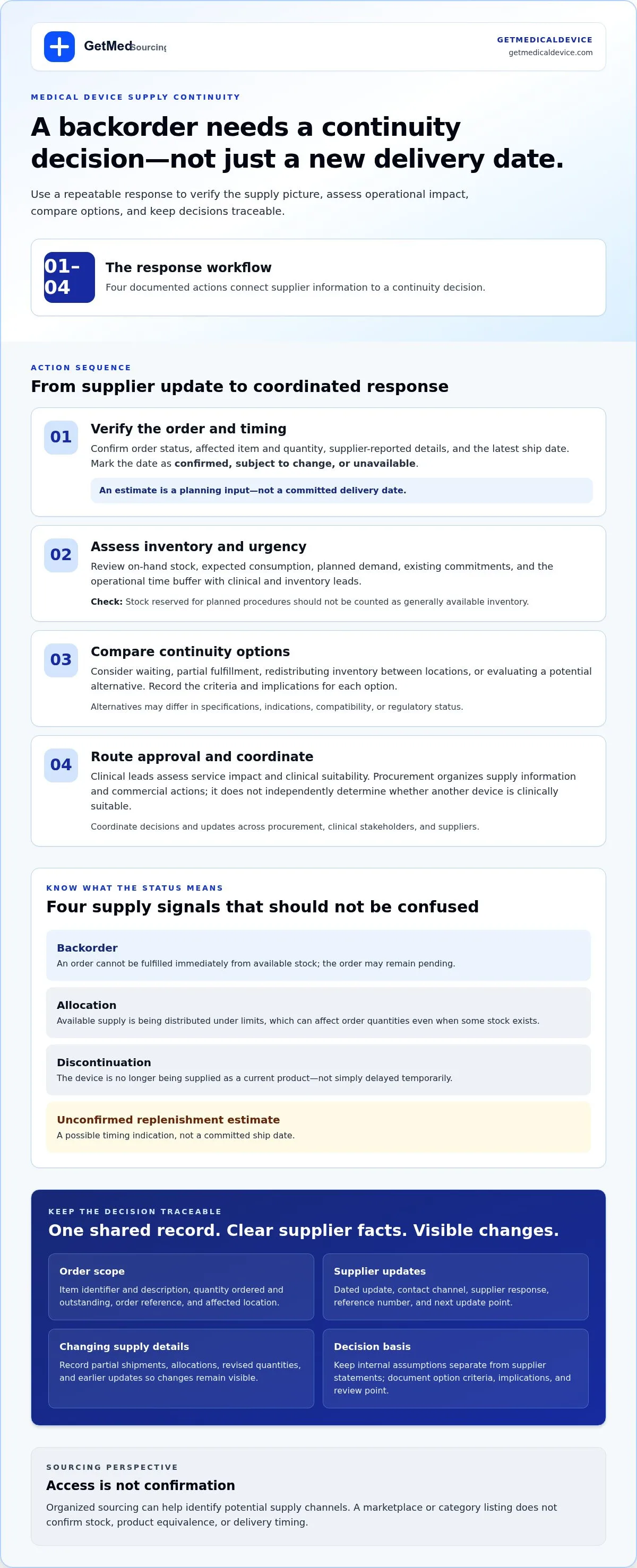
A medical device backorder occurs when an order cannot be fulfilled immediately from available stock. The order may remain pending, but the term alone does not explain why supply is delayed or when it will resume. An allocation means available supply is being distributed under limits, which can affect order quantities even when some stock exists. A discontinuation means the device is no longer being supplied as a current product, rather than temporarily delayed. An unconfirmed replenishment estimate is a possible timing indication, not a committed ship date.
Working definition: “A backorder is a documented gap between an accepted order and available stock; availability dates remain estimates unless the supplier confirms them.” This distinction supports sound supply chain management principles: teams need an accurate view of demand, supply status, and operational impact before deciding what to do next.
Which details establish the scope of a backorder?
Build a record that connects supplier information to the affected operational need. Capture the item identifier and description, quantity ordered and outstanding, order reference, and affected location. Record the reported cause only if the supplier has provided one. Note the latest estimated ship date and whether it is confirmed, subject to change, or unavailable. Keep internal assumptions separate from supplier statements.
Then check whether the disruption concerns one item, a broader product family, or several orders. Compare affected order lines and supplier updates to avoid mistaking a single delayed item for a wider supply issue, or treating repeated delays as isolated incidents.
How can a delayed device affect clinical operations?
A delay can change inventory coverage, reorder timing, and procedure planning. Depending on local policy and clinical needs, teams may need to review scheduled cases or coordinate stock across locations. These are operational risks to assess, not proof that a specific patient outcome will occur.
Ask clinical and operational leads to assess urgency, service impact, and implications for planned work. Procurement can document order status, supplier updates, and commercial actions, but it does not independently determine whether another device is clinically suitable. That separation is central to how to handle a medical device backorder without confusing purchasing decisions with clinical approval.
What to Confirm Before Choosing a Medical Device Backorder Response
Before changing an order or exploring alternatives, establish what is known about the delay and how long current inventory can cover expected needs. Confirm the affected quantity, order status, any supplier-reported cause, and the latest estimated ship date. Ask whether that date is confirmed, subject to change, or unavailable. Treat an estimate as a planning input, not a guarantee, and do not present it internally as a committed delivery date.
Compare the outstanding quantity with on-hand stock, expected consumption, and existing commitments. This gives teams a practical view of the time buffer before the shortage may affect operations. For example, stock reserved for planned procedures should not be counted as generally available inventory.
Which supplier updates should procurement document?
Maintain a dated record of each update, including the contact channel, supplier response, reference number, and next update point. Note partial shipments, allocations, or revised quantities as supplier-reported details, and preserve earlier updates so changes remain visible. This gives purchasing and clinical teams a shared basis for planning and prevents tentative dates from becoming firm expectations in internal communications.
How should teams assess operational urgency?
Review the impact with clinical, inventory, and procurement stakeholders. Prioritize according to documented need, stock available for use, and the operational consequences of delay. Procurement can organize supply information, while clinical leads assess service impact and clinical considerations. Set a review point and repeat the assessment if stock, demand, or supplier information changes.
Planning checklist:
- Confirmed: order status, outstanding quantity, on-hand stock, and supplier-reported updates.
- Estimated: replenishment timing unless the supplier identifies it as confirmed.
- Internal planning: expected consumption, commitments, time buffer, and review date.
This distinction supports a more reliable decision about how to handle a medical device backorder. If a broader sourcing review is appropriate, use medical device product categories to explore relevant product areas. A category listing is a starting point for sourcing, not confirmation of stock or suitability.
How to Handle a Medical Device Backorder: A Practical Response Workflow
A repeatable sequence helps teams move from a supplier update to a documented continuity decision. Use these steps to coordinate the response while keeping clinical judgments distinct from procurement actions.
- Verify: Confirm the order status, affected quantity, supplier-reported information, and whether the latest ship date is confirmed or estimated.
- Assess: Review available inventory, planned demand, existing commitments, and the operational time buffer with relevant clinical and inventory leads.
- Compare: Consider waiting, partial fulfillment, redistributing inventory between locations, or evaluating a potential alternative. Record the criteria and implications for each option.
- Approve: Route questions of clinical suitability to designated clinical decision-makers. Procurement can manage commercial and administrative steps, but should not approve clinical substitutions.
- Communicate: Share the decision, confirmed status, operational implications, accountable owner, and next update time with affected departments.
- Review: Reassess when supplier information, available stock, or operational needs change. Keep the decision record current.
How should teams assess a potential substitute?
Compare intended use, specifications, compatibility, labeling, and applicable authorization against the requirements for the planned use. A category match alone does not establish equivalence. Any substitution requires appropriate clinical and regulatory review before use. Document the decision-maker, approval or rejection, rationale, and any staff communication needed to support an approved change.
How should teams communicate the response?
Assign one owner to coordinate supplier updates and maintain the internal record. Give affected departments the latest confirmed status, operational implications, and next update point. For sourcing context, teams can review coronary intervention devices or neurovascular products. Category listings do not establish product suitability or availability.
This workflow makes how to handle a medical device backorder a coordinated process rather than an isolated purchasing task. For a broader supplier search, explore medical device sourcing on GetMedicalDevice. Evaluate clinical suitability and supply details through the appropriate review processes.
When to Expand Sourcing and Keep Decisions Traceable
Expand the search when waiting or using existing channels no longer aligns with documented timing, inventory, or service needs. Compare each option using the same criteria: supplier-reported timing, quantity offered, product documentation, supplier identity, traceability information, and requirements that apply in the purchasing jurisdiction. A broader search can reveal potential sourcing options, but it does not establish stock, delivery timing, or suitability. Keep these criteria consistent so potential suppliers can be assessed on the same basis.
What should a backorder decision record include?
Keep a decision record that shows what the team knew and why it selected a response. Include status evidence, options considered, the decision date, responsible approvers, and the rationale. Link the record to purchase orders, supplier correspondence, and relevant product documentation so updates can be traced to their source. When reviewing a supplier, document the identity and information used in the assessment.
How can a B2B sourcing platform support the next step?
A marketplace can help procurement discover suppliers through product listings and submit procurement inquiries through RFQs. Use medical device categories to focus a broader search on the relevant product area. GetMedicalDevice offers Verified Supplier Membership, premium product listings, and RFQ response credits, supporting supplier visibility and procurement inquiries. Listings and responses are sourcing inputs, not confirmation that a device is in stock, equivalent to the backordered item, or suitable for a particular use. Buyers must assess each supplier response and product independently, including applicable documentation and requirements.
Apply the same documented criteria to every option, whether the team waits, uses existing channels, or broadens its search. For supplier discovery, explore medical device suppliers and listings through GetMedicalDevice.
Build a More Resilient Sourcing Plan
Use each backorder as an opportunity to strengthen the process for the next disruption. Identify which product needs warrant closer supply monitoring, define who owns sourcing decisions, and set a clear threshold for when the search should expand. A documented approach to how to handle a medical device backorder helps teams apply decisions consistently as supplier information and operational needs change.
When additional sourcing options are relevant, GetMedicalDevice provides a global B2B marketplace connecting medical device buyers and suppliers. Its sourcing environment includes Verified Supplier Membership, premium product listings, and RFQ response credits. These tools support supplier discovery and procurement inquiries, while buyers assess each response, product documentation, suitability, and availability independently.
For your procurement planning, explore medical device sourcing options through GetMedicalDevice. Use the platform to broaden supplier discovery, then evaluate each option against your documented requirements.
Frequently Asked Questions
What should I do first when a medical device is on backorder?
Start by reconciling the supplier’s update with your purchasing system so the team is working from the same order status and quantity. Ask whether the date is confirmed or provisional, then compare usable stock with planned demand and commitments. In deciding how to handle a medical device backorder, assign an owner to record the findings and set a review point before the next operational decision is due.
Can a hospital substitute another medical device during a backorder?
A hospital should use a substitute only after the appropriate clinical review and approval. A similar product name, appearance, or category does not establish that it is suitable for the same use. The designated reviewers should assess its specifications, compatibility, labeling, and applicable authorization against the planned use. Record the rationale and communicate any approved change to affected staff before implementation.
How do you communicate a medical device backorder to clinical teams?
Send a concise update that separates verified information from pending decisions. Identify the affected item and quantity, state what the supplier has reported, and label timing as confirmed, provisional, or unavailable. Explain which operations may need review without implying a clinical outcome. Name the update owner and next review time, and identify any alternative as under assessment until appropriate approval is complete.
What information should be documented when handling a medical device backorder?
Maintain one record connecting the purchase order to the supplier’s messages and product documents. Include dates, quantities, status changes, revised estimates, inventory and operational assessments, options considered, approvals, the decision, and each responsible owner. Preserve prior updates rather than overwriting them so the record shows how the decision changed over time. This makes follow-up easier when a new supplier response or operational requirement changes the plan.
When should procurement look for another medical device supplier?
Consider broadening the search when the reported supply timing or quantity cannot support documented operational needs, or the supplier has no usable update. Apply the same checks to each option, including supplier identity, product documentation, traceability, and applicable jurisdictional requirements. Keep clinical suitability decisions with designated clinical reviewers. A marketplace listing or inquiry can support supplier discovery, but it is not evidence of stock, delivery timing, or product equivalence.
