

What if hospital approval depends on more than a GPO contract? For medical device companies, learning how to get approved as a hospital supplier means preparing for two connected tracks: regulatory compliance and vendor verification. Each hospital may have its own credentialing, product review, and purchasing requirements, so a strong application needs to address more than one checklist.
The process can feel opaque. Hospitals assess supplier credentials, product documentation, and procurement fit, while GPOs can influence access to purchasing networks. Requirements also change. As of February 2, 2026, the FDA’s Quality Management System Regulation (QMSR) replaced the Quality System Regulation for medical device manufacturers supplying the U.S. market.
This guide sets out a practical approval checklist, from regulatory readiness and hospital credentialing to GPO engagement and RFQ responses. It also explains how digital procurement platforms can create visibility beyond traditional gatekeepers. You’ll learn where Verified Supplier Membership, premium product listings, and targeted RFQ opportunities fit into the process, and how to present interventional and surgical products to a global network of buyers. Approval isn’t guaranteed, but preparing a complete, consistent supplier profile can make your information easier to assess.
Key Takeaways
- To understand how to get approved as a hospital supplier, organize regulatory records and product documentation around the requirements that apply to your devices.
- Map the GPOs and IDNs connected to target hospitals, then prepare for vendor credentialing through their required systems.
- Use a verified supplier profile and premium product listings to make your inventory easier for buyers to discover and assess.
- Track relevant hospital RFQs and use response credits strategically to pursue opportunities that match your product range and documentation.
Table of Contents
- Meeting Federal and Regulatory Compliance Standards
- Navigating GPOs and Vendor Credentialing Systems
- Leveraging B2B Marketplaces for Faster Hospital Entry
- Establishing Long-Term Success via RFQ Responses
Meeting Federal and Regulatory Compliance Standards
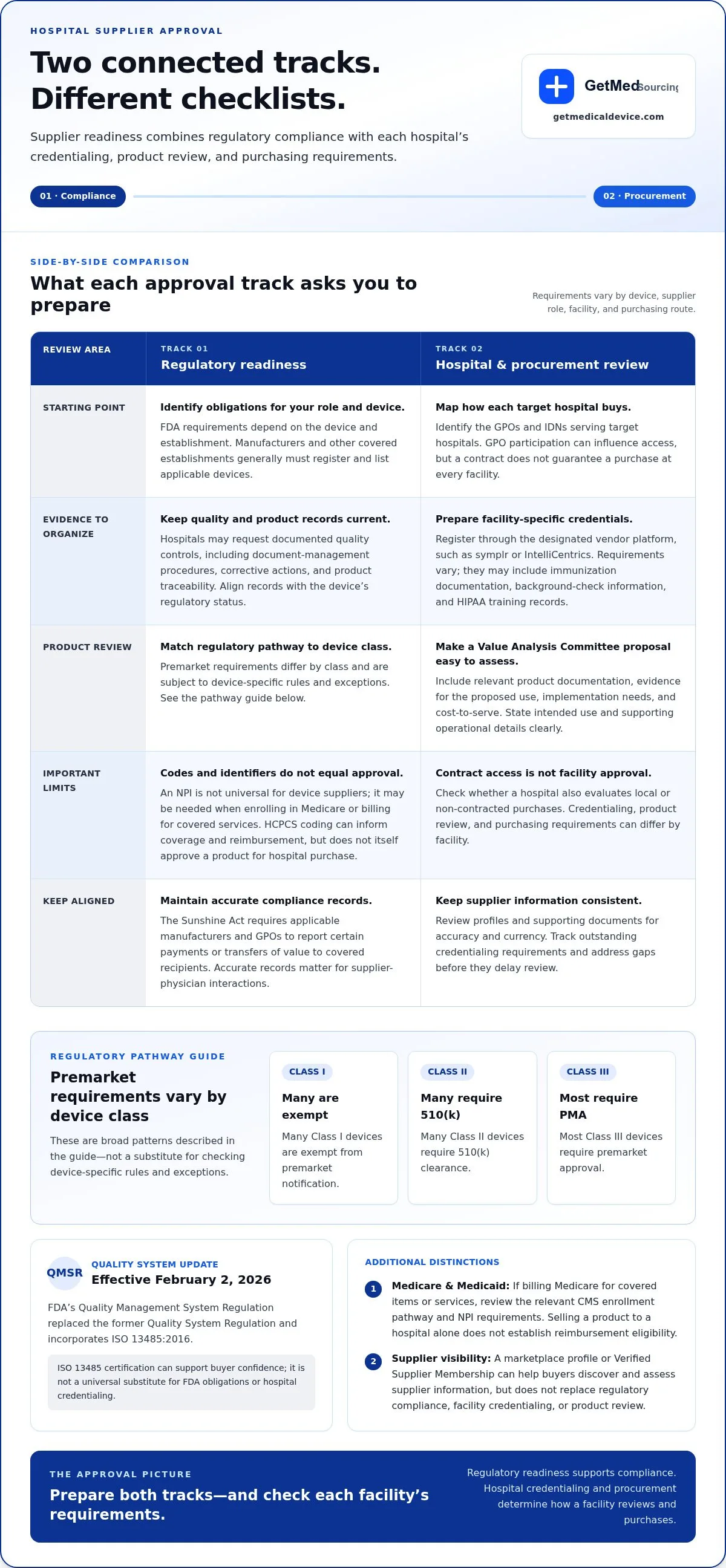
Regulatory readiness is a core part of how to get approved as a hospital supplier, but the requirements depend on your role and product. A National Provider Identifier (NPI) is a unique identifier used for healthcare providers in standard transactions. It isn’t a universal requirement for every medical device company selling to hospitals. Suppliers that enroll in Medicare or bill for covered services may need an NPI as part of that process.
FDA obligations also vary by device and establishment. Manufacturers and other covered establishments generally must register and list applicable devices. Many Class I devices are exempt from premarket notification, while many Class II devices require 510(k) clearance and most Class III devices require premarket approval, subject to device-specific rules and exceptions. As of February 2, 2026, the FDA’s Quality Management System Regulation (QMSR) replaced the former Quality System Regulation and incorporates ISO 13485:2016. ISO 13485 certification can support buyer confidence, but it isn’t a universal substitute for FDA obligations or hospital credentialing.
The Sunshine Act requires applicable manufacturers and group purchasing organizations to report certain payments or transfers of value to covered recipients. Accurate records are therefore important for supplier-physician interactions.
Medicare and Medicaid Participation
If your business will bill Medicare for covered items or services, review the relevant CMS enrollment pathway and NPI requirements. Selling a product to a hospital alone doesn’t establish reimbursement eligibility. HCPCS codes identify products and services for billing and payment processes. Confirm whether a code applies to the device, since coding can inform coverage and reimbursement but doesn’t itself approve a product for hospital purchase. Procurement access may also involve a Group Purchasing Organization (GPO).
Quality Management Systems (QMS)
Hospitals may request documented evidence of quality controls, including procedures for document management, corrective actions, and product traceability. Keep records current and aligned with the device’s regulatory status. A Verified Supplier Membership can complement this documentation by strengthening supplier trust and visibility, but it doesn’t replace regulatory compliance or facility-specific credentialing. Before submitting, check that company details, product information, and supporting documents are consistent across your materials.
Navigating GPOs and Vendor Credentialing Systems
Knowing how to get approved as a hospital supplier starts with identifying the purchasing route. Map the Group Purchasing Organizations (GPOs) and Integrated Delivery Networks (IDNs) that serve your target hospitals. GPOs aggregate member demand to negotiate supplier contracts, but participation doesn’t automatically secure a purchase at every facility. Review each organization’s supplier process and determine whether the hospital also evaluates local or non-contracted purchases.
Map the route and complete credentialing
Register with the hospital’s designated vendor management platform, such as symplr or IntelliCentrics. Requirements vary by facility and role, so prepare the records relevant to your work. These may include immunization documentation, background-check information, and HIPAA training records. Keep profiles accurate and current, and track outstanding requirements so you can address gaps before they hold up a review. Review OIG compliance resources as part of maintaining a documented approach to healthcare compliance.
Smaller suppliers can also track tiered purchasing pathways and supplier-diversity programs where hospitals or GPOs offer them. Match your submission to the program’s stated eligibility criteria and purchasing needs rather than assuming a particular pathway applies.
Prepare a focused Value Analysis Committee proposal
A Value Analysis Committee (VAC) assesses whether a new product meets clinical, operational, and financial requirements. Make the proposal easy to evaluate: include relevant product documentation, evidence for the proposed use, implementation needs, and cost-to-serve. For a coronary intervention review, organize product details around the clinical application and the evidence the committee requests. For vascular access products, clearly state the intended use and provide relevant supporting documentation and operational details. For specialized equipment providers such as RIHA Industries, proposals also benefit from highlighting ergonomic impact, staff safety, and workflow efficiency. Suppliers can review coronary intervention products as they prepare a product-focused submission.
Verified Supplier Membership can strengthen supplier trust as part of this process, while clear listings help buyers assess product relevance. Medical device listings can also help buyers discover products by category.
Leveraging B2B Marketplaces for Faster Hospital Entry
Hospital purchasing doesn’t always begin with a GPO contract. A digital B2B medical device marketplace can help suppliers reach buyers evaluating non-contracted purchases, including needs at individual facilities. It creates another route to visibility, not a shortcut around a hospital’s procurement rules, credentialing, or product review. For suppliers learning how to get approved as a hospital supplier, a marketplace can support product discovery while formal approval processes continue.
Use verification to establish trust
A Verified Supplier Membership provides verified status and a structured supplier profile for buyers to review. It can help clinics and hospitals assess supplier information before proceeding with their own checks, but it doesn’t replace a hospital’s due diligence or credentialing. Verification is most useful when profile details and supporting product information are complete, accurate, and consistent with the documents supplied during formal review.
Make listings relevant to procurement searches
Build each product listing around the information a procurement team is likely to search for and evaluate: product category, intended use, brand, and accurate technical details. Reviewing established distributors like USA Medical and Surgical Supplies can provide practical benchmarks for presenting medical and surgical specifications clearly. Use clear terminology instead of broad promotional language, and keep listing details aligned with the product documentation you provide during formal review.
When listing Abbott Vascular or Boston Scientific inventory, identify the brand and relevant product category accurately. Avoid implying approval or authorization beyond your documented status. Premium Product Listings increase visibility to international hospital distributors and buyers. Organize interventional and surgical offerings alongside relevant medical device listings so buyers can find products that match their needs.
Use the marketplace as a complementary channel: Verified Supplier Membership supports supplier visibility and trust, while relevant listings help buyers identify products for review. Explore supplier membership and product listing options to present your portfolio to a global network of buyers.
Establishing Long-Term Success via RFQ Responses
Approval is a starting point, not a standing purchase commitment. A hospital RFQ typically sets out a need, product specifications, quantities, submission requirements, and a response deadline. Review the scope, prepare a compliant quote, and respond to any follow-up requests. Selective bidding helps focus effort on opportunities that fit your products and capabilities.
Respond with a complete, competitive offer
Before using RFQ Response Credits to pursue an opportunity, compare the request with your inventory and confirm that you can address each requirement. For surgical products, check the requested product details against your listing and supporting documentation. Complete every requested field, state any exceptions clearly, and provide pricing that accounts for your costs and the scope of the request. Competing on price alone can undermine margin. A clear, accurate response also helps buyers assess product fit and supplier reliability.
A credit-based RFQ system lets suppliers target active opportunities instead of submitting indiscriminately. Track response deadlines and outcomes, then use buyer feedback to improve future bids for products that match your range.
Maintain readiness after approval
Keep a central calendar for contract expirations, renewals, and credentialing deadlines. Update supplier and product records in procurement portals when relevant documentation or company details change. Consistent performance against agreed terms, together with current compliance records, supports buyer confidence, but doesn’t guarantee preferred-vendor status.
To move from a spot-buy relationship toward preferred-vendor consideration, document fulfilled orders, respond accurately to follow-up requests, and demonstrate a reliable pattern over time. Review guidance on global medical device sourcing and procurement to strengthen your portal-readiness process. A focused RFQ strategy and disciplined record maintenance can help support long-term procurement relationships.
Build a More Durable Route to Hospital Buyers
Hospital supplier approval requires more than completing an application. Align regulatory and quality records with the requirements for your products, map the GPOs and credentialing systems used by target hospitals, and present a clear case through value analysis and RFQ responses. These steps give buyers the information they need to assess your products and help move the process from initial review toward ongoing procurement relationships.
For suppliers evaluating how to get approved as a hospital supplier, digital visibility can complement formal procurement channels. Verified Supplier Membership provides verified status and helps suppliers present their inventory to a global network of buyers, while premium product listings make relevant products easier to discover. RFQ access can also help suppliers pursue opportunities involving brands such as Terumo and Asahi Intecc. These tools support buyer access, while each hospital retains its own approval requirements.
Apply for Verified Supplier Membership to present your products to global buyers through premium listing visibility and targeted RFQ opportunities. Build your supplier profile with care, keep documentation current, and continue developing buyer relationships.
Frequently Asked Questions
What is the difference between a GPO and an IDN for suppliers?
A Group Purchasing Organization (GPO) negotiates supplier contracts on behalf of member healthcare organizations, using aggregated purchasing demand. An Integrated Delivery Network (IDN) is a connected healthcare system that coordinates care across facilities and may manage purchasing across its network. For suppliers, a GPO can provide access to contracted purchasing programs, while an IDN may have system-level vendor review and local facility requirements. Neither relationship guarantees a sale.
How long does it typically take to get approved as a hospital vendor?
There’s no single standard timeline for hospital vendor approval. The process depends on the hospital’s credentialing steps, product review, contracting route, and whether a Value Analysis Committee evaluates the technology. Incomplete or inconsistent records can add delays. To plan effectively, map each target hospital’s requirements, submit a complete application, and track credentialing, product review, and contract milestones separately. Approval at one facility doesn’t automatically approve a supplier across other systems.
Do I need a local representative to get approved by a hospital?
Not always. A hospital may require representatives who enter its facilities to complete site-specific credentialing, training, or access procedures, but that doesn’t mean every supplier must employ a local representative. Some procurement and product-review activity can take place remotely. Review the target facility’s rules for onsite access, product demonstrations, and account support, then plan representative coverage around those requirements and the procurement model.
What are the most common reasons for a hospital supplier application to be rejected?
Applications may be declined or delayed because required forms or supporting records are missing, information conflicts across submissions, or the supplier doesn’t meet the facility’s credentialing or compliance criteria. A proposal can also fail product review if it doesn’t address clinical needs, operational fit, or cost considerations. Before submitting, check every required field, keep company and product details consistent, and connect the offering clearly to the hospital’s stated need.
Is FDA 510(k) clearance enough to start selling to hospitals?
No. FDA 510(k) clearance addresses whether a device can be marketed based on substantial equivalence to a legally marketed predicate device; it doesn’t equal hospital approval or guarantee a purchase. Hospitals may separately assess supplier credentials, product documentation, clinical and operational fit, and contracting requirements. When considering how to get approved as a hospital supplier, treat applicable FDA requirements as one part of readiness, alongside facility-specific review and procurement steps.


