
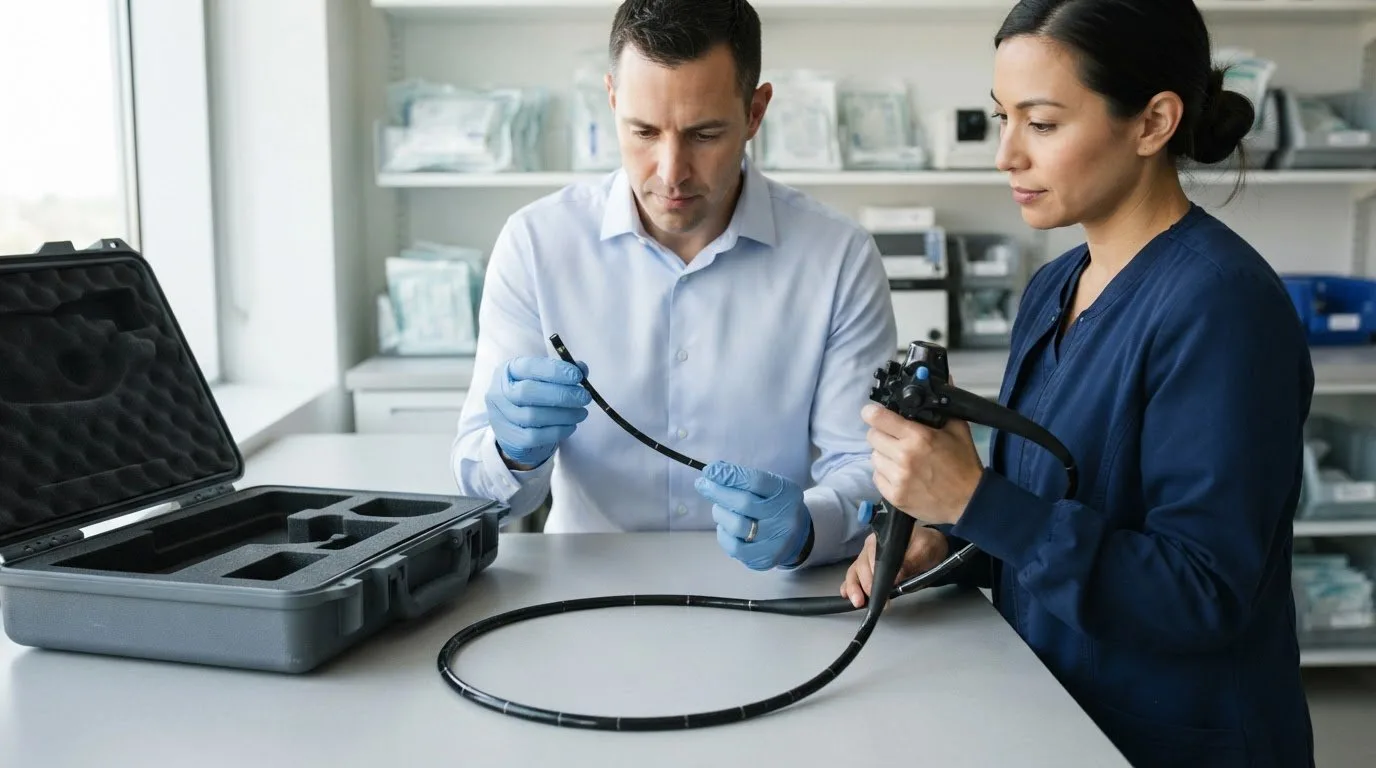
Finding buyers takes more than posting a listing. To understand how to find buyers for medical equipment inventory, make stock visible to relevant buyers and contact hospitals, clinics, and medical professionals about their needs. Include clear details on equipment type, condition, specifications, and available documentation so buyers can assess whether an item fits their requirements.
Overstock, demo, refurbished, and used equipment can suit different buyers, so tailor your sales approach to the inventory and its condition. Direct outreach can reveal demand that a general listing may miss, especially when a facility needs a specific equipment category or a cost-effective option.
This article explains how to prepare inventory for sale, reach suitable buyers through marketplaces and professional networks, and organize outreach to healthcare facilities. You’ll also see where a B2B medical device platform can support supplier visibility and responses to procurement requests.
Key Takeaways
- Match each item’s condition and documentation to the buyer’s requirements before presenting it for sale.
- Compare similar equipment listings and account for marketplace commissions when setting terms.
- Target hospitals, clinics, and medical professionals with focused outreach, referrals, and industry networking.
- Use GetMedicalDevice’s supplier membership, product listings, and RFQ response credits to support buyer visibility and procurement responses.
Table of Contents
- Considering overstock, demo, refurbished, and used equipment
- Selling medical equipment through a specialized marketplace
- Reaching hospitals, clinics, and medical professionals
- Who buys used medical equipment in the United States?
- GetMedicalDevice: Verified Supplier Membership
Considering overstock, demo, refurbished, and used equipment
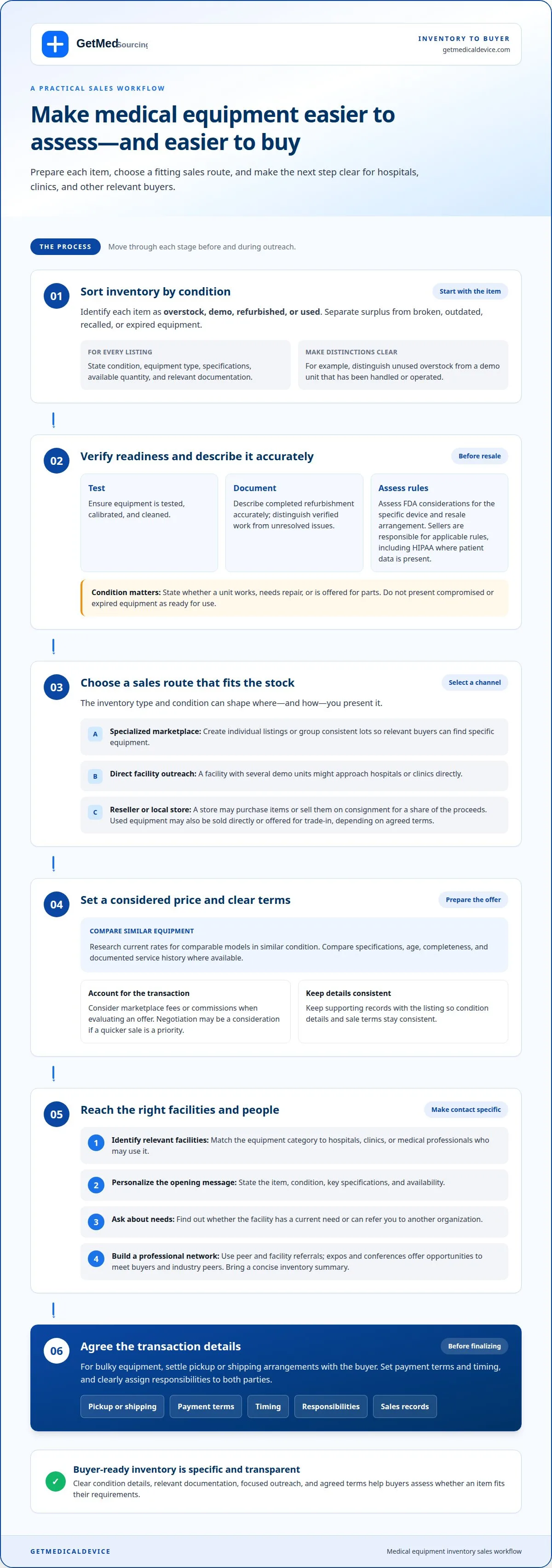
Organize inventory by condition and sales history before approaching buyers. Clear categories help hospitals and clinics compare items and assess what meets their purchasing needs.
Listing New, Used, and Refurbished Equipment
Create a separate listing for each item or consistent lot. Identify it as overstock, a demo unit, refurbished, or used, then state its condition, specifications, and relevant warranty or certification details. For example, distinguish unused overstock from a demo unit that has been handled or operated. This gives buyers a clear basis for evaluating fit and comparing inventory.
Refurbishment, Resale, and FDA Rules
Before resale, ensure equipment is tested, calibrated, and cleaned. Describe completed refurbishment accurately, and distinguish verified work from unresolved condition issues. Assess FDA considerations for the specific device and resale arrangement rather than assuming one description applies to every item. Sellers are responsible for applicable regulations, including HIPAA where equipment contains patient data.
Choose a sales route that fits the stock. A medical facility with several demo units might approach hospitals or clinics directly, while a seller with mixed used inventory can create individual listings for a broader buyer network. Local medical equipment stores may purchase items or sell them on consignment for a share of the proceeds.
Before outreach, organize the available details for each listing: item category, condition, specifications, and documentation. Group comparable units together and list distinct items separately. Buyers seeking refurbished equipment can assess its stated condition, while facilities considering overstock can compare new, unused stock with their immediate requirements.
Selling medical equipment through a specialized marketplace
A specialized marketplace can connect sellers with buyers searching for specific medical equipment. Prepare accurate listings and clear transaction terms before presenting inventory.
Selling Surplus, Broken, or Outdated Equipment
Separate surplus equipment from broken or outdated items. State the condition plainly, including whether a unit works, needs repair, or is offered for parts. A marketplace listing can help buyers find relevant stock, but it cannot replace an accurate description. Include the device type, known issues, specifications, and available documentation so buyers can assess suitability before discussing a purchase.
For example, describe working surplus equipment as available for use and identify the specific fault in a damaged unit. Do not present an expired item as usable inventory. Clear condition details help prevent mismatched expectations and allow interested buyers to decide whether an item suits their needs.
Selling or Trading In Used Equipment
Used equipment can be sold directly or offered for trade-in, depending on the buyer and agreed terms. A specialized marketplace can put an item in front of relevant buyers, while a reseller may purchase it or arrange a resale. Requirements can vary by device and transaction, so account for applicable rules before listing. Keep sales records and describe each item accurately.
For bulky equipment, agree on pickup or shipping arrangements with the buyer before finalizing the sale. Set payment terms and timing as part of the transaction, and assign responsibilities clearly to both parties. Equipment size, condition, and the agreed sales method shape these arrangements.
Pricing Used Equipment and Assessing Risks
To price used equipment, research current rates for comparable models in similar condition. Reviewing standard retail listings on sites like usamedicalsurgical.com can provide a baseline for new medical and surgical items when establishing competitive resale values. Compare specifications, age, completeness, and documented service history where available. Set terms that reflect the item’s actual condition, and consider negotiation if a quicker sale is a priority. Account for any marketplace fees or commissions when evaluating an offer.
Recalled, expired, or damaged equipment raises disclosure and suitability concerns. Identify its status clearly, avoid describing compromised equipment as ready for use, and separate it from functional inventory. Buyers need accurate information to assess the item and its intended use. Keep supporting records with the listing so condition details and sale terms remain consistent.
Reaching hospitals, clinics, and medical professionals
Direct outreach can connect available equipment with facilities seeking cost-effective options. Start with hospitals and clinics whose departments use the relevant equipment category. Tailor each message to the item, its condition, and the facility’s likely needs.
A practical approach to how to find buyers for medical equipment inventory is to make every contact specific. Identify the equipment, its condition, key specifications, and available quantity. Ask whether the facility has a current need or can refer you to another organization. A clinic may not need a device but could know another practice that does, making your next conversation more relevant.
Build a focused network through professional referrals. Ask industry peers and facility contacts to identify organizations that may need your equipment category. Medical equipment expos and conferences also provide opportunities to meet buyers and industry peers. Bring a concise inventory summary so you can explain what is available without relying on a generic sales pitch.
- Identify relevant facilities: Match the equipment category to hospitals, clinics, or professionals who may use it.
- Personalize outreach: State the item’s condition, specifications, and availability in the opening message.
- Ask about needs: Invite the facility to describe its requirements or suggest another potential buyer.
- Use industry events: Bring an inventory summary to expos and conferences for focused discussions.
When feasible, offer a demonstration or trial period so a prospective facility can assess the equipment. Keep the demonstration focused on the listed device and its documented condition. Direct conversation can also clarify equipment history and address questions a marketplace listing may leave open.
After each conversation, record the facility’s stated needs, the equipment discussed, and any referrals offered. For teams deciding how to find buyers for medical equipment inventory, these notes help prioritize follow-up and avoid sending the same generic message to every contact. A hospital seeking one category may need a different approach from a clinic referred by a peer.
Who buys used medical equipment in the United States?
Potential buyers include hospitals, clinics, medical equipment resellers, and wholesalers. Their purchasing criteria differ, so identify the likely buyer before choosing an outreach method.
The United States has over 14,000 medical supplies wholesale businesses. This gives sellers another buyer category to consider, alongside healthcare facilities and specialized resellers. A wholesaler may assess a lot of comparable items, while a clinic may need a particular device category. Match the inventory type and quantity to the buyer’s likely purchasing needs.
- Hospitals and clinics: Contact facilities that use the relevant equipment and ask about current needs or referrals.
- Medical equipment resellers: Present condition details and specifications for assessment against their buyer network.
- Wholesale businesses: Describe the available inventory and whether items are offered individually or as a lot.
- Local equipment stores: Ask whether they purchase equipment or consider consignment arrangements.
For example, a seller with several similar units could approach a wholesaler or reseller, while a single specialized device may suit direct outreach to a relevant clinic. The buyer’s intended use, equipment condition, and documentation help determine whether the match is practical. Keep listing and outreach details consistent so every buyer receives the same information.
Professional referrals can reveal facilities with specific requirements. Ask industry contacts to identify hospitals or clinics seeking your equipment category, then tailor the introduction to that need. Medical equipment expos and conferences offer another way to connect with buyers and industry peers. Bring a concise inventory summary to support focused discussions, then follow up with contacts whose requirements fit your stock.
To widen B2B visibility, explore medical device inventory categories and align each listing with the buyers most likely to need it. A specialized marketplace can also connect suppliers with potential buyers beyond their immediate local network.
GetMedicalDevice: Verified Supplier Membership
GetMedicalDevice’s Verified Supplier Membership gives medical device suppliers a way to present their business through a B2B platform. It is a relevant next step when you’re ready to make inventory visible to potential buyers and respond to procurement requests.
Use Premium Product Listings to showcase available medical devices with information organized for buyer review. RFQ Response Credits let suppliers respond to procurement requests from hospitals, clinics, and international distributors. Together, these offerings support two distinct tasks: presenting inventory and engaging with buyers seeking products.
For example, a supplier with a defined product range can create listings and use RFQ Response Credits to pursue relevant requests. The platform supports supplier visibility and procurement connections, rather than refurbishment or equipment transport.
To explore supplier options, visit getmedicaldevice.com.
Build a Buyer-Focused Inventory Plan
Turn available stock into a buyer-specific plan. Select an inventory segment, identify the audience it suits, and assign responsibility for follow-up. A consistent process helps your team track opportunities that need a response and listings that need attention.
If you’re refining how to find buyers for medical equipment inventory, align your next step with your sales objective. GetMedicalDevice offers Verified Supplier Membership, Premium Product Listings, and RFQ Response Credits to help suppliers build visibility and pursue procurement opportunities. These options support different parts of the buyer-engagement process.
Prepare the inventory information your team intends to present, then consider which platform tools fit that plan. Contact GetMedicalDevice about your inventory to discuss a relevant next step. A clear plan gives your outreach direction and helps you move forward with confidence.
Frequently Asked Questions
Where can I sell surplus medical equipment inventory?
Surplus inventory can be offered through a specialized medical equipment marketplace, direct facility outreach, or a local equipment store. For a mixed lot, separate items by type and condition so buyers can identify relevant stock quickly. Ask a store whether it purchases inventory or accepts consignment, since these arrangements differ in who buys the equipment and how proceeds are handled.
How do I find medical equipment brokers, dealers, and liquidation companies?
Use professional referrals, industry events, and specialized marketplace networks to identify resellers and other potential intermediaries. Prepare a short inventory brief with item categories, quantities, condition, and specifications before making contact. Ask each interested business whether it buys equipment directly, arranges resale, or offers consignment. This distinction helps you compare the proposed transaction with your inventory and selling priorities.
Which online marketplaces sell used medical equipment?
General online marketplaces such as eBay, Amazon, and Craigslist can connect sellers with potential buyers, while specialized medical equipment marketplaces focus on industry inventory. Compare each platform’s audience, listing format, and applicable commissions before choosing a sales channel. A specialized marketplace, for example, may suit a clearly categorized device listing, while a general platform may reach a broader audience. Check that the platform accommodates your item and transaction.
What information and photos should I include in a medical equipment listing?
Include the equipment category, model or identifying details, condition, specifications, included components, and relevant warranty or certification information. Use clear photos showing the full item, its controls, labels, and visible wear. Close-ups can document damage to the housing or a missing accessory. Remove or conceal patient information from images and equipment displays before publishing, particularly if patient data may be present.
How do I sell medical equipment to hospitals, clinics, and other healthcare providers?
Match the equipment category to facilities that may use it, then send a focused inventory summary to the appropriate contact. State what is available, its condition, and the information a buyer needs to assess fit. Ask about current purchasing needs or referrals to other facilities. For procurement requests, respond to the specified product and quantity, then agree on commercial terms directly with the buyer.
