

What if broader supplier discovery made qualification more consistent, rather than more difficult? Procurement teams searching for cardiovascular medical device suppliers across product categories and markets often face fragmented records, inconsistent product information, and limited ways to compare candidates. A wider search is useful only when clinical, regulatory, and operational requirements are documented and applied consistently.
Broader participation can expand sourcing options, but every supplier still needs to meet the buyer’s qualification criteria. A structured search helps organize discovery; buyer-led review remains essential.
This 2026 guide outlines a repeatable workflow for identifying and qualifying suppliers. It covers cardiovascular product categories, sourcing channels such as category-based marketplaces, and practical criteria for comparing supplier records. The goal is to broaden discovery while keeping qualification clear, traceable, and aligned with procurement requirements.
Key Takeaways
- Broaden supplier participation without treating diversity objectives as a substitute for clinical, regulatory, quality, or operational qualification.
- Set documented minimum requirements before expanding your search, then apply the same criteria and evidence-recording process to each supplier.
- Use a sourcing brief to compare cardiovascular medical device suppliers against product specifications, intended market, purchasing context, and documentation needs.
- Use GetMedicalDevice’s marketplace as a supplier-discovery channel, with category-based browsing and listings that support buyer discovery.
Table of Contents
- What supplier diversity means when sourcing cardiovascular medical device suppliers
- How to qualify cardiovascular suppliers without weakening procurement controls
- How to find and compare cardiovascular medical device suppliers
- How GetMedicalDevice supports cardiovascular supplier discovery
What supplier diversity means when sourcing cardiovascular medical device suppliers
Supplier diversity broadens eligible supplier participation within an organization’s procurement framework without lowering the clinical, regulatory, quality, or operational standards every candidate must meet. It widens discovery, but it does not replace qualification. Organizations define their own participation objectives and apply them alongside established procurement controls.
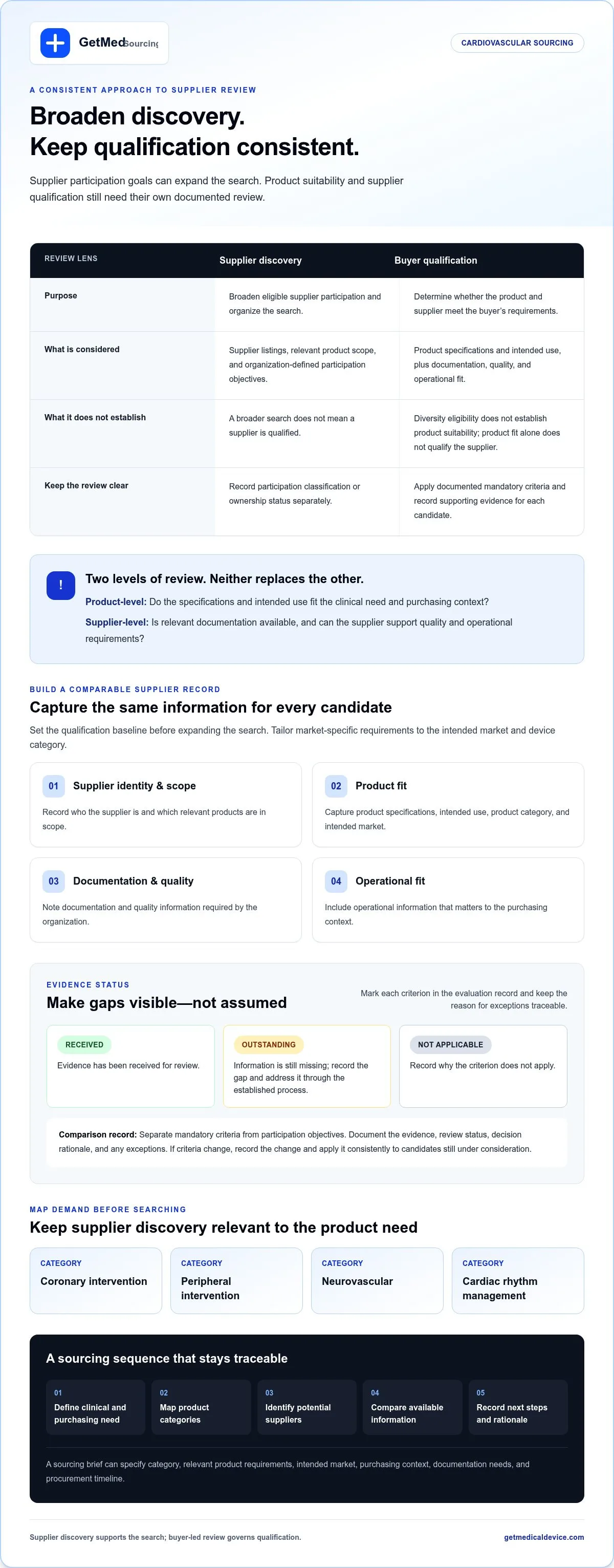
Cardiovascular sourcing requires evaluation at two levels. Product-level review considers whether a device’s specifications and intended use fit the clinical need and purchasing context. Supplier-level review considers relevant documentation, quality processes, and the ability to support operational requirements. A supplier’s eligibility under an organization’s diversity objectives does not establish product suitability, and product fit alone does not qualify the supplier.
Which cardiovascular categories can procurement teams map?
Map demand by clinical and product category before searching. Useful starting points include coronary intervention, peripheral intervention, neurovascular, and cardiac rhythm management. For example, teams sourcing coronary intervention products can define that need separately from rhythm management devices, then organize discovery and comparisons around each category. This makes it easier to spot gaps in supplier coverage and keep evaluations relevant to the product requirement.
Who participates in cardiovascular sourcing decisions?
Assign responsibilities before opening discovery. Procurement coordinates the process and applies the organization’s participation objectives. Clinical stakeholders define the product need and assess clinical suitability. Supply-chain teams assess operational fit and purchasing requirements. Compliance stakeholders review applicable documentation and market-specific requirements. These responsibilities intersect, but they should not be conflated: diversity objectives are organization-defined procurement goals, while product requirements and qualification evidence must be assessed on their own terms.
How to qualify cardiovascular suppliers without weakening procurement controls
Set the qualification baseline before expanding the search for cardiovascular medical device suppliers. Define mandatory product-fit, documentation, quality, and operational requirements, then identify which requirements depend on the intended market and device category. Inclusive sourcing expands discovery; qualification governs selection. Record any supplier diversity classification or ownership status separately, since it does not establish product suitability or satisfy qualification criteria.
What information belongs in a supplier review?
Use a structured record so reviewers assess comparable information instead of relying on inconsistent profiles or informal impressions. Capture:
- Supplier identity and relevant product scope
- Product specifications and intended market
- Documentation and quality information required by the organization
- Operational information relevant to the purchasing context
Apply jurisdiction-specific requirements only after establishing the intended market and device category. This avoids treating one market’s requirements as universal.
How can teams document fair comparisons?
Use one evaluation record for every candidate. Separate mandatory criteria from organization-defined diversity objectives, and record the evidence and review status for each criterion. Mark evidence as received, outstanding, or not applicable, and document the reason for any not-applicable status. Missing information is a gap to record and address through the organization’s established decision process, not evidence that a requirement has been met.
Include the decision rationale and any exceptions, together with the evidence supporting them. If criteria change during sourcing, document the change and apply it consistently to candidates still under consideration. This creates a traceable comparison without conflating participation goals with clinical, quality, or market-specific requirements.
Structured marketplace discovery can help teams identify suppliers to review, but buyer qualification remains essential. Explore cardiovascular supplier listings as one input to your documented sourcing process.
How to find and compare cardiovascular medical device suppliers
Use a defined sequence to turn a broad search into a documented sourcing decision. Start with the clinical and purchasing need, map relevant categories, identify potential suppliers, compare available information, and record next steps. This keeps discovery focused and shows which information is complete and which still needs review.
Prepare a sourcing brief before searching for cardiovascular medical device suppliers. Include the product category, relevant specifications, intended market, purchasing context, documentation needs, and procurement timeline. Keep clinical requirements distinct from organization-defined supplier-diversity objectives so each candidate is assessed consistently.
How should buyers structure a cardiovascular sourcing request?
Describe the product category and technical requirements in terms that match the intended use and purchasing need. Identify the destination market, documentation needed for review, and procurement timeline. A clear request gives suppliers a consistent scope to respond to and gives internal reviewers a shared basis for comparison. Keep participation objectives separate from clinical and product requirements.
When does a marketplace support supplier discovery?
Searchable categories and supplier listings can organize an initial search by product area, helping teams move from broad discovery to a manageable review set. For example, browsing cardiac rhythm management devices can focus discovery around that category. Treat listings as a starting point, then assess each candidate against the documented review criteria.
For each candidate, compare the available information with the sourcing brief and record evidence, open questions, and the responsible reviewer. Document whether to advance the supplier, request additional information, or close the review, with a rationale tied to the stated criteria. This creates a clear handoff from discovery to qualification.
Use GetMedicalDevice product listings as a channel for category-based cardiovascular supplier discovery.
How GetMedicalDevice supports cardiovascular supplier discovery
GetMedicalDevice is a global B2B medical device marketplace and sourcing channel where buyers can explore cardiovascular products and supplier listings. Category-based browsing helps organize an initial search, while supplier and product information gives procurement teams a starting point for review. The marketplace connects buyers with a global network of suppliers and supports discovery; buyers retain responsibility for clinical, regulatory, quality, and operational qualification.
How buyers can use category-based discovery
Start with the clinical product area, then narrow the search to the category relevant to the requirement. For example, a team sourcing cardiac rhythm management products can browse that category as an initial discovery step. Use relevant listings to identify potential suppliers and products for further assessment.
Once candidates are identified, compare listing details with the sourcing brief: product specifications, intended market, purchasing context, and required documentation. Record gaps for follow-up through the buyer’s established review process. This connects marketplace browsing to a consistent procurement workflow.
What suppliers can do to improve marketplace visibility
Suppliers can use Verified Supplier Membership and premium product listings to present their business and products to buyers on the marketplace. Verified status builds trust with global buyers and increases visibility for supplier inventories. These options support discovery, while buyer qualification remains a separate process. RFQ Response Credits let suppliers respond to active procurement requests, connecting relevant offerings with defined buyer needs.
Buyers can browse by cardiovascular category and use relevant listings to build a candidate set for documented review. Suppliers can use membership, premium listings, and RFQ response credits to present their offerings to global buyers.
Put your cardiovascular sourcing plan into action
Turn your sourcing priorities into a focused discovery plan. Define the product scope and target market, then use those parameters to identify potential cardiovascular medical device suppliers for structured review. Keep the process open to new candidates while preserving your organization’s qualification criteria.
GetMedicalDevice is a global B2B medical device marketplace providing access to cardiovascular products from brands including Boston Scientific, Terumo, Asahi Intecc, and Abbott Vascular. Supplier-facing options include Verified Supplier Membership, premium product listings, and RFQ Response Credits. These tools support marketplace visibility and buyer discovery, while supplier qualification remains part of the buyer’s review.
Explore cardiovascular sourcing and supplier options to begin your next search. A clear brief and consistent review process can help your team move from discovery to informed procurement decisions.
Frequently Asked Questions
What does supplier diversity mean in healthcare procurement?
Supplier diversity means creating procurement pathways for a broader range of eligible businesses to compete for healthcare purchasing opportunities. Each organization defines which supplier categories and objectives apply to its program. For example, a hospital may track participation in its procurement reporting while using its standard clinical and commercial review for every purchase. The organization sets the specific objectives and reporting approach.
How can hospitals find diverse cardiovascular medical device suppliers?
Hospitals can widen discovery by searching relevant product categories and sourcing channels, then recording supplier information in a consistent format. For cardiovascular medical device suppliers, a team might begin with a defined need, such as a coronary or rhythm-management category, and use marketplace listings to identify candidates. The hospital can then apply its supplier-inclusion process and procurement review before making a sourcing decision.
Does supplier diversity change medical device qualification requirements?
No. Supplier diversity objectives do not, by themselves, change the requirements a hospital or other buyer applies to a product or supplier. Keep participation criteria distinct from clinical, documentation, quality, and market-specific review. Recording a supplier’s participation status in a separate field, for example, helps prevent it from being mistaken for evidence that a product meets purchasing requirements.
What information should a cardiovascular supplier profile include?
A useful profile helps reviewers identify the supplier and understand the scope of its cardiovascular offering. Include the business identity, product categories, relevant product details, intended markets, and documentation available for review. Record when information was received and who reviewed it. These details help distinguish candidates with similar category listings and support follow-up when a purchasing request calls for more specific evidence.
Can a B2B marketplace support supplier-diversity efforts?
Yes. A B2B marketplace can help buyers broaden initial discovery by organizing supplier and product listings across categories. GetMedicalDevice provides a global marketplace for medical device sourcing, where buyers can explore listings and suppliers can present their offerings. Marketplace discovery can contribute to a broader candidate pool, but it does not establish a buyer’s diversity classification or replace the buyer’s qualification and selection process.