
What if global expansion didn’t require building every supplier relationship from scratch? Building a global medical device distribution network depends on verifying partners, coordinating procurement across regions, and identifying market requirements early. Fragmented purchasing processes and inadequate partner checks can slow market entry and increase compliance risk.
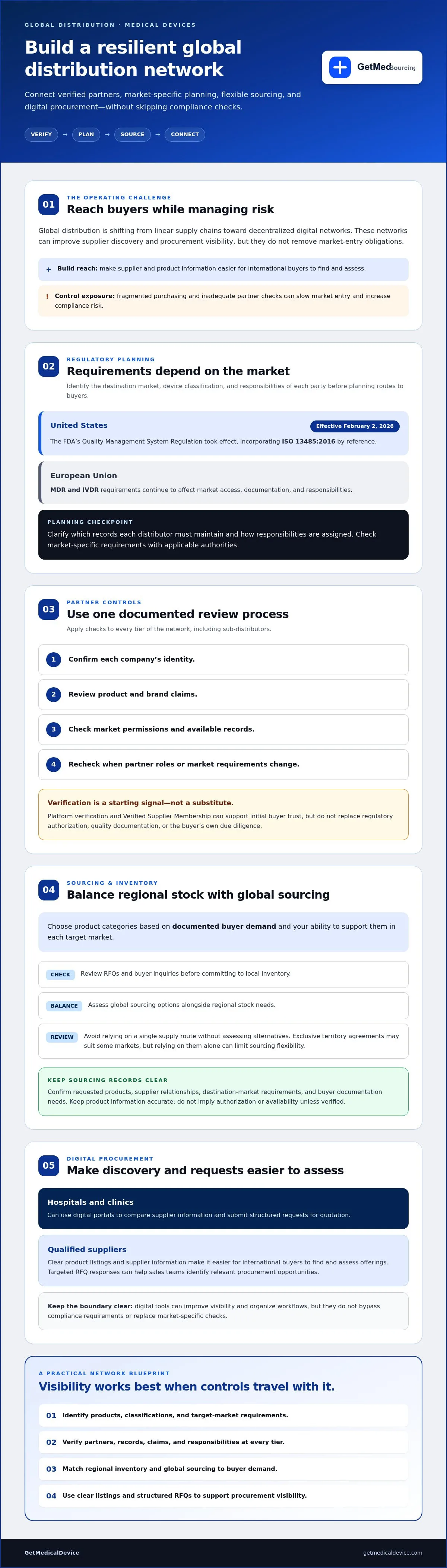
Regulatory planning is essential. The U.S. FDA’s Quality Management System Regulation took effect on February 2, 2026, incorporating ISO 13485:2016 by reference, while EU MDR and IVDR requirements continue to affect market access. A scalable network must connect commercial reach with supplier verification and region-specific planning.
This guide explains how to evaluate partners, organize procurement across regions, and use digital tools in distribution workflows. It also covers how verified supplier memberships and targeted RFQ responses, including those supported by GetMedicalDevice, can help suppliers become visible to buyers and identify relevant procurement opportunities.
Key Takeaways
- Building a global medical device distribution network starts with a documented process for verifying partners and assessing their suitability in each market.
- Balance regional inventory planning with global sourcing and procurement. Avoid relying on a single supply route without assessing alternatives.
- Use a B2B medical device marketplace and clear product listings to make supplier information easier for international buyers to find and assess.
- Verified Supplier Membership and targeted RFQ responses can support buyer trust and help sales teams identify relevant procurement opportunities.
Table of Contents
- The 2026 Landscape of Global Medical Device Distribution
- Core Pillars of a Resilient Distribution Strategy
- Implementing a Digital-First Distribution Model
- Scaling with Verified Partnerships on GetMedicalDevice
The 2026 Landscape of Global Medical Device Distribution
Global distribution is shifting from linear supply chains, where access depends on sequential intermediaries and established territories, toward decentralized digital networks. These networks can improve supplier discovery and procurement visibility, but they don’t remove market-entry obligations. Before planning routes to buyers, identify the products and classifications involved. The overview of what are medical devices provides foundational context. Check market-specific requirements with the applicable authorities.
For teams building a global medical device distribution network, verified status can serve as an initial signal in international procurement. Buyers need information they can assess before engaging a supplier. Platform verification can support initial trust, but it isn’t a substitute for regulatory authorization, quality documentation, or the buyer’s own due diligence. Specialized marketplaces can make supplier and product information, as well as RFQ opportunities, easier to find without bypassing compliance requirements.
Regulatory Hurdles in Global Scaling
Requirements depend on the destination market, device classification, and each party’s role. In the EU, MDR and IVDR obligations shape market access and documentation responsibilities. In the United States, the FDA’s Quality Management System Regulation took effect on February 2, 2026, incorporating ISO 13485:2016 by reference. Before entering a market, clarify which records each distributor must maintain and how responsibilities are assigned. For coronary intervention devices and neurovascular devices, organize product, supplier, and market documentation so buyers can review the relevant information efficiently.
The Shift to Digital Procurement Portals
Hospitals and clinics can use digital portals to compare supplier information and submit structured requests for quotation. This makes procurement requirements more visible and gives qualified suppliers a clearer way to respond. Exclusive territory agreements may suit some markets, but relying on them alone can limit sourcing flexibility. Review buyer access and market needs regularly, then use verified platforms and RFQ workflows to identify relevant opportunities.
Core Pillars for Building a Global Medical Device Distribution Network
Building a global medical device distribution network requires controls that extend beyond the first supplier relationship. Partner vetting, inventory decisions, brand alignment, and ongoing compliance monitoring should work as one operating framework. Distribution networks connect buyers with devices that must be safe, effective, and appropriate for their markets. The World Health Organization’s overview of the global landscape for medical devices provides useful context for this access challenge.
Vetting and Verification Frameworks
Apply the same documented checks to every tier of the network, including sub-distributors. Confirm each company’s identity, product and brand claims, market permissions, and available records. A Verified Supplier Membership can support initial buyer trust, but it should complement, not replace, independent checks. For products in interventional radiology, keep supplier credentials and relevant product documentation organized for buyer review. Recheck records when partner roles or market requirements change.
Strategic Product Selection
Choose product categories based on documented buyer demand and your ability to support them in each target market. Review RFQs and buyer inquiries before committing to local inventory. Assess global sourcing options alongside regional stock needs. For example, a sourcing plan for Asahi Intecc medical products should begin by confirming the requested products, supplier relationship, destination-market requirements, and buyer documentation needs. Treat this as a due-diligence workflow, not evidence of a specific transaction.
Brand alignment also requires clear sourcing records and accurate product information for high-value brands such as Terumo and Boston Scientific. Don’t imply authorization or availability unless it’s verified. Assign responsibility for monitoring partner activity, updating records, and escalating inconsistencies. This creates a practical review process without assuming digital tools replace market-specific checks.
Medical device listings on GetMedicalDevice offer a starting point for reviewing supplier and product information.
Implementing a Digital-First Distribution Model
Digital infrastructure gives suppliers a way to become discoverable beyond established territory relationships. For teams building a global medical device distribution network, the goal is to turn visibility into qualified buyer conversations, then assess each opportunity through a consistent process.
- Establish a marketplace presence. Create a clear supplier profile with accurate company details, product categories, and contact information. A surgical products category listing, for example, should make the supplier’s relevant offering easy for buyers to identify.
- Build useful premium listings. Organize product information with precise names, categories, brands, and other verified details buyers may search. Use brand-specific terms, such as “Boston Scientific medical device supplier,” only when they accurately describe the supplier’s relationship and offering. Don’t imply authorization or availability without verification.
- Respond selectively to RFQs. Check each request for product, destination, and buyer requirements before responding. Prioritize requests that match documented capabilities, and address the stated requirements so buyers can evaluate fit.
- Develop qualified leads. Use initial RFQ exchanges to clarify requirements and assess whether there is a basis for an ongoing distribution relationship. Confirm partner responsibilities and market-specific requirements before formalizing an agreement.
Optimizing RFQ Management
For high-value requests involving surgical products, assign a clear owner, check the request against current product and supplier records, and address each stated requirement without making unsupported claims. RFQ credits are platform credits that enable suppliers to respond selectively to active procurement requests. Track responses and follow-up so international sales teams can focus their effort on relevant demand.
Premium Listing Strategies
Structure listings so decision-relevant information is easy to scan: product category, verified brand details, and a clear description of the supplier’s role. Premium Product Listings can support visibility, while a Verified Supplier Membership provides a trust signal for buyers reviewing potential partners. Neither replaces buyer due diligence or applicable market checks.
Supplier membership and listing options are available through GetMedicalDevice.
Scaling with Verified Partnerships on GetMedicalDevice
For suppliers entering new markets, visibility alone isn’t enough. Buyers also need a reason to assess a supplier with confidence. A Verified Supplier Membership on GetMedicalDevice provides a trust signal that can help distinguish a supplier profile. Buyers should still conduct their own due diligence and confirm product and market requirements.
Maximizing the Membership Advantage
In categories such as vascular access devices, clear supplier information can help international clinics identify relevant businesses and review their offerings. Keep company and product details accurate, and ensure brand or availability claims are supported. GetMedicalDevice connects professional buyers with suppliers and supports RFQ-based procurement, giving suppliers a structured way to identify active requests that align with their products and capabilities.
The platform can also support global medical device sourcing by bringing supplier discovery and procurement requests into a digital channel. RFQ Response Credits let sales teams target responses to relevant procurement requests and allocate outreach effort deliberately. This helps teams focus engagement, but does not guarantee lower overhead or a successful sale.
Building Long-Term Distribution Equity
Use each qualified RFQ exchange to assess whether there’s a basis for a continuing channel relationship. Confirm product fit, buyer requirements, partner responsibilities, and the market documentation needed before agreeing on ongoing distribution. A verified listing can start the conversation, but it doesn’t replace due diligence or fulfill delivery obligations. Buyers and suppliers must arrange fulfillment through their own processes and partners.
For teams building a global medical device distribution network, the practical sequence is to maintain an accurate supplier presence, respond selectively to relevant requests, and develop promising conversations into documented partnerships. Become a Verified Supplier on GetMedicalDevice to establish a more visible foundation for international procurement opportunities.
Build Your Next Stage of Global Reach
Building a global medical device distribution network takes more than a digital presence. It requires accurate supplier information, appropriate market checks, and a disciplined process for identifying and responding to relevant procurement demand. Verified status can provide an initial trust signal, while targeted RFQ responses give sales teams a structured way to pursue suitable opportunities.
GetMedicalDevice connects suppliers with professional buyers, including hospitals, and offers Premium Product Listings for surgical and interventional products. Suppliers can also present relevant brand information, including Abbott Vascular, while ensuring that claims about authorization, availability, or supplier relationships are accurate and documented. These tools support discovery and buyer engagement. Distribution agreements and fulfillment remain matters for the parties to establish directly.
To strengthen your supplier presence and pursue relevant procurement requests, apply for Verified Supplier Membership. A clear, verified foundation can help your team build productive international buyer relationships, one qualified opportunity at a time.
Frequently Asked Questions
How do I verify a medical device distributor in an international market?
Use a documented, market-specific review before establishing a commercial relationship. Confirm the company’s legal identity, references, product traceability, supplier or brand relationship, and relevant market documentation against reliable records and applicable authority requirements. When building a global medical device distribution network, apply the same checks to sub-distributors and review them again when roles or market conditions change. Platform verification can support initial trust, but it doesn’t replace due diligence.
What are the main regulatory requirements for global medical device distribution in 2026?
Requirements depend on the destination market, device classification, and the responsibilities assigned to each party. In the United States, the FDA’s Quality Management System Regulation took effect on February 2, 2026, incorporating ISO 13485:2016 by reference. In the EU, MDR and IVDR requirements apply, and EUDAMED Actor Module registration became mandatory on May 26, 2026. Confirm current obligations with the relevant authorities before market entry.
Can a B2B marketplace replace traditional medical device distribution channels?
No. A B2B marketplace can complement established channels by helping suppliers become discoverable and supporting structured RFQ-based sourcing. It doesn’t replace distributor relationships, market-specific compliance checks, commercial agreements, or arrangements for product fulfillment. Use digital platforms to identify potential buyers and assess demand, then establish responsibilities and transaction terms directly with suitable partners. GetMedicalDevice connects professional buyers and suppliers through supplier listings and RFQ processes.
How does an RFQ credit system help in building a distribution network?
An RFQ credit system lets suppliers use credits to respond selectively to active procurement requests, rather than treating every inquiry as an equal sales opportunity. Review each request for product, buyer, and market fit, then focus responses on relevant demand. This supports a more structured approach to international outreach. Credits enable RFQ responses, but don’t guarantee buyer engagement, a sale, or a distribution agreement.
What are the risks of international medical device procurement and how can they be mitigated?
Key risks include unverified suppliers, inaccurate product or brand claims, incomplete documentation, and misunderstandings about market-specific requirements. Reduce exposure by checking supplier identity and product records, confirming responsibilities across the distribution chain, and reviewing applicable requirements before proceeding. Keep procurement records organized and reassess partners when circumstances change. A marketplace verification signal can support initial screening, but buyers should conduct their own due diligence before purchasing or entering agreements.