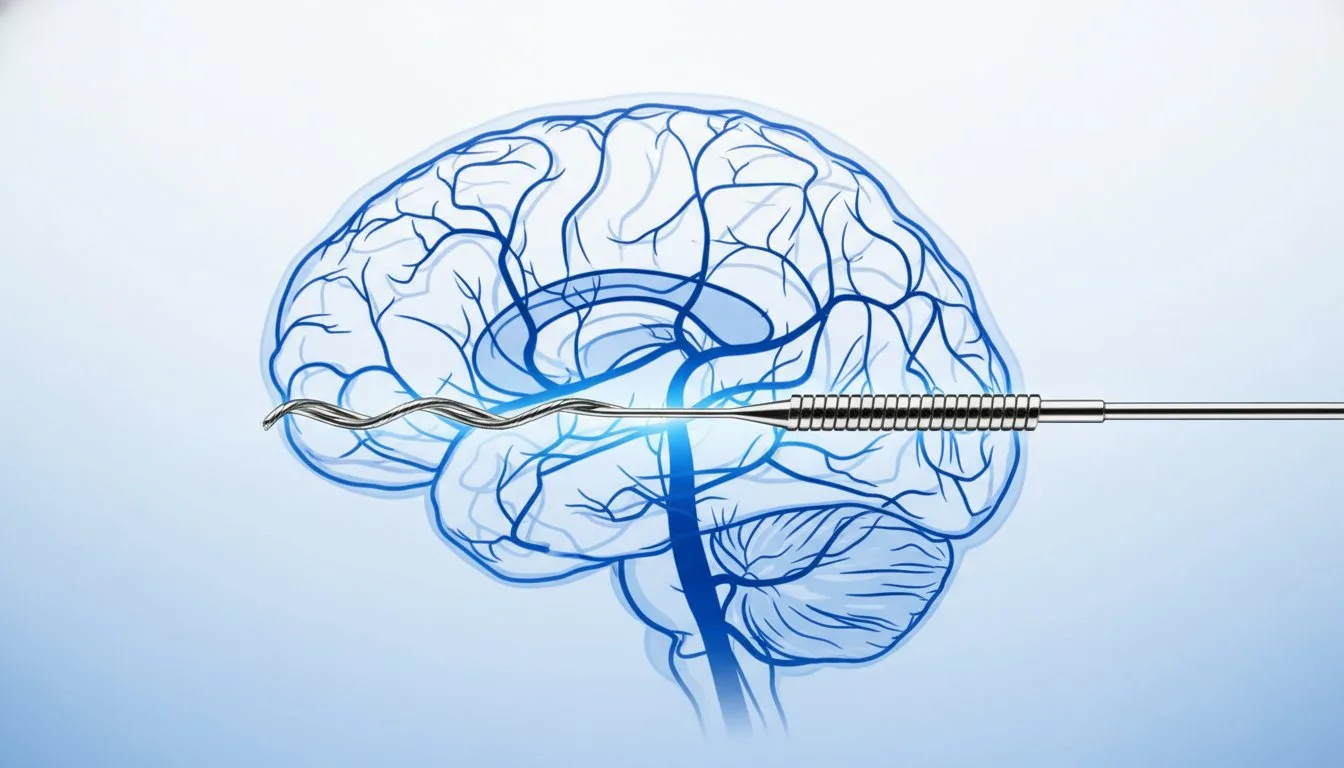
Asahi Intecc secured over 60% of the neurovascular guidewire market share in Japan by 2014, yet many procurement teams continue to face technical obstacles when sourcing these high-stakes components internationally. Identifying the specific Asahi Intecc neurovascular devices required for distal access involves navigating a complex landscape of variants, from the ultra-fine CHIKAI 008 to the specialized CHIKAI X 010. Without precise data, supply chain fragmentation often leads to procurement delays or technical mismatches during critical procedures.
It's challenging to maintain a streamlined supply chain when fragmented data and unverified sources create unnecessary risk for surgical departments. This article serves as a technical and procurement reference to eliminate that friction. You'll learn how to distinguish between the torque performance of ACT-ONE technology and the structural support of the FUBUKI catheter series. We'll provide a clear framework for RFQ preparation, using verified product data and regulatory status to validate your selection. This overview previews the technical specifications of the CHIKAI line and the logistical benefits of utilizing verified supplier memberships to secure authentic equipment for your facility.
Key Takeaways
- Understand the mechanical advantages of ACT-ONE technology in facilitating 1:1 rotation and superior torque response within tortuous neurovascular anatomy.
- Distinguish between the specialized applications of CHIKAI guidewires and FUBUKI guide catheters to optimize intracranial access for complex interventions.
- Learn to standardize your RFQ process for Asahi Intecc neurovascular devices by aligning SKU requirements with specific clinical volumes and procedure types.
- Evaluate the criteria for identifying authentic product chains to mitigate the risks associated with supply chain fragmentation and unverified surgical equipment.
- Discover how utilizing RFQ response credits and verified supplier networks can accelerate the acquisition of premium neurovascular inventory.
Table of Contents
- The Role of Asahi Intecc in Modern Neurovascular Intervention
- Technical Comparison: CHIKAI Guidewires and FUBUKI Catheters
- ACT-ONE Technology: The Core Differentiator
- Strategic Procurement of Asahi Intecc Devices
- Sourcing Asahi Intecc via GetMedicalDevice
The Role of Asahi Intecc in Modern Neurovascular Intervention
Asahi Intecc is a global leader in high-precision stainless steel wire drawing technology. This expertise forms the technical foundation for their specialized medical components. According to the Asahi Intecc corporate overview, the organization focuses on advanced material processing to solve complex clinical challenges. Within the neurological field, Asahi Intecc neurovascular devices provide the necessary infrastructure for intracranial access during time-sensitive interventions. These tools are engineered specifically for finesse cases where clinicians must navigate tiny, tortuous distal vessels that standard equipment cannot reliably reach. The portfolio is built on a legacy of metallurgical innovation that translates into superior tactile feedback for the operator.
Clinical Applications: Ischemic vs. Hemorrhagic Stroke
The neurovascular portfolio addresses two primary categories of cerebrovascular events: ischemic and hemorrhagic. For ischemic stroke, Asahi guidewires facilitate mechanical thrombectomy access in large vessel occlusions (LVO). These wires ensure that therapeutic devices reach the clot site with minimal resistance. In hemorrhagic cases, Asahi systems provide the stable platform required for microcatheter delivery during intracranial aneurysm coiling. The reliability of the wire's tip allows for precise placement within the aneurysm sac. Specialized navigation tools are also essential for treating Arterial Venous Malformations (AVM) and Fistulas (AVF). These procedures require devices that can traverse high-flow, high-tortuosity environments without losing their structural integrity or causing vessel damage.
The Importance of Distal Access Precision
Precision in distal navigation is critical to minimize vessel wall trauma in the brain's delicate vascular architecture. Asahi Intecc designs its neurovascular portfolio to transition seamlessly from rigid proximal support to extreme distal flexibility. This mechanical gradient allows interventionalists to maintain control in the parent artery while delicately probing the cerebral vasculature. It's a balance of pushability and safety. Many neuro-interventionalists prioritize these devices for last-centimeter access because they provide predictable feedback in the most fragile environments. By reducing the friction between the device and the vessel wall, these tools help prevent vasospasm and perforation. The consistency of the wire's performance ensures that the operator's movements at the proximal end result in exact, 1:1 responses at the distal tip. This level of control is a prerequisite for successful outcomes in modern neuro-intervention.
Procurement teams must recognize that these devices aren't interchangeable with standard peripheral wires. The dimensional tolerances required for intracranial work are significantly tighter. Selecting Asahi Intecc neurovascular devices ensures that the facility is equipped with tools designed for the specific mechanical demands of the cerebral anatomy. This clinical focus reduces the likelihood of procedural complications and supports the high standards of care required in dedicated stroke centers and neuro-surgical suites.
Technical Comparison: CHIKAI Guidewires and FUBUKI Catheters
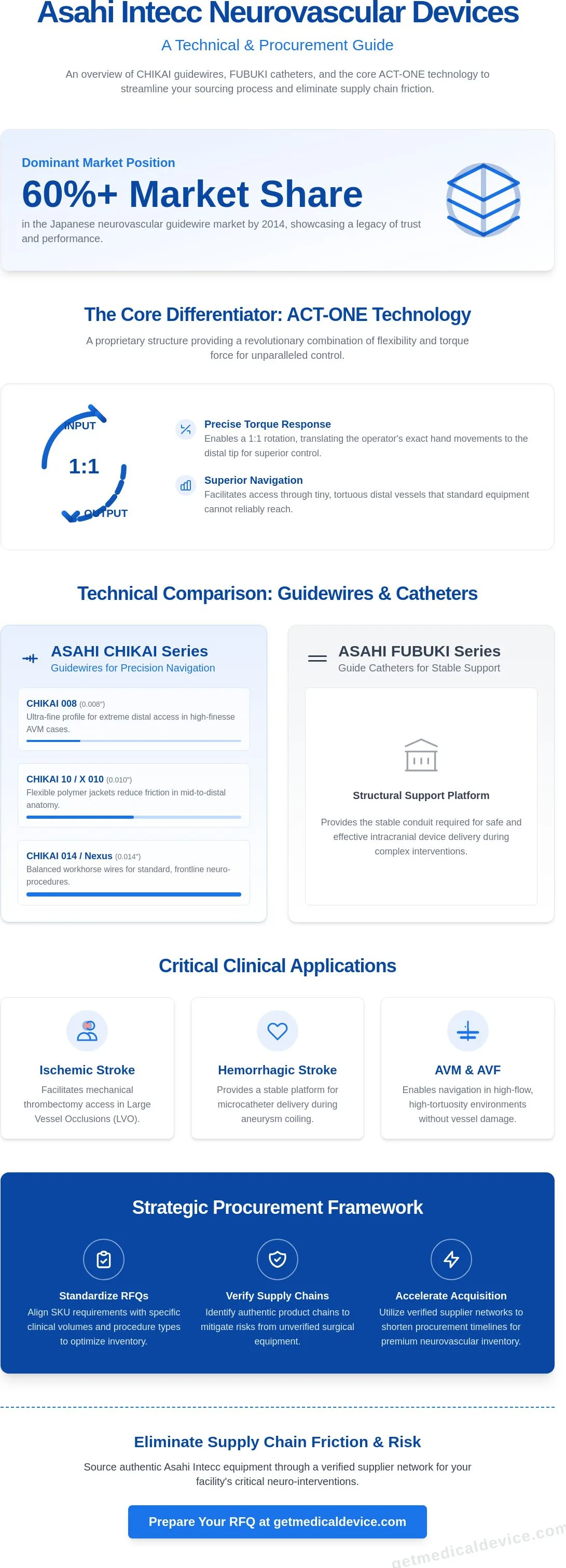
Efficient neuro-intervention requires a coordinated mechanical effort between the primary navigator and the support conduit. The CHIKAI series represents the core of Asahi’s neurovascular guidewire offering, while FUBUKI systems provide the stable platform required for intracranial device delivery. These Asahi Intecc neurovascular devices are categorized by specific diameter measurements—0.008, 0.010, and 0.014 inches—each serving a distinct anatomical purpose. Understanding these technical distinctions allows procurement officers to align inventory with the specific procedural needs of their neuro-interventional suites.
ASAHI CHIKAI Series: Guidewire Specifications
The CHIKAI 008 is optimized for the smallest distal vessels and high-finesse AVM cases, offering the lowest profile for extreme navigation. For mid-to-distal anatomy, clinicians utilize the CHIKAI 10 and CHIKAI X 010, which feature flexible polymer jackets to reduce friction. Documentation regarding FDA 510(k) clearance for ASAHI guidewires confirms the rigorous testing these wires undergo to ensure safety in the neurovasculature. The CHIKAI 014 and Nexus models act as the balanced workhorse for standard frontline neuro-procedures. These wires provide the necessary torque and support for the majority of stroke and aneurysm cases, making them a staple for high-volume centers.
ASAHI FUBUKI Access Systems
The FUBUKI line is designed to facilitate the delivery of therapeutic devices through its large lumen design and minimized puncture profile. The FUBUKI Long Sheath offers a stable foundation from the puncture site, while the FUBUKI XF is engineered for quick distal placement in challenging vascular environments. For procedures requiring more nuanced support, the FUBUKI 043 Intermediate Catheter provides essential distal stabilization for microcatheter systems. This intermediate layer is vital for maintaining access in tortuous anatomy where proximal catheters cannot reach. Buyers should evaluate their procedural mix to determine the ratio of intermediate catheters to primary access sheaths required.
Selecting between workhorse wires and specialty wires depends on the complexity of the clinical caseload. While the 014 series handles the bulk of routine interventions, the 008 and 010 variants are indispensable for distal access. Standardizing procurement around these specific diameters ensures that interventionalists have the correct tool for every anatomical challenge. To secure these components from reliable sources, facilities can verify supplier credentials through specialized procurement platforms to ensure product authenticity and chain-of-custody transparency.
ACT-ONE Technology: The Core Differentiator
ACT-ONE technology represents the primary metallurgical innovation that distinguishes Asahi wires from traditional neurovascular components. It's a proprietary stainless steel cable tube technology. Unlike conventional solid-core wires that rely on a single tapered mandrel, ACT-ONE uses a multi-strand cable structure. This architecture enhances mechanical properties without increasing the device's profile. This specific design is the foundational reason why Asahi Intecc neurovascular devices maintain a competitive edge in complex intracranial access. It provides a level of control that solid-core alternatives cannot replicate.
Torque Transmission and Vessel Navigation
The primary mechanical advantage of the ACT-ONE structure is its superior torque response. In neurovascular procedures, clinicians must navigate through the carotid siphon and other high-tortuosity segments. Traditional wires often suffer from "whip," where the distal tip lags behind the proximal rotation and then snaps forward. ACT-ONE converts operator hand movement into 1:1 distal tip rotation. This precision allows for exact micro-adjustments within the vessel. High-fidelity torque transmission reduces procedure times because the operator isn't fighting the wire's natural resistance. When these wires are used alongside supporting structures, as discussed in studies on Asahi Fubuki Guiding Catheter Efficacy, the overall clinical success rate for distal navigation improves. The wire behaves predictably. This is essential for patient safety.
Kink Resistance and Device Longevity
Durability is a critical parameter for medical device buyers and clinical managers. ACT-ONE wires demonstrate high resistance to kinking and tip deformation during repeated passes through calcified or tortuous anatomy. While solid-core wires may take a permanent "set" or bend after navigating a sharp turn, the cable tube design maintains its structural integrity. This shape retention allows a single wire to be used for multiple phases of a procedure without requiring a mid-case replacement. It's a more resilient tool for difficult cases.
From a procurement standpoint, this durability translates to measurable value. Reduced device failure rates mean fewer units are opened per case, directly lowering procedural costs and minimizing medical waste. The safety profile is also enhanced. The multi-strand design significantly reduces the risk of wire fracture or vessel perforation compared to thinner, solid-core alternatives. By ensuring the wire remains predictable throughout its use, hospitals can improve throughput in their interventional suites while maintaining high safety standards. It's a technical solution that addresses both clinical requirements and logistical efficiency. Procurement teams should prioritize these specifications when evaluating long-term supply contracts for Asahi Intecc neurovascular devices.
Strategic Procurement of Asahi Intecc Devices
Procuring Asahi Intecc neurovascular devices requires a systematic approach that aligns clinical demand with supply chain capabilities. High-precision tools like the CHIKAI series demand exact SKU identification to prevent procedural delays. Buyers must move beyond simple price comparisons and focus on lead times, product authenticity, and technical support. A robust procurement strategy ensures that the interventional suite remains operational during peak volumes, particularly for time-sensitive stroke interventions.
Preparing a Neurovascular RFQ
Standardizing the Request for Quote (RFQ) process is essential for maintaining inventory accuracy. When preparing documentation for Asahi devices, procurement officers must include specific data points to ensure the correct variant is sourced. These parameters include the outer diameter (0.008, 0.010, or 0.014 inches), the usable length (typically 200cm for neurovascular applications), and the specific tip configuration. For high-volume stroke centers, bulk procurement strategies help stabilize inventory levels for emergency Large Vessel Occlusion (LVO) cases. It's helpful to review this medical device procurement checklist to ensure all logistical and technical parameters are met before finalizing a contract. Detailed RFQs reduce the risk of receiving incompatible components that could compromise surgical outcomes.
Verifying Global Medical Device Suppliers
Supply chain fragmentation in the neurovascular sector introduces risks regarding counterfeit or improperly stored products. Verification involves auditing the supplier's credentials and ensuring they maintain a clear chain-of-custody for Asahi Intecc neurovascular devices. Key criteria for identifying reliable distributors include their adherence to ISO 13485 standards and their ability to provide formal documentation for international trade. Certificates of Origin and Free Sale Certificates should be mandatory attachments to any high-value quote. Risk mitigation also involves evaluating a supplier's historical performance in maintaining stock during global logistics disruptions. Verified wholesalers provide a level of transparency that unvetted intermediaries cannot match, which is vital for high-stakes surgical equipment.
The primary objection in neurovascular procurement is ensuring consistent stock availability for critical stroke care. A single-source dependency often leads to stockouts during manufacturing delays. Establishing a multi-supplier strategy through a centralized platform allows facilities to compare availability across different regions. To streamline your sourcing process and mitigate these risks, you can browse premium product listings from verified suppliers to secure your essential neurovascular inventory. This approach ensures that clinical teams have the tools they need without the friction of unverified sourcing channels.
Sourcing Asahi Intecc via GetMedicalDevice
Securing a consistent supply of Asahi Intecc neurovascular devices requires an infrastructure that prioritizes verification and logistical transparency. GetMedicalDevice acts as a formal intermediary, connecting hospital procurement departments and medical distributors with a global network of vetted suppliers. This platform eliminates the ambiguity often associated with cross-border medical trade by centralizing the procurement process. By utilizing a systematic framework, buyers can ensure that the high-precision tools required for neuro-intervention are sourced through documented and reliable channels.
Leveraging the Verified Supplier Network
The integrity of the neurovascular supply chain depends on the rigorous vetting of every participant. GetMedicalDevice employs a strict verification protocol to evaluate suppliers of major brands, including Asahi Intecc, Terumo, and Boston Scientific. This process confirms that distributors adhere to international regulatory standards and maintain appropriate storage conditions for sensitive interventional equipment. A centralized B2B marketplace allows procurement teams to bypass fragmented sourcing methods. Instead of managing dozens of individual relationships, buyers interact with a consolidated network of professionals. Understanding the Verified Supplier Membership benefits is essential for organizations looking to scale their operations while maintaining high standards of transparency. This membership structure ensures that all parties operate within a framework of professional accountability and verified data.
Optimizing Procurement with RFQ Credits
The Request for Quote (RFQ) system on GetMedicalDevice is designed to facilitate competitive bidding while maintaining technical accuracy. Buyers use RFQ response credits to initiate detailed inquiries for specific Asahi Intecc neurovascular devices, such as the CHIKAI 008 or FUBUKI guide catheters. This methodical approach allows for precise data input and predictable outcomes. To optimize the procurement workflow, follow these instructional steps:
- Define the exact technical parameters, including device diameter, usable length, and required tip shape.
- Submit the request through the platform to reach the global network of vetted neurovascular suppliers.
- Analyze the incoming bids based on lead times, unit costs, and documentation availability.
- Select the supplier that aligns with the facility's clinical volume and budgetary requirements.
This bidding process ensures that hospitals don't rely on a single point of failure within their supply chain. By comparing offers from multiple verified distributors, procurement officers can mitigate the risks of stockouts and price volatility. The platform's focus on efficiency allows interventional suites to maintain their focus on clinical outcomes rather than logistical hurdles. To secure your facility's inventory and access a reliable path for specialized surgical equipment, you can source Asahi Intecc neurovascular devices today through the GetMedicalDevice marketplace. This professional facilitator provides the stable project management tools necessary for modern, high-stakes medical procurement.
Optimizing the Neurovascular Supply Chain
Standardizing the procurement of Asahi Intecc neurovascular devices ensures that clinical teams maintain the mechanical precision required for successful intracranial interventions. By focusing on the structural advantages of ACT-ONE technology and utilizing precise SKU identification, facilities reduce procedural risks and improve operational efficiency. Transitioning from fragmented sourcing to a centralized, data-driven approach is the final step in securing a resilient supply chain for stroke and aneurysm care.
A stable infrastructure is necessary to manage high-stakes inventory effectively. Through a Verified Supplier Membership, procurement officers gain access to a Global RFQ Response System that facilitates transparent bidding on premium components. This system streamlines the acquisition of inventory from industry leaders, including Asahi Intecc, Terumo, and Boston Scientific. You can Access the Verified Supplier Network for Asahi Intecc Devices to secure authentic equipment and optimize your facility's throughput. Establishing a reliable procurement path ensures your surgical suite is always prepared for the next critical case.
Frequently Asked Questions
What is the primary difference between CHIKAI 008 and CHIKAI 014?
The primary difference between these guidewires is the outer diameter and their specific clinical application within the neurovasculature. CHIKAI 008 features a 0.008-inch profile designed for navigating ultra-distal vessels and high-finesse Arterial Venous Malformation (AVM) cases. In contrast, CHIKAI 014 is a 0.014-inch workhorse wire used for standard frontline procedures and providing stable support for larger therapeutic devices. Selecting the correct diameter ensures the necessary balance between distal flexibility and proximal support during navigation.
Are Asahi Intecc neurovascular devices compatible with other microcatheter brands?
Asahi Intecc neurovascular devices are engineered to be compatible with standard microcatheter brands that accept 0.010-inch or 0.014-inch guidewires. The proprietary coating and dimensional tolerances ensure smooth tracking within the inner lumen of various third-party catheters. Procurement teams should verify specific internal diameter requirements of their existing inventory to ensure seamless integration during interventional procedures. It's essential to match the wire's outer diameter with the microcatheter's minimum internal clearance to prevent friction or device entrapment.
How does ACT-ONE technology improve neurovascular procedure safety?
ACT-ONE technology improves safety by providing 1:1 torque transmission and high resistance to kinking. This multi-strand cable tube structure prevents the wire from whipping or snapping forward during navigation through the carotid siphon. By ensuring the distal tip responds exactly to the operator's hand movements, the risk of vessel wall trauma or unintended perforation is significantly reduced during complex distal access. The technology's durability also ensures the wire maintains its shape after multiple passes through tortuous anatomy.
Where can I find a verified Asahi Intecc guidewire distributor?
Verified distributors are accessible through the GetMedicalDevice platform, which vets suppliers for product authenticity and regulatory compliance. The platform provides a centralized directory of wholesalers who maintain documented chains of custody for high-stakes surgical equipment. This verification process mitigates the risks associated with supply chain fragmentation and ensures that facilities receive authentic components from reputable global sources. Buyers can evaluate supplier credentials and historical performance before initiating a formal procurement request within the marketplace.
What is the typical shelf life of Asahi FUBUKI long sheaths?
The typical shelf life for ASAHI FUBUKI long sheaths is three years from the date of sterilization, provided the packaging remains intact and undamaged. Each device is labeled with a specific expiration date that must be verified before clinical use. Procurement managers should implement a first-in, first-out (FIFO) inventory system to ensure that products are utilized within their validated sterility period. It's critical to inspect the sterile barrier for punctures before introducing the device into the sterile field.
Can I source Asahi Intecc products for international distribution through GetMedicalDevice?
Buyers can source Asahi Intecc neurovascular devices for international distribution by leveraging the platform's global network of verified suppliers. The system facilitates connections between entities in different regions, allowing for the acquisition of inventory that may be unavailable through local channels. This infrastructure supports international trade by providing a standardized environment for communication, documentation exchange, and transaction management between professional stakeholders. It's an efficient solution for distributors looking to expand their portfolio with premium neurovascular components.
What are the regulatory requirements for importing neurovascular devices from Japan?
Importing neurovascular devices from Japan requires compliance with regional regulatory standards such as FDA 510(k) clearance in the United States or CE Mark certification in Europe. Essential documentation includes the Certificate of Free Sale, Certificate of Origin, and detailed technical data sheets. Importers must ensure that the specific device version is cleared for use in their jurisdiction before finalizing procurement contracts with international wholesalers. Documentation must be meticulously verified to prevent delays during customs clearance and regulatory audits.
How do I use RFQ credits to find Asahi Intecc product lists and pricing?
To obtain product lists and pricing, users submit a detailed request through the platform and utilize RFQ response credits to access bids from verified distributors. This system allows buyers to specify technical requirements while inviting multiple suppliers to provide competitive quotes. Using Asahi Intecc neurovascular devices as a primary search parameter ensures that responses are filtered for relevant, authentic inventory currently available in the global market. This methodical approach provides pricing transparency and inventory validation for hospital procurement teams.
