
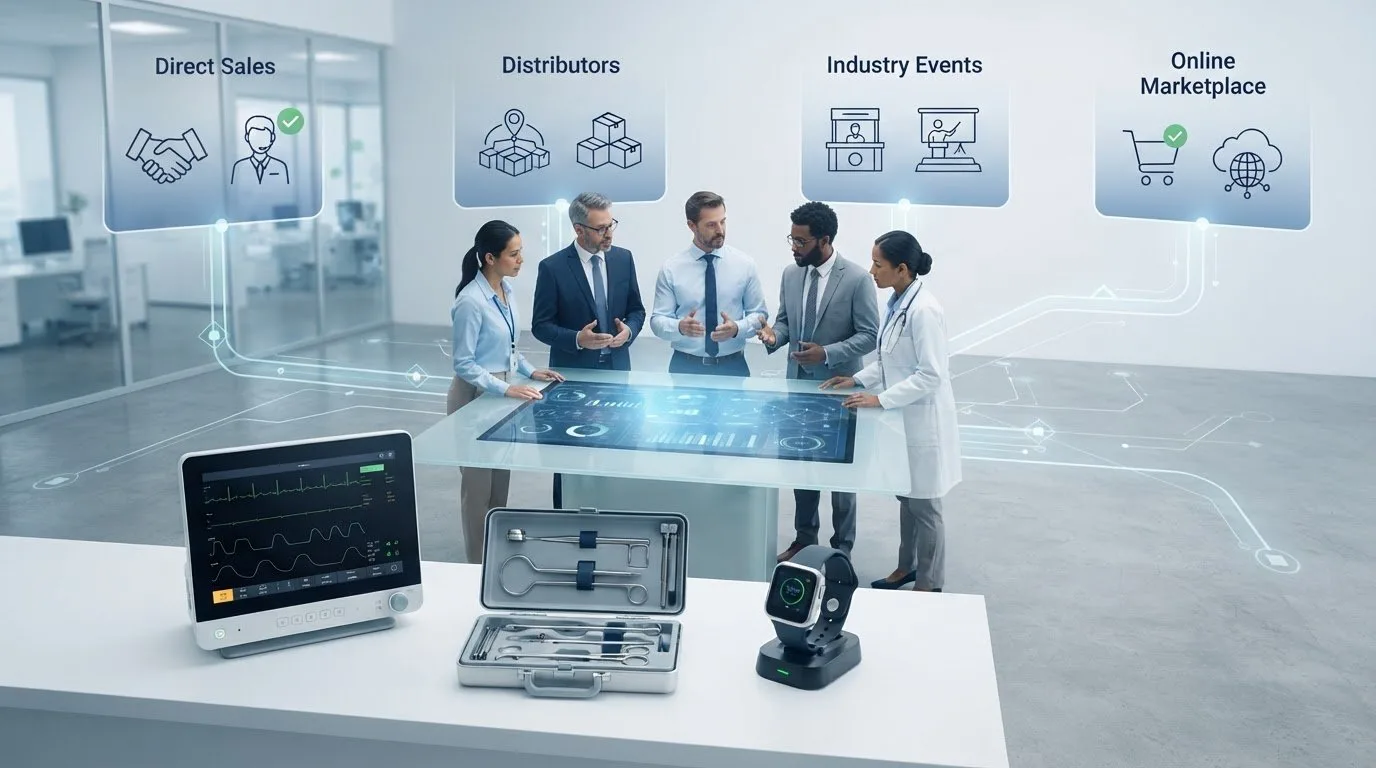
The strongest alternatives to traditional medical device sales reps can extend buyer discovery without replacing relationship-led selling. Reps provide account-specific discussion and product context, but coordinating outreach across markets takes time, and a rep-only model can limit how buyers find a supplier. The practical question is how to widen reach while keeping clinical and product conversations well supported.
Digital marketplaces, distributors, and industry events can complement direct sales. The right mix depends on product complexity and how buyers source. This guide compares the main channels, explains how to match them to buyer behaviour, and offers practical steps for assigning each channel a clear role. It also covers how verified supplier visibility and responses to active requests for quotation can create a more organized route to procurement opportunities. The aim is to combine relationship-led selling with digital discovery and distributor reach, rather than expecting one channel to do every job.
Key Takeaways
- Use alternatives to traditional medical device sales reps to extend buyer discovery, while retaining clinical engagement where products require detailed discussion.
- Compare reps, distributors, trade shows, and B2B marketplaces by reach, relationship depth, and support for procurement requests.
- Build a channel mix by defining target buyers, assessing device complexity, mapping purchasing routes, and assigning each channel a clear role.
- Explore how Verified Supplier Membership, premium product listings, and RFQ response credits can support supplier visibility and procurement participation.
Table of Contents
- Why medical device suppliers are looking beyond traditional sales reps
- How alternative medical device sales channels compare
- How to choose a sales-channel mix for medical devices
- How GetMedicalDevice supports sales beyond rep-led outreach
Why medical device suppliers are looking beyond traditional sales reps
Traditional medical device sales is relationship-based: representatives contact healthcare professionals, explain products, and maintain accounts over time. This guide focuses on supplier sales channels, not career alternatives for sales representatives. Suppliers considering alternatives to traditional medical device sales reps are looking for ways to improve buyer discovery and procurement access while keeping the product support buyers need.
Representatives remain valuable when a device needs a demonstration, detailed product education, or ongoing coordination with a clinical team. A Medical device can vary widely in purpose and complexity, so the information and support buyers need depends on the product and its users. A sales channel creates access to buyers; clinical expertise supports informed product use. These functions can work together.
What traditional medical device representatives contribute
Representatives build account relationships, explain product features, and coordinate conversations among relevant clinical stakeholders. When a device needs hands-on demonstration or discussion of its role in a procedure, direct interaction can help address product questions and provide context. The representative’s role is commercial and educational; clinicians retain responsibility for independent treatment decisions. Keeping these roles distinct helps separate product discussions from clinical judgment.
Why suppliers consider additional sales channels
Rep-led outreach takes time to coordinate across accounts and markets. Other channels give buyers more ways to find supplier information or submit procurement requests, but visibility alone does not guarantee a lead, sale, or award. Channel fit depends on product complexity, geography, and purchasing process. A product that needs extensive clinical discussion may still depend on representative engagement, while structured listings can help buyers discover available inventory. Distributors, events, and marketplaces can each support a different step toward purchase. Compare their functions, then assign each a defined role instead of expecting one channel to serve every buyer.
How alternative medical device sales channels compare
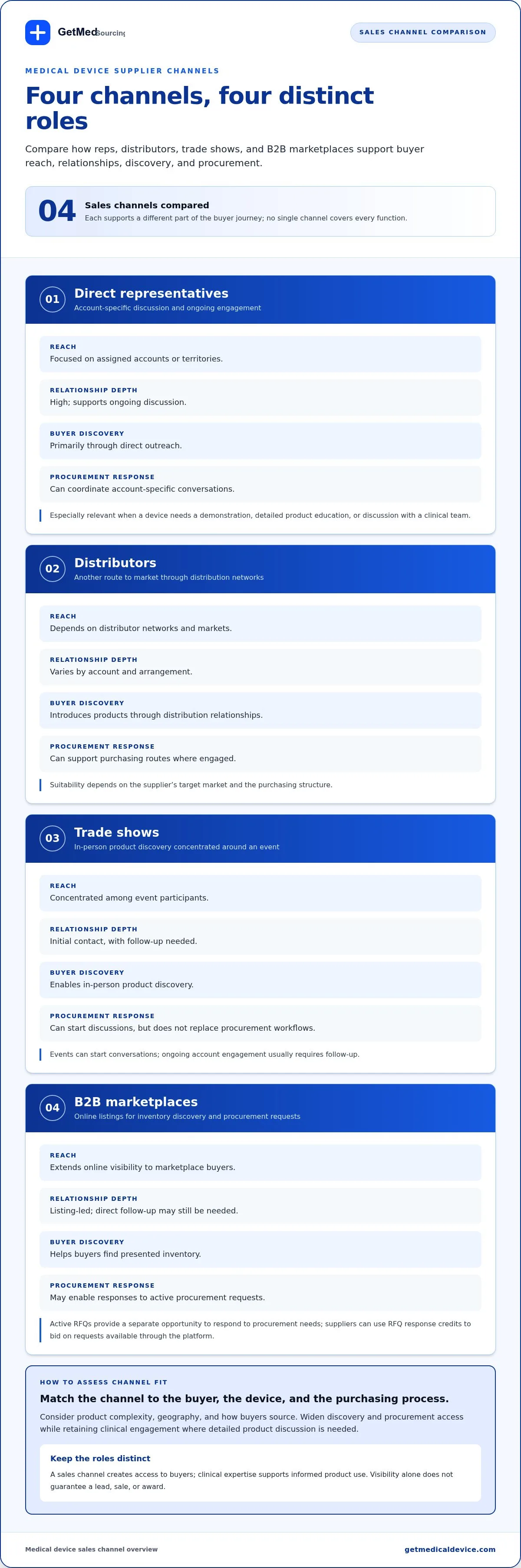
Each channel supports a different part of the buyer journey. Direct representatives sustain account-specific discussions, distributors provide another route to market, trade shows create opportunities for in-person discovery, and B2B marketplaces present inventory through online listings. No single channel covers every function. Choose based on the product and purchasing process, while accounting for relevant requirements such as those covered in FDA medical device regulations.
| Channel | Reach | Relationship depth | Buyer discovery | Procurement response |
|---|---|---|---|---|
| Direct representatives | Focused on assigned accounts or territories | High; supports ongoing discussion | Primarily through direct outreach | Can coordinate account-specific conversations |
| Distributors | Depends on distributor networks and markets | Varies by account and arrangement | Introduces products through distribution relationships | Can support purchasing routes where engaged |
| Trade shows | Concentrated among event participants | Initial contact, with follow-up needed | Enables in-person product discovery | Can start discussions, but does not replace procurement workflows |
| B2B marketplaces | Extends online visibility to marketplace buyers | Listing-led; direct follow-up may still be needed | Helps buyers find presented inventory | May enable responses to active procurement requests |
Direct sales, distributors, and industry events
For complex interventional or surgical devices, direct conversations can address account-specific questions and support detailed product discussions. Distributors and online medical supply retailers like usamedicalsurgical.com offer a different route, with suitability shaped by the supplier’s target market and purchasing structure. Trade shows concentrate discovery around an event and can start conversations, but ongoing account engagement usually requires follow-up. These channels serve different purposes, so assess them by the buyer and task they are best placed to support.
Digital marketplaces and procurement requests
A B2B marketplace listing gives suppliers a structured way to present inventory for buyer discovery. Active RFQs offer a separate opportunity to respond to procurement needs: suppliers can use RFQ response credits to bid on requests available through the platform. These alternatives to traditional medical device sales reps can expand discovery and response options, but they do not replace clinical expertise or guarantee procurement outcomes. Suppliers assessing online visibility can review medical device product listings as one marketplace example.
How to choose a sales-channel mix for medical devices
Start with buyer requirements, then work back to the supplier activities needed to meet them. Alternatives to traditional medical device sales reps should widen discovery and procurement access without removing clinical engagement where it is needed.
- Define target buyers. Specify the healthcare organizations, purchasing teams, and clinical stakeholders you need to reach. Identify where they search for products and how they prefer to begin supplier conversations.
- Assess device complexity. Determine how much product education, demonstration, or clinical discussion the device requires. This helps you decide where representative involvement matters and where clear inventory information can support initial discovery.
- Map purchasing routes. Document how target buyers evaluate products, engage distributors, and submit procurement requests. A global medical device sourcing framework can help organize procurement stages and identify where supplier information needs to be accessible.
- Assign channel roles. Give each channel a specific task, such as account education, regional market access, event-based introductions, inventory visibility, or responding to active RFQs. Factor in geography and your ability to keep product information current.
Match channel roles to product and buyer requirements
For a device requiring substantial clinical context, prioritize channels that enable direct discussion with relevant stakeholders. For products buyers can assess from accurate listing details-such as standardized burn care dressings from Burn-Fix-online visibility can support discovery before a conversation begins. Existing relationships, distributor networks, industry events, and online searches can all contribute, depending on the buyer and market.
Set measurable channel objectives
Set objectives you can observe and review. For example, check whether listings show current inventory, whether qualified inquiries receive a response, and whether your team participates in relevant RFQs. Keep product descriptions consistent across channels, and route clinical questions to appropriate expertise. Visibility and responses show activity, not guaranteed revenue or purchase orders.
For an example of digital supplier visibility, review GetMedicalDevice alongside the other channels in your plan.
How GetMedicalDevice supports sales beyond rep-led outreach
Marketplace participation adds digital discovery and procurement-response functions to a supplier’s channel mix without replacing account relationships or clinical engagement. GetMedicalDevice is a global B2B medical device marketplace where suppliers present inventory to buyers. Online visibility can support product discovery, while representatives continue to manage account-specific and clinical discussions where needed.
Where supplier membership fits in a channel mix
Verified Supplier Membership provides verified status and visibility to global buyers. Premium Product Listings give suppliers a way to present inventory on the platform. Together, these features support a defined channel objective: making supplier and product information available to marketplace buyers. They do not guarantee inquiries, sales, or procurement awards.
RFQ response credits let suppliers bid on active procurement requests. This gives suppliers a platform route for responding to buyer demand alongside existing sales processes. For background on supplier verification and its role in procurement, see this verified supplier procurement guide. The B2B marketplace trend analysis also provides context for how digital channels fit into supplier visibility strategies.
To use these alternatives to traditional medical device sales reps effectively, keep listings aligned with current inventory information and route clinical questions through appropriate expertise. Marketplace participation can expand how buyers discover products and how suppliers respond to procurement requests. It does not replace relationship-led work for complex product discussions or account development.
A practical next step for suppliers
Compare membership, listing, and RFQ participation with your existing objectives. Decide whether your priority is supplier visibility, inventory presentation, or responding to active procurement requests, then define how those activities complement representative-led outreach. Track observable activity rather than assuming outcomes.
GetMedicalDevice’s supplier options include membership, premium product listings, and RFQ response credits.
Put your channel plan into action
Build your next sales-channel decision around a clear operational priority: which buyers you need to reach, what support they need before purchasing, and how they submit procurement requests. This focus helps you evaluate alternatives to traditional medical device sales reps as part of a coordinated approach, rather than treating any channel as a universal replacement for clinical and account work.
If digital buyer discovery is part of your plan, compare GetMedicalDevice’s supplier options with your objectives. Verified Supplier Membership and premium product listings support supplier visibility, while RFQ response credits provide access to bid on active procurement requests. These functions can complement representative-led engagement without guaranteeing inquiries or sales.
Explore GetMedicalDevice supplier membership and listing options to identify where marketplace participation fits your channel mix.
Frequently Asked Questions
What are alternatives to traditional medical device sales reps?
Alternatives to traditional medical device sales reps include distributor partnerships, industry events, B2B marketplaces, and digital procurement channels. A supplier might use representatives for accounts that need detailed product discussion, while a marketplace listing helps buyers find inventory during online research. Choose channels based on where target buyers search and how they purchase, rather than assuming one channel suits every product or market.
Can a digital marketplace replace medical device sales representatives?
No. A digital marketplace supports product discovery and can provide a route to respond to procurement requests, but it does not provide the account-specific interaction or clinical discussion a representative may offer. A buyer might find a listed product online, then need a knowledgeable representative to discuss it or address product questions. Treat digital access as an additional point of engagement, not a complete substitute.
How do medical device suppliers reach hospital buyers without a sales rep?
Suppliers can make product information accessible through B2B marketplace listings, work through distributor relationships, and participate in industry events where hospital stakeholders may encounter their offerings. They can also review procurement requests and prepare relevant responses. Keep product descriptions consistent and make it straightforward for interested buyers to identify the supplier and product. These routes support discovery but do not guarantee a hospital inquiry or purchase.
Are medical device distributors an alternative to direct sales teams?
Yes. Distributors can provide a route to market in place of, or alongside, a supplier’s direct sales team. Their suitability depends on the market, product, and buyer purchasing process. For example, a supplier may rely on a distributor for a particular territory while retaining direct engagement for accounts that require detailed product discussion. A distributor relationship does not automatically remove the need to support product information and account requirements.
How can a medical device supplier use RFQs to find procurement opportunities?
Suppliers can review active RFQs for requests that match their products and inventory, then prepare a bid that addresses the buyer’s stated requirements. On GetMedicalDevice, RFQ response credits let suppliers bid on active procurement requests. Treat each RFQ as an opportunity to submit a considered response, not a promise of an award. Track which requests fit your offering and manage follow-up through your sales process.