
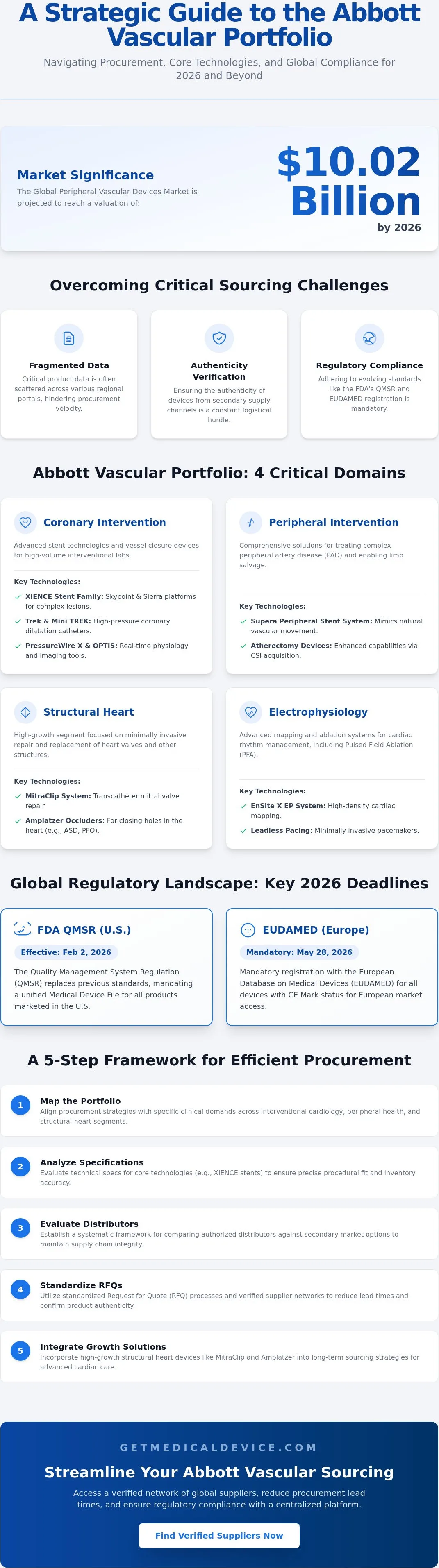
With the global peripheral vascular devices market reaching a valuation of USD 10.02 billion in 2026, the complexity of managing medical supply chains has scaled alongside clinical demand. You likely recognize the friction inherent in sourcing the Abbott Vascular device portfolio when critical product data is fragmented across various regional portals. It's difficult to maintain procurement velocity while simultaneously verifying the authenticity of secondary supply channels or ensuring compliance with the FDA's new Quality Management System Regulation (QMSR).
This guide serves as a technical resource to resolve these logistical bottlenecks by providing a structured map of product categories and a repeatable framework for global distribution. You'll gain a clear understanding of the current clinical landscape, including the integration of Pulsed Field Ablation (PFA) systems and leadless pacing technologies. We'll examine specific workflows for RFQ management and the mandatory EUDAMED registration protocols required as of May 28, 2026, to ensure your sourcing operations remain both compliant and efficient.
Key Takeaways
- Map the Abbott Vascular device portfolio across interventional cardiology, peripheral health, and structural heart segments to align procurement with specific clinical demands.
- Analyze technical specifications for core technologies, including the XIENCE stent family and Supera peripheral systems, to ensure precise procedural fit and inventory accuracy.
- Establish a systematic framework for evaluating authorized distributors versus secondary market opportunities to maintain global supply chain integrity.
- Utilize standardized RFQ processes and verified supplier networks to reduce procurement lead times and verify product authenticity in international trade.
- Integrate high-growth structural heart solutions, such as MitraClip and Amplatzer systems, into long-term sourcing strategies for advanced cardiac care facilities.
Table of Contents
- The Strategic Significance of the Abbott Vascular Device Portfolio in 2026
- Coronary and Peripheral Intervention: Core Vascular Technologies
- Structural Heart and Electrophysiology: High-Growth Segments
- Procurement Framework: Sourcing Abbott Vascular Devices Globally
- Streamlining Abbott Vascular Sourcing via GetMedicalDevice
The Strategic Significance of the Abbott Vascular Device Portfolio in 2026
Abbott Vascular operates as a cornerstone of modern interventional cardiology. It provides a highly integrated infrastructure of devices designed to address complex vascular pathologies. For procurement officers and clinical directors, the Abbott Vascular device portfolio represents more than a collection of products; it's a standardized framework that allows for clinical consistency across diverse hospital networks. By centralizing procurement around these specific technologies, facilities can reduce the logistical friction associated with managing multiple disparate vendors.
The current portfolio covers four critical clinical domains:
- Coronary Intervention: Advanced stent technologies and vessel closure devices.
- Peripheral Intervention: Solutions for complex artery disease and limb salvage.
- Structural Heart: Minimally invasive repair and replacement of heart valves.
- Electrophysiology: Mapping and ablation systems for cardiac rhythm management.
This breadth is essential for Tier-1 medical facilities that require a reliable supply of everything from drug-eluting stents to advanced transcatheter valve repair systems. Standardization within these categories streamlines training for clinical staff and simplifies the technical parameters required for inventory management.
Portfolio Evolution and Market Leadership
Abbott’s position in the 2026 market is the result of aggressive, acquisition-driven growth and a focused shift toward minimally invasive transcatheter therapies. A review of the Abbott Laboratories company profile reveals a history of strategic expansions, including the April 2023 acquisition of Cardiovascular Systems, Inc. (CSI), which significantly bolstered its atherectomy capabilities. This evolution ensures that the Abbott Vascular device portfolio remains aligned with the industry-wide transition toward procedures that reduce patient recovery times and hospital stays. It's a stable, global infrastructure that prioritizes accuracy and verified procedural outcomes.
Regulatory Compliance and Global Availability
Sourcing these devices requires strict adherence to evolving international standards. As of February 2, 2026, the FDA’s Quality Management System Regulation (QMSR) has officially replaced previous standards, mandating a unified Medical Device File for all products. Additionally, mandatory registration with the European Database on Medical Devices (EUDAMED) became effective on May 28, 2026. Procurement teams must distinguish between devices with U.S. FDA approval and those holding CE Mark status for European markets. Verification of product authenticity through reputable platforms is a necessary step to ensure that all sourced components meet these rigorous global regulatory requirements and maintain patient safety standards.
Coronary and Peripheral Intervention: Core Vascular Technologies
The Abbott Vascular device portfolio serves as the operational foundation for high-volume interventional laboratories. While capital equipment provides the diagnostic data, the core of daily operations revolves around coronary and peripheral consumables. These products require precise inventory management due to their high turnover rates and specific shelf-life parameters. Managing these assets effectively ensures that clinical teams have immediate access to the necessary tools for both elective and emergent procedures.
Coronary Stents and Balloon Dilatation
The XIENCE family remains the benchmark for everolimus-eluting stents, with the Skypoint and Sierra platforms offering optimized deliverability in complex lesions. These systems are frequently paired with Trek and Mini TREK coronary dilatation catheters, which provide the high-pressure capabilities required for effective pre-dilatation. To ensure procedural success, clinical teams often integrate physiology and imaging tools. Products like the PressureWire X and OPTIS imaging software allow for real-time stent optimization. Facilities looking to secure these high-stakes components can find verified Abbott Vascular suppliers to maintain consistent stock levels.
Peripheral Artery Disease (PAD) Solutions
Managing PAD requires a different set of mechanical properties, specifically the ability to withstand the compression and torsion found in the superficial femoral artery. The Supera peripheral stent system addresses this through a unique biomimetic design that mimics the natural movement of the vessel. For vessel access management, the Perclose ProGlide and StarClose SE vascular closure devices provide reliable hemostasis, reducing the time to ambulation for patients. It's a systematic approach to vascular access that prioritizes patient safety and procedural efficiency.
Sourcing these specialized interventional tools requires verification of the supplier's standing. You can confirm the current FDA establishment registration for Abbott Vascular to validate the regulatory status of the manufacturing entities. This documentation is a critical component of the procurement workflow, especially when managing high-risk carotid or embolic protection procedures using the Embassy or Accunet systems.
The Abbott Vascular device portfolio also integrates atherectomy systems following the acquisition of CSI. This includes the Diamondback 360 Orbital Atherectomy System, used to treat severely calcified lesions before stent placement. By combining intravascular imaging (OCT) with these mechanical intervention tools, clinicians achieve a level of precision that defines modern vascular care. These integrated technologies represent the highest tier of the current vascular catalog.
Structural Heart and Electrophysiology: High-Growth Segments
The expansion of the Abbott Vascular device portfolio into structural heart and electrophysiology (EP) represents a strategic shift toward high-margin, specialized therapies. These segments require rigorous supply chain oversight due to the technical complexity of the implants and the supporting capital equipment. Unlike the high-turnover consumables in the coronary lab, structural heart devices often involve longer procurement cycles and specific certification requirements for the implanting facility. Effective management of these assets is critical, as approximately 12 million people in the United States over the age of 65 have AFib, a number expected to double in the next 20 years.
Transcatheter Valve and Structural Interventions
The MitraClip G4 system remains the primary solution for transcatheter mitral valve repair (TMVr), utilizing edge-to-edge technology to treat mitral regurgitation. Its counterpart, the TriClip system, applies similar mechanical principles to the tricuspid valve. For Left Atrial Appendage (LAA) occlusion, the Amplatzer Amulet provides a mechanical alternative to long-term anticoagulation. Procurement teams should also account for the Navitor TAVI system, which expands Abbott's footprint in the transcatheter aortic valve replacement market. These devices require precise sizing and inventory verification through verified medical device suppliers to ensure procedural readiness.
Arrhythmia Management and Mapping Systems
In the electrophysiology space, the EnSite X EP Mapping System serves as the digital backbone for complex arrhythmia management. This system integrates with the TactiCath and FlexAbility ablation catheters to provide high-density mapping and targeted energy delivery. A significant addition to the portfolio is the Volt Pulsed Field Ablation (PFA) System, which received FDA approval on December 22, 2025. This technology represents a move toward non-thermal ablation, which is a major trend in cardiac care for 2026. Additionally, the TactiFlex Duo Ablation Catheter received its CE Mark in Europe on January 20, 2026, further diversifying the global Abbott Vascular device portfolio.
Cardiac Rhythm Management (CRM) has also seen a transition toward leadless technology. The AVEIR DR dual chamber leadless pacemaker system, which received FDA approval on July 5, 2023, addresses previous limitations in leadless pacing. While the UltiSynq CSP and AVEIR CSP systems remain for investigational use only as of April 2026, the current AVEIR DR system is available for global sourcing. Facilities must ensure that their procurement partners can handle RFQ response credits for these high-value technical requirements. Maintaining a stable link with verified suppliers is essential for securing these advanced arrhythmia management tools without logistical delays.
Procurement Framework: Sourcing Abbott Vascular Devices Globally
Sourcing the Abbott Vascular device portfolio requires a transition from clinical evaluation to rigorous logistical verification. Procurement officers must distinguish between authorized channels and the secondary market. While authorized distributors offer direct manufacturer support, secondary channels provide necessary flexibility during global shortages or for specific cost-containment initiatives. Regardless of the source, every unit must be audited for lot numbers and expiration dates to comply with the FDA's Quality Management System Regulation (QMSR) effective as of February 2, 2026. This regulation unifies terminology under the Medical Device File (MDF), making documentation accuracy a non-negotiable requirement for international trade.
Calculating the total cost of ownership (TCO) is a critical step that extends beyond the initial unit price. Buyers must factor in international shipping, specialized storage for temperature-sensitive items, and specific financial terms. For instance, Abbott's standard payment terms for U.S. partners are net 90 from the date of invoice. This 90-day liability window affects cash flow and must be integrated into the broader procurement strategy. Managing lead times for high-demand items, such as the XIENCE stent family, involves maintaining a buffer stock to offset potential manufacturing delays or shipping bottlenecks.
Evaluating Medical Device Suppliers
Verification of ISO 13485:2016 certification is the baseline for any supplier interaction. Organizations should prioritize partners who maintain a "Verified Status" on global B2B platforms, as this indicates a documented history of regulatory compliance and successful fulfillment. Red flags in the sourcing process include a lack of transparent MDF documentation or lead times that deviate significantly from industry averages. Counterfeit prevention relies on this strict adherence to documentation; if a supplier cannot provide a clear chain of custody, the risk to the clinical environment is too high.
Optimizing the RFQ Process
A structured Request for Quote (RFQ) is the most effective tool for securing competitive bids within the Abbott Vascular device portfolio. Accuracy in an RFQ requires specific inputs: exact product codes, required quantities, minimum shelf-life requirements, and preferred delivery incoterms. Utilizing RFQ Response Credits allows procurement teams to broadcast these requirements to a pre-screened pool of verified suppliers. This process facilitates a direct comparison of multiple bids based on price, shipping logistics, and payment terms, ensuring the final selection meets both clinical and budgetary parameters.
Streamlining Abbott Vascular Sourcing via GetMedicalDevice
GetMedicalDevice functions as a specialized B2B intermediary that streamlines the acquisition of the Abbott Vascular device portfolio. The platform's architecture is designed to reduce the friction inherent in cross-border medical trade by providing a transparent environment for both buyers and suppliers. It's a stable infrastructure that prioritizes verified data over marketing claims, ensuring that procurement teams can locate specific product codes without the delays typically associated with manual sourcing across fragmented regional portals.
The platform's role as an authoritative facilitator is essential for maintaining clinical continuity in high-stakes environments. By centralizing product data and supplier credentials, it allows for a methodical approach to inventory management. Procurement officers can rely on the system to provide a clear path toward product authentication, which is a critical requirement under the current FDA and EUDAMED regulatory frameworks. This systematic verification process ensures that every device sourced meets the necessary technical and safety parameters before it enters the clinical workflow.
The Facilitator Advantage for Distributors
International distributors use the platform to showcase existing inventory of coronary, peripheral, and structural heart devices to a global network of clinics. This capability is particularly vital for high-demand items where inventory turnover is rapid. For example, a regional hospital network sourcing XIENCE stents can use the platform to broadcast its specific needs to a targeted group of vendors. This process ensures that the clinical demand is met by a supplier with a documented track record of reliability and regulatory adherence. It's an efficient way to bridge the gap between complex global entities and local clinical requirements.
Next Steps: Securing Your Supply Chain
The platform offers several tools designed to enhance procurement security and efficiency. A Verified Supplier Membership serves as a formal indicator of a vendor's commitment to industry standards and documentation accuracy. Additionally, Premium Product Listings provide detailed technical parameters for the newest technologies in the Abbott Vascular device portfolio, including the Volt PFA System and the AVEIR DR dual chamber leadless pacemaker. These listings ensure that buyers understand the clinical fit of each device before initiating the bidding process, thereby reducing the likelihood of procurement errors.
To optimize your sourcing workflow, you should begin by registering your organization on the GetMedicalDevice portal. Once registered, you can utilize RFQ Response Credits to solicit bids for high-value cardiovascular tenders. This system allows for a linear progression from identifying a clinical need to securing a verified source. By integrating these tools into your standard operations, you ensure a consistent supply of essential vascular technologies. You can view the Abbott Vascular inventory on GetMedicalDevice to begin the verification and sourcing process today.
Executing a Standardized Sourcing Framework for 2026
Executing a successful procurement strategy in 2026 requires a systematic adherence to new regulatory standards and a clear map of the Abbott Vascular device portfolio. By centralizing your sourcing through verified B2B channels, you eliminate the risks associated with fragmented regional data and unverified secondary markets. It's a methodical approach that ensures your facility maintains a steady supply of critical technologies, ranging from high-turnover coronary stents to advanced structural heart implants.
Standardizing your RFQ process allows for greater transparency in shipping logistics and adherence to net 90 payment terms. This framework protects your clinical operations from supply chain volatility and ensures compliance with the mandatory EUDAMED registration effective May 28, 2026. You can now transition from strategic planning to professional execution by utilizing a platform designed for high-stakes medical procurement and direct distribution of major interventional brands.
Access Verified Abbott Vascular Suppliers and Submit Your RFQ Today to secure your facility's requirements through a streamlined, credit-based bidding system. Establishing these professional connections today ensures your network's long-term operational stability.
Frequently Asked Questions
What are the most commonly sourced devices in the Abbott Vascular portfolio?
Commonly sourced items within the Abbott Vascular device portfolio include the XIENCE family of drug-eluting stents and the Supera peripheral stent system. Procurement teams also frequently prioritize Perclose ProGlide vessel closure devices and the MitraClip G4 system for structural heart repairs. These products represent high-volume consumables and essential implants that require consistent inventory management to meet clinical procedural demands.
How can I verify if an Abbott Vascular device supplier is legitimate?
Legitimate suppliers must provide documentation of ISO 13485:2016 certification and valid FDA establishment registration. You should also check for Verified Status on professional B2B platforms, which indicates a completed audit of the supplier's business licenses and historical compliance records. Verification of the Medical Device File for specific lot numbers is a final requirement to ensure product authenticity before purchase.
Does Abbott Vascular offer devices for both coronary and peripheral procedures?
Abbott Vascular maintains extensive product lines for both coronary and peripheral interventions. The coronary segment features the XIENCE Skypoint and Sierra stents along with Trek dilatation catheters. The peripheral segment includes the Supera biomimetic stent and Armada balloon catheters designed for complex artery disease. This dual-segment coverage allows facilities to standardize their vascular lab inventory under a single manufacturer framework.
What is the MitraClip system, and is it available for international distribution?
The MitraClip system is a transcatheter edge-to-edge repair technology used to treat mitral regurgitation without open-heart surgery. It's available for international distribution, though many regions require the implanting facility to complete specific clinical training and certification. Procurement teams must verify that their chosen supplier is authorized to distribute these specialized structural heart devices across international borders.
How do I submit an RFQ for large quantities of Abbott coronary stents?
You can submit a structured RFQ by utilizing professional B2B procurement portals that connect buyers with verified medical device suppliers. Your request should include exact product codes, required quantities, and specific lead time expectations for the Abbott Vascular device portfolio. Using RFQ Response Credits on these platforms allows you to broadcast your requirements to multiple pre-screened vendors simultaneously, facilitating a competitive bidding process.
What are the benefits of using a B2B marketplace for medical device procurement?
B2B marketplaces provide a centralized infrastructure for identifying verified suppliers and comparing competitive bids in a transparent environment. These platforms reduce procurement friction by standardizing the RFQ process and providing access to a wider global inventory than traditional local distributors. This efficiency is critical for maintaining stock levels of high-demand interventional tools while ensuring all regulatory documentation is accessible for audit purposes.
Are Abbott Vascular devices compatible with other imaging systems like Philips or GE?
Interventional consumables like stents, guidewires, and balloons are generally compatible with standard fluoroscopy and imaging systems from manufacturers like Philips, GE, and Siemens. However, proprietary software systems such as OPTIS for intravascular imaging are designed to integrate specifically with Abbott's hardware. You should verify the technical specifications of capital equipment to ensure seamless integration with the broader diagnostic infrastructure of your facility.
How does GetMedicalDevice handle supplier verification for high-risk medical equipment?
The platform implements a rigorous verification protocol that includes an audit of the supplier's ISO certifications and operational history. It assigns Verified Supplier status only to entities that pass this documentation review and demonstrate adherence to global distribution standards. This process serves as a critical filter for procurement officers, helping them avoid grey market risks and ensuring the integrity of high-risk medical equipment sourcing.
