

What if the lowest-priced device creates the highest procurement risk? For private clinics, a purchase must meet clinical requirements and fit the budget, but it also depends on supplier reliability, product documentation, and availability when needed. That makes procurement strategies for private clinics more than a price comparison. Ad hoc requests or inconsistent review criteria can leave teams with limited visibility into what’s being ordered, why, and when it needs replenishing.
A repeatable process makes purchasing decisions easier to assess and explain. This 2026 guide sets out a practical workflow, from identifying clinical needs and reviewing supplier information to comparing offers, approving orders, and checking inventory. It shows how to weigh continuity of supply, documentation, and cash-flow impact alongside unit price, without treating any single factor as decisive. Structured records and digital supplier discovery can support existing sourcing work, while final verification and purchasing decisions remain with the clinic. The result is a clearer basis for consistent procurement and better visibility across the purchasing cycle.
Key Takeaways
- Use procurement strategies for private clinics that assess clinical fit, availability, documentation, and workflow impact alongside unit price.
- Build a repeatable purchasing sequence, from forecasting needs and defining specifications to reviewing orders and replenishment.
- Assign clear responsibility for clinical approval, budget authorization, receiving checks, and reorder decisions.
- Use supplier relationships, distributors, and B2B marketplaces as complementary discovery routes, then assess each product and supplier against clinic requirements.
Table of Contents
- What private-clinic procurement strategies need to achieve
- Which supplier and product criteria should private clinics compare?
- How to build a private-clinic procurement workflow
- How private clinics can source devices and improve procurement over time
What private-clinic procurement strategies need to achieve
A procurement strategy is a repeatable method for specifying, evaluating, purchasing, and reviewing clinical supplies. For private clinics, procurement strategies for private clinics should connect patient-care requirements with dependable availability, appropriate product documentation, and budget control. The general procurement process offers a useful foundation, but clinic decisions also need to reflect how products are used in practice.
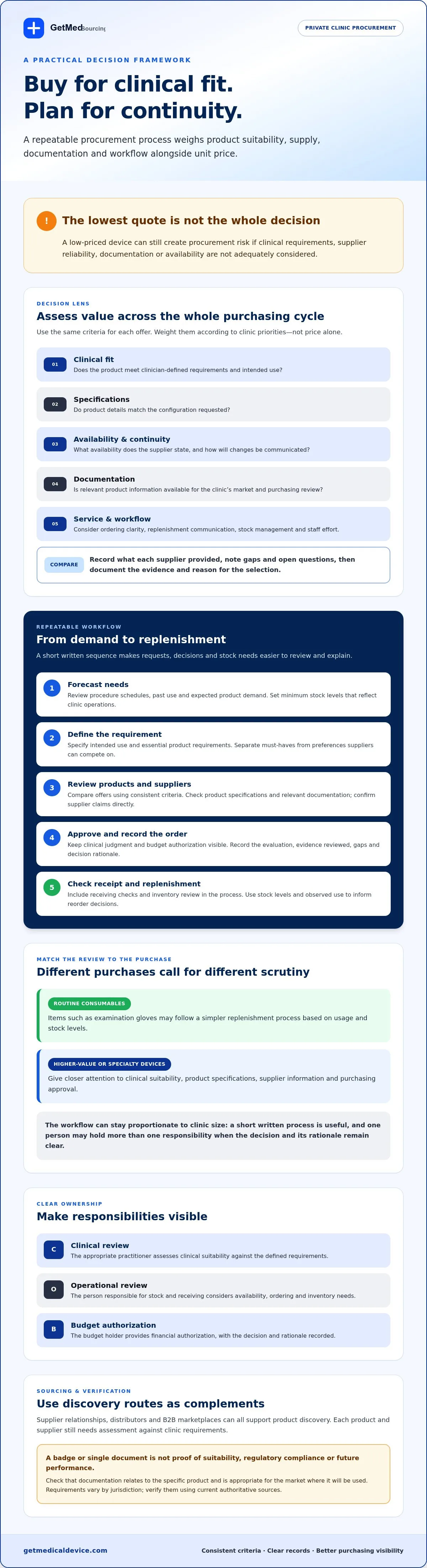
Routine consumables, such as examination gloves, may follow a simpler replenishment process based on usage and stock levels. Higher-value or specialty devices warrant closer review of clinical suitability, product specifications, supplier information, and purchasing approval. A quoted unit price is only one part of procurement value. The decision should also account for clinical fit, supply continuity, documentation, and the work required to order and manage stock.
Start with clinical demand and purchasing priorities
Map recurring procedures and expected product use, then set minimum stock levels that reflect clinic operations. Record who can request an item and who decides whether it is clinically suitable. Separate essential requirements, such as required specifications, from preferences that suppliers can compete on. This gives reviewers a consistent way to evaluate alternatives without treating every request as an automatic purchase.
Make procurement proportionate to clinic size
A clinic doesn’t need to copy a hospital’s procurement structure. Use a short written workflow that records the request, evaluation, approval, and review. Assign clinical review to the appropriate practitioner, operational review to the person responsible for stock and receiving, and financial authorization to the budget holder. For routine purchases, one person may hold more than one responsibility, but the decision and its rationale should remain clear.
Which supplier and product criteria should private clinics compare?
Use the same comparison criteria for each offer so a low quote doesn’t overshadow clinical or operational differences. A simple matrix can record what each supplier has provided, highlight gaps, and show which questions need answers before a purchase decision.
- Clinical fit: Does the product meet clinician-defined requirements and intended use?
- Specifications: Do the stated product details match the requested configuration?
- Availability: What availability does the supplier state, and how will changes be communicated?
- Documentation: Is relevant product information available for the clinic’s market and purchasing review?
- Service and workflow: How clear is the ordering process, and what information is provided about replenishment and stock management?
These criteria make procurement strategies for private clinics more consistent while leaving room to weight factors according to clinical need. For supplier checks, use this medical device supplier verification guidance as a reference, then confirm claims directly. A badge or single document should not be treated as proof of product suitability, regulatory compliance, or future performance.
Assess clinical fit and product documentation
Have the relevant clinician compare product specifications with the defined requirements before reviewing price. Check that available documentation relates to the specific product and is appropriate for the market where it will be used. Requirements vary by jurisdiction, so confirm them through current authoritative sources rather than assuming one document applies everywhere.
Compare suppliers beyond the quoted unit price
Consider the total workflow impact: staff time spent placing orders, clarity of supplier responses, replenishment communication, and the effort required to manage stock. A weighted scorecard can rank clinical fit, documentation, availability, and workflow factors according to clinic priorities. Record the evidence reviewed, any gaps, and the reason for the final selection. For product discovery, clinics can also review medical device listings as one sourcing route, then assess suppliers and products against their own criteria.
How to build a private-clinic procurement workflow
A documented sequence turns purchasing from a series of individual requests into a process the clinic can review and repeat. These procurement strategies for private clinics should keep clinical judgment, budget approval, and receiving checks visible at each decision point.
- Forecast needs: Review procedure schedules, past use, and current stock.
- Define specifications: Record clinical requirements, quantity, and required timing.
- Identify suppliers: Use established relationships and discovery channels to find potential sources.
- Compare offers: Send the same request for quotation (RFQ) to each supplier, with matching product and quantity details.
- Approve and order: Obtain clinical approval and budget authorization before placing an order.
- Receive and review: Check the received order against the purchase details, then record issues for follow-up.
For additional context on organizing sourcing decisions, consult this global medical-device sourcing framework.
Create a repeatable request and approval process
Use a consistent request record that captures the item, clinical rationale, specifications, quantity, timing, and approving roles. Keep supplier quotations and decision notes with the order record. This creates a useful basis for comparing future purchases and explaining why a particular offer was selected. Clinical reviewers assess suitability, the budget holder authorizes expenditure, and designated staff confirm receipt.
Monitor inventory and supplier performance
Track consumption, stock levels, stated availability, delays, substitutions, and recurring ordering problems. Assign someone to make reorder decisions using clinic-specific demand and supply risk rather than a universal threshold. Set review intervals that fit the item’s use and the consequences of a supply interruption. Adjust them when purchasing or receiving records show a change is needed.
For supplier discovery, explore medical-device listings on GetMedicalDevice as one input to the clinic’s sourcing process. Review each supplier and product against your own requirements before purchase.
How private clinics can source devices and improve procurement over time
Clinics can identify potential sources through existing supplier relationships, distributors, and B2B marketplaces. These routes can complement one another: a marketplace can help surface products and suppliers, while direct supplier conversations clarify current availability, documentation, and purchasing terms. Treat listings as a starting point for evaluation, not as confirmation that a product meets clinical or market-specific requirements.
Use digital sourcing without outsourcing due diligence
Search by relevant product category, then compare listing information with the clinic’s defined specifications. For a clinic that performs coronary procedures, coronary intervention products may be a relevant discovery category. GetMedicalDevice can be considered as a supplier-discovery resource. Check current listings and buyer processes, then contact suppliers to verify product details, documentation, availability, and purchasing terms before ordering. The clinic remains responsible for assessing whether the evidence and product fit its needs.
Turn purchasing records into the next procurement improvement
Review purchasing and inventory records at intervals suited to the clinic’s demand and supply risks. Look for patterns, not just individual order issues:
- Spend changes that may warrant renewed comparison or budget review.
- Stockouts, delays, and substitutions that affect continuity or forecast assumptions.
- Specification changes that require clinical review or updates to approval criteria.
Use these findings to adjust forecasts, supplier options, and the criteria applied to future purchases. This feedback loop makes procurement strategies for private clinics more responsive over time, while keeping sourcing decisions tied to documented clinic requirements.
Put a More Consistent Procurement Process Into Practice
Effective procurement strategies for private clinics connect clinical requirements, supplier assessment, purchasing approvals, and inventory review in one repeatable process. Compare offers on more than unit price, document why a supplier was selected, and use purchasing records to refine forecasts and criteria over time.
Digital supplier discovery can complement existing relationships by helping clinics identify products and potential sources. GetMedicalDevice is a B2B platform featuring medical-device listings, including products from Boston Scientific, Terumo, Asahi Intecc, and Abbott Vascular. Treat listings as a starting point, then confirm product fit, current availability, documentation, and purchasing terms directly with suppliers before making a decision.
Explore medical-device products and supplier listings to support your clinic’s sourcing research. With clear criteria and regular review, your team can make purchasing decisions more consistent, accountable, and aligned with continuity of care.
Frequently Asked Questions
How can a private clinic reduce medical-device procurement costs?
A clinic can manage procurement costs by forecasting demand, setting appropriate stock levels, and comparing supplier offers against consistent requirements. Assess clinical fit, documentation, stated availability, and ordering effort alongside unit price. These procurement strategies for private clinics can help teams avoid unnecessary purchases and identify where replenishment or supplier communication needs review, without compromising product suitability or continuity of care.
What should a private clinic check before choosing a medical-device supplier?
Check whether the product meets clinician-defined specifications and whether the supplier can provide relevant product information and documentation for the clinic’s market. Confirm stated availability, purchasing terms, and how the supplier communicates about order changes or replenishment. Review the evidence directly, and don’t treat a single document, badge, or listing as proof of product suitability, regulatory compliance, or future supplier performance.
How does an RFQ help a clinic procure medical devices?
A request for quotation (RFQ) helps a clinic compare supplier responses against the same defined requirements. Include the product specifications, quantity, and timing so differences between offers are easier to assess. Review more than the quoted price: consider clinical fit, available documentation, stated availability, and ordering requirements. Keep the responses and selection rationale on record to support consistent purchasing decisions.
Can a small private clinic use a medical-device marketplace?
Yes. A small clinic can use a B2B medical-device marketplace as one route for discovering products and potential suppliers, alongside existing supplier relationships and distributors. Listings can help identify options, but the clinic should independently assess product fit and review relevant evidence. GetMedicalDevice is a B2B platform featuring medical-device listings and supplier discovery; confirm current listings and buyer processes before relying on them.
How often should a private clinic review its procurement strategy?
Set review intervals that reflect the clinic’s demand, stock risk, and purchasing activity rather than applying a universal schedule. Review sooner if records show stockouts, delays, substitutions, changing specifications, or recurring ordering problems. At each review, examine consumption, stock levels, and spend patterns, then adjust forecasts, supplier options, or approval criteria where the evidence supports a change. Document the decision and follow-up.